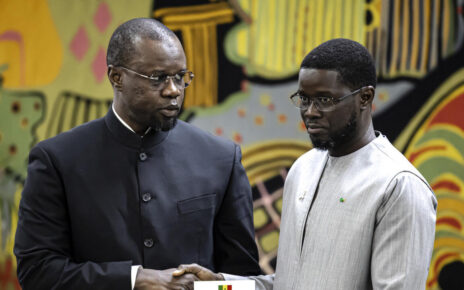
The notion of citizen power in Senegal has taken center stage following the historic 2024 presidential election that brought Bassirou Diomaye Faye to power. Yet, as the dust settles on this democratic milestone, critical questions emerge about the sustainability of this civic awakening. The abandonment of direct citizen access to the Constitutional Court—despite its inclusion in the 2024 coalition program and the National Dialogue recommendations—serves as a stark reminder of the institutional roadblocks that continue to stifle genuine civic participation.
Understanding citizen power in Senegal: beyond elections
Citizen power is not merely about casting a vote every few years—it is about sustained, meaningful engagement in the democratic process. At its core, it demands the ability of Senegalese citizens to hold their government accountable, not just through protests and mobilizations, but through institutional mechanisms that allow direct recourse against constitutional violations. The current debate in Senegal revolves around whether the democratic renewal promised by the 2024 election can be institutionalized or whether it risks fading into a fleeting moment of civic euphoria without lasting structural impact.
The 2024 election itself was a testament to the vitality of Senegalese civic engagement. The unprecedented mobilization against the attempted postponement of the vote, the decisive intervention by the Constitutional Council, and the eventual release of political prisoners demonstrated the power of collective action. Yet, the absence of direct citizen access to constitutional adjudication in the reforms currently underway raises concerns about the depth of this democratic transformation.
the paradox of democratic progress
Senegal stands at a crossroads where democratic progress is palpable but incomplete. The election of Bassirou Diomaye Faye marked a break from the previous political order, yet the structural conditions for citizen power remain fragile. While the 2024 and 2025 National Dialogues sought to redefine the rules of governance, the exclusion of certain civic proposals—such as direct citizen access to the Constitutional Court—highlights a persistent disconnect between democratic aspirations and institutional reality.
The reform process, though ambitious in its rhetoric, risks being undermined by half-measures that fall short of empowering ordinary citizens. Without mechanisms that allow direct citizen oversight and control over constitutional adherence, the promise of a new democratic dawn risks stagnation. This is where the concept of pouvoir citoyen—citizen power—must be reimagined not as a theoretical ideal but as a practical framework for institutional reform.
historical foundations of civic engagement in Senegal
The history of civic participation in Senegal stretches far beyond its colonial and postcolonial experiences. Precolonial African societies, including those of the Wolof people, developed sophisticated systems of governance and civic ethics that emphasized collective deliberation, accountability, and ethical conduct. Institutions such as the penc (village assemblies held under the baobab tree) and the ethical virtues of jom (honor), kersa (dignity), ngor (integrity), and teranga (hospitality) formed the moral backbone of civic life long before the advent of modern democratic institutions.
These traditions were not merely social customs; they were mechanisms of political accountability. In the Wolof kingdoms, for example, the jambur (assembly of free notables) could depose a damel (king) deemed unfit, demonstrating an early form of checks and balances. Similarly, the penc allowed for open, consensus-driven deliberation, where decisions were not imposed but collectively validated—a stark contrast to the adversarial models of Western democracy.
the role of ethics in democratic governance
The ethical traditions of Senegalese civic life offer more than nostalgic reflections—they provide a conceptual framework for reimagining modern democratic institutions. The virtues of jom and kersa, for instance, emphasize the importance of honor and restraint in public life, while ngor underscores the value of keeping one’s word and acting with integrity. These virtues are not relics of a bygone era; they are living principles that can animate contemporary governance by fostering trust, accountability, and civic responsibility.
Yet, the erosion of these ethical norms in modern Senegalese politics is evident. Opportunistic political shifts, corruption, and the breakdown of civic trust reflect a growing disconnect between traditional ethics and contemporary governance. The challenge for Senegal lies in reconciling these two dimensions: leveraging the strengths of modern democratic institutions while revitalizing the ethical foundations of civic life that have historically sustained democratic participation.
the constitutional promise: direct citizen access to justice
One of the most glaring deficiencies in Senegal’s constitutional framework is the lack of direct citizen access to constitutional adjudication. Under the current constitution, only the President or a tenth of deputies can refer a law to the Constitutional Council for review. This exclusionary mechanism effectively bars ordinary citizens from challenging unconstitutional laws or government actions, leaving them dependent on political intermediaries—a system that undermines the very principle of popular sovereignty.
The 2024 coalition program explicitly called for the creation of a Constitutional Court with horizontal access for citizens, allowing them to directly challenge constitutional violations. The National Dialogue of 2025 also recommended this reform, yet it was conspicuously absent from the final draft of the constitutional reform bill unveiled in 2026. This omission is not merely procedural; it signals a broader reluctance to institutionalize mechanisms that empower citizens, instead reinforcing a top-down model of governance that prioritizes elite control over popular sovereignty.
lessons from comparative democracies
Senegal’s experience resonates with broader debates on democratic reform in Africa. Countries like South Africa and Benin have experimented with direct citizen access to constitutional adjudication, demonstrating that such mechanisms can strengthen democratic resilience. In South Africa, the Constitutional Court’s ability to hear cases directly from citizens has been instrumental in upholding constitutional rights, particularly in the post-apartheid era. Similarly, Benin’s 1990 National Conference, which established a constitutional framework for direct citizen participation, offers valuable lessons on how democratic reforms can be anchored in local traditions of deliberation and accountability.
These examples suggest that Senegal’s failure to adopt direct citizen access is not a reflection of institutional incapacity but rather a choice that prioritizes elite control over civic empowerment. The question now is whether Senegal will seize the opportunity to learn from these comparative experiences and integrate citizen-centered reforms into its constitutional framework.
revitalizing local democracy: the potential of decentralization
The 2013 Decentralization Act marked a significant step toward empowering local communities by transferring authority and resources to municipalities. However, the promise of local democracy remains largely unfulfilled. Many municipal councils operate as administrative bodies disconnected from citizens, lacking both financial resources and a culture of participatory governance. The traditional institutions of penc and gokh (neighborhood assemblies) offer a potential bridge between formal governance structures and local civic traditions.
Revitalizing local democracy requires more than legal reforms—it demands a cultural shift that integrates traditional deliberative practices into modern governance. Experiments in participatory budgeting, citizen audits, and community assemblies have shown promise in other African contexts, such as Porto Alegre in Brazil and Kerala in India. In Senegal, such initiatives could be adapted to local traditions, creating spaces where citizens are not merely recipients of services but active co-managers of their communities.
building a culture of civic responsibility
The success of democratic reforms in Senegal hinges on the ability to cultivate a culture of civic responsibility that bridges traditional ethics and modern governance. Civic education must move beyond rote learning of institutions and symbols to include the ethical principles that underpin democratic participation. Programs that teach the values of jom, kersa, and ngor—not as abstract ideals but as practical tools for civic engagement—can help restore the moral foundations of public life.
Moreover, institutions of oversight, such as the Court of Auditors and the National Anti-Corruption Office (OFNAC), must be granted true independence and empowered to respond to citizen complaints. A culture of transparency and accountability cannot be imposed from above; it must be nurtured through active civic participation and institutional responsiveness.
the role of national dialogues in democratic renewal
The 2024 and 2025 National Dialogues represented an ambitious attempt to redefine Senegal’s political system through inclusive deliberation. These dialogues sought to engage a broad cross-section of society, including political parties, civil society, and ordinary citizens, in crafting reforms that reflect the collective will. However, the effectiveness of such dialogues depends on their ability to translate recommendations into concrete legal changes—and to justify any deviations transparently.
The exclusion of the recommendation for direct citizen access to the Constitutional Court from the final reform bill underscores the fragility of participatory processes in the face of institutional inertia. For national dialogues to be more than symbolic gestures, they must be accompanied by mechanisms that ensure their recommendations are binding and that deviations are publicly justified. This is the only way to prevent civic participation from becoming a mere spectacle of democratic theater.
a path forward: seven proposals for civic empowerment
- Institute direct citizen access to the Constitutional Court: Allow citizens to directly challenge unconstitutional laws or government actions, ensuring that the court’s role as a guardian of constitutional rights is not dependent on elite intermediaries.
- Recognize traditional deliberative spaces: Legally acknowledge institutions like the penc and neighborhood assemblies as mandatory consultation forums for municipal decisions, ensuring that traditional forms of deliberation are integrated into modern governance.
- Reform civic education: Introduce curricula that teach the ethical principles of jom, kersa, ngor, and teranga as essential components of democratic participation, linking traditional values to modern civic duties.
- Strengthen oversight institutions: Grant the Court of Auditors, OFNAC, and other oversight bodies true independence, and create mechanisms for direct citizen complaints, ensuring that these institutions serve the public rather than political elites.
- Institutionalize national dialogues: Establish a charter for national dialogues that mandates transparent procedures for participant selection, deliberation, and the justification of deviations from recommendations, preventing civic participation from becoming a mere formality.
- Promote a politics of recognition: Address the emotional and symbolic dimensions of civic participation by recognizing the dignity of all citizens, particularly marginalized groups, and fostering a sense of belonging that transcends material gains.
- Revitalize decentralization with participatory tools: Implement participatory budgeting, citizen audits, and public accountability mechanisms at the municipal level, transforming citizens from passive recipients of services into active co-managers of their communities.
the challenges of democratic renewal
The path to democratic renewal in Senegal is fraught with challenges. Institutional inertia, elite resistance, and the erosion of civic ethics threaten to undermine even the most ambitious reforms. Yet, the 2024 election and the subsequent civic mobilization demonstrate that Senegalese citizens are capable of reimagining their political future. The question is whether the current leadership will seize the moment to institutionalize these aspirations or whether they will remain fleeting expressions of civic energy.
The absence of direct citizen access to constitutional adjudication is not just a legal oversight—it is a moral and political failure. It signals a reluctance to trust citizens with the responsibility of upholding their own rights, instead reserving that role for political elites. This is a paradox at the heart of Senegal’s democratic experiment: a country that has demonstrated the power of civic mobilization now risks institutionalizing a model of governance that excludes the very citizens it claims to empower.
conclusion: the future of citizen power in Senegal
Senegal stands at a pivotal moment in its democratic journey. The 2024 election and the subsequent civic mobilization have reawakened the promise of a more inclusive, accountable, and participatory democracy. Yet, the structural reforms needed to sustain this promise remain incomplete. Direct citizen access to constitutional adjudication, the revitalization of local democracy, and the cultivation of civic ethics are not optional luxuries—they are essential pillars of a democratic system that truly reflects the will of the people.
The future of citizen power in Senegal depends on the ability to bridge the gap between democratic aspirations and institutional realities. It requires a commitment to civic education, ethical governance, and participatory reform. Only then can Senegal move beyond the cycle of fleeting civic mobilizations and build a democracy that is as resilient as it is inclusive.