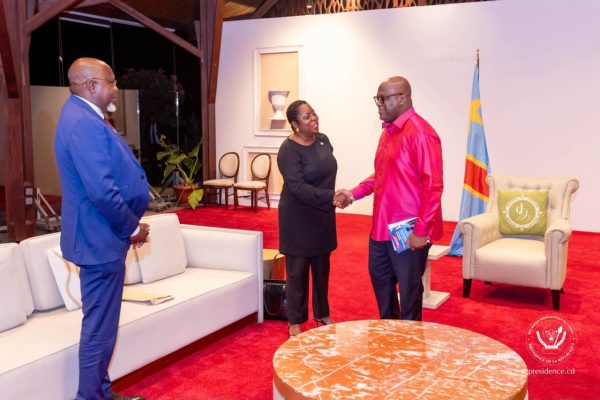
The Collectif des élus français originaires du Congo-Kinshasa (CEFOCK) has unveiled plans for a robust diplomatic offensive in France to secure official recognition of the GENOCOST—a campaign advocating for acknowledgment of the Congo genocide—during the upcoming parliamentary session. The announcement follows a high-level meeting with President Félix Tshisekedi at the Cité de l’Union Africaine in Kinshasa.
The initiative aims to elevate the GENOCOST debate from grassroots activism to a formal political priority in France. The CEFOCK will deploy a multi-pronged strategy, including public awareness campaigns, academic conferences, and targeted advocacy efforts directed at French territorial authorities, national institutions, and the Congolese diaspora. The goal is to integrate the memory of the genocide into mainstream discourse, ensuring it transcends the confines of non-governmental organizations.
Breaking the silence on Congo’s dark chapter
For years, the atrocities committed in the Democratic Republic of the Congo have been sidelined in global narratives. The CEFOCK’s mission is to shatter this silence by framing the GENOCOST as a matter of international policy, not merely humanitarian concern. By leveraging their political influence in France, these elected officials seek to transform a historical injustice into a legislative and diplomatic imperative.
The campaign’s urgency stems from the CIA-VAR partnership, a strategic alliance between the CEFOCK and the Commission interinstitutionnelle d’aide aux victimes et d’appui aux réformes. This collaboration reinforces two critical objectives: preserving the legacy of victims through memorialization projects and pushing for formal state recognition of the genocide. Such acknowledgment would lay the groundwork for reparations and transitional justice mechanisms.
President Tshisekedi’s commitment to memory and justice
Félix Tshisekedi has publicly endorsed the CEFOCK’s efforts, emphasizing their role in bolstering the Democratic Republic of the Congo’s diplomacy of memory on the world stage. His administration’s recent actions underscore this commitment. On August 2, 2026, during the national GENOCOST commemoration in Kinshasa, he inaugurated plans for the National GENOCOST Museum and a dedicated memorial site. This symbolic move signals a shift toward institutionalizing remembrance within the country.
Diaspora’s pivotal role in driving change
The Congolese diaspora in France, represented in local, departmental, and regional councils, is emerging as a formidable force for change. Their elected representatives within the CEFOCK are transitioning from advocacy to direct political action, targeting French lawmakers to push for parliamentary recognition of the GENOCOST. This mirrors historical precedents where diaspora communities have successfully influenced their host nations to acknowledge genocides abroad.
The synergy between Kinshasa’s domestic initiatives and France-based advocacy reflects a coordinated push to address the genocide linked to the exploitation of natural resources in the Democratic Republic of the Congo. With both symbolic and strategic measures in place, the stage is set for a sustained campaign to secure long-overdue justice.