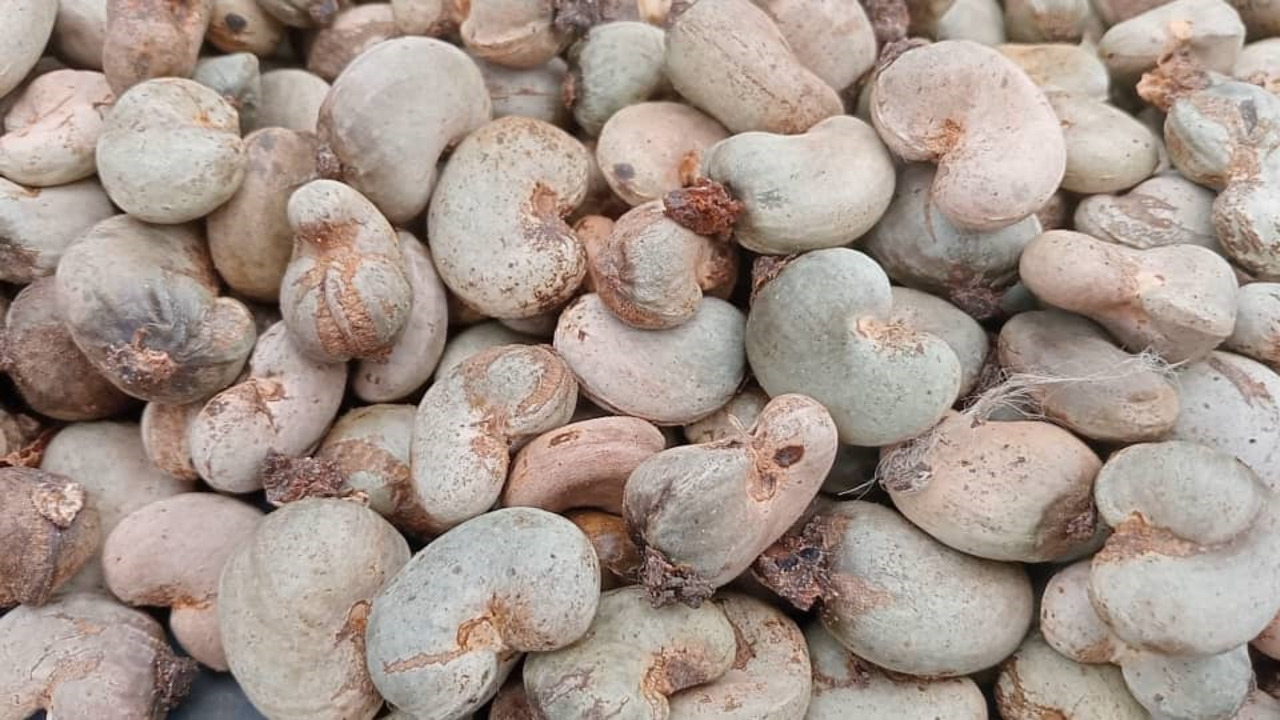
Côte d’Ivoire is currently in the peak of its anacardes marketing season, with the Cotton and Cashew Council projecting over 1.3 million tonnes this year. While this aligns with recent annual outputs, it marks a significant decline of 200,000 tonnes compared to 2025. The northern regions, particularly Bounkani in the northeast, are bearing the brunt of this downturn, where irregular rainfall patterns have severely disrupted cashew production.
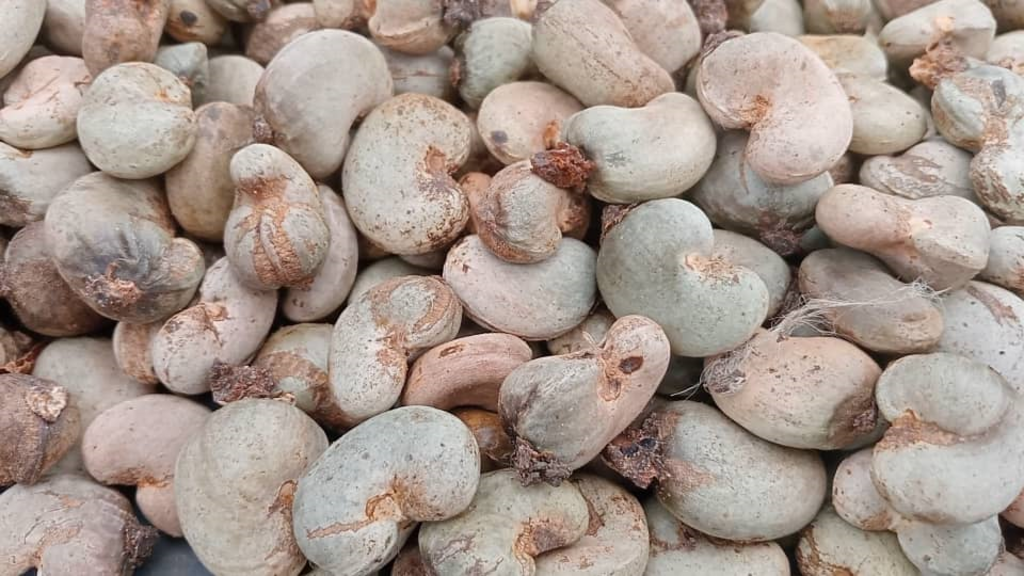
From Bouna, our on-the-ground correspondent reports
Kouamé Ouattara, a farmer near Bouna, faces an unexpected challenge this season: his 3-hectare cashew orchard has produced next to nothing. « Three years ago, I could harvest up to 500 kg per hectare. Now, I barely manage to gather two bags from the entire plot», he explains. The culprit, he believes, is the erratic rainfall. « Traditionally, heavy rains between November and December trigger flowering. This year, however, the rains stopped in October, leaving November, December, January, and February bone-dry. Once flowering fails, you have to wait another full year. The entire season is lost».
The consequences extend beyond nut production. Beekeepers maintaining hives near cashew plantations are also suffering. Koffi Ouattara, president of the Koflangué beekeepers’ association, notes a drastic drop in honey yields. « Last year, we harvested 100 liters. This season? Only 30 liters. For us, it’s a significant financial hit», he shares.
Farming practices need urgent review
Climate isn’t the only factor at play. Poor agricultural practices are exacerbating the crisis, according to Dr. Sibirina Soro, a researcher at Daloa University and coordinator of the national cashew research project. « Much of the issue stems from incorrect tree density in orchards. Many are overcrowded, resembling dense forests rather than productive plantations», he explains. « The recommended density is 100 trees per hectare. Rehabilitating these orchards is critical».
Dr. Soro also emphasizes the need for better pest management education. With Ivorian cashew farmers avoiding chemical pesticides, their orchards are more vulnerable to pest-related losses during poor harvest years. His team conducts annual training sessions to address these challenges, aiming to safeguard both livelihoods and the nation’s cashew industry.