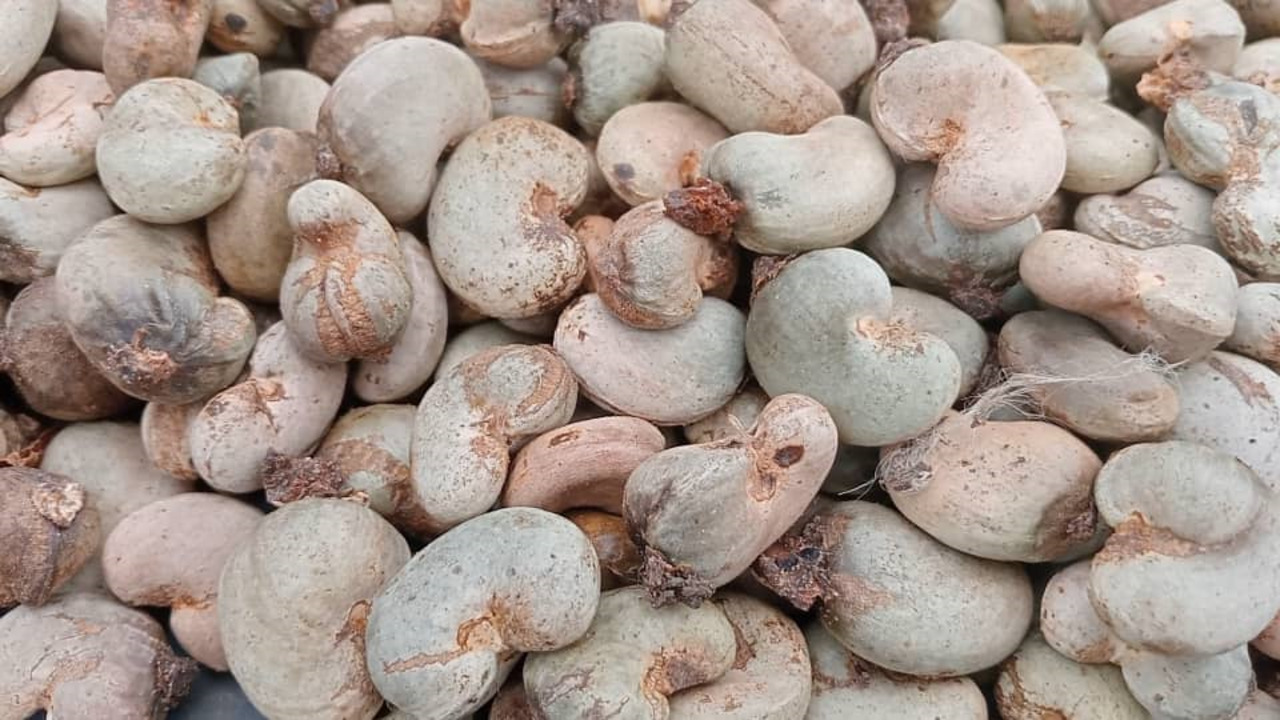
In Côte d’Ivoire, the cashew harvest season is in full swing, with the Cotton and Cashew Council projecting over 1.3 million tonnes this year. While overall production remains robust, this season’s output is expected to decline by 200,000 tonnes compared to last year. The Bounkani region in the northeast is particularly affected, facing significant challenges due to erratic rainfall patterns.
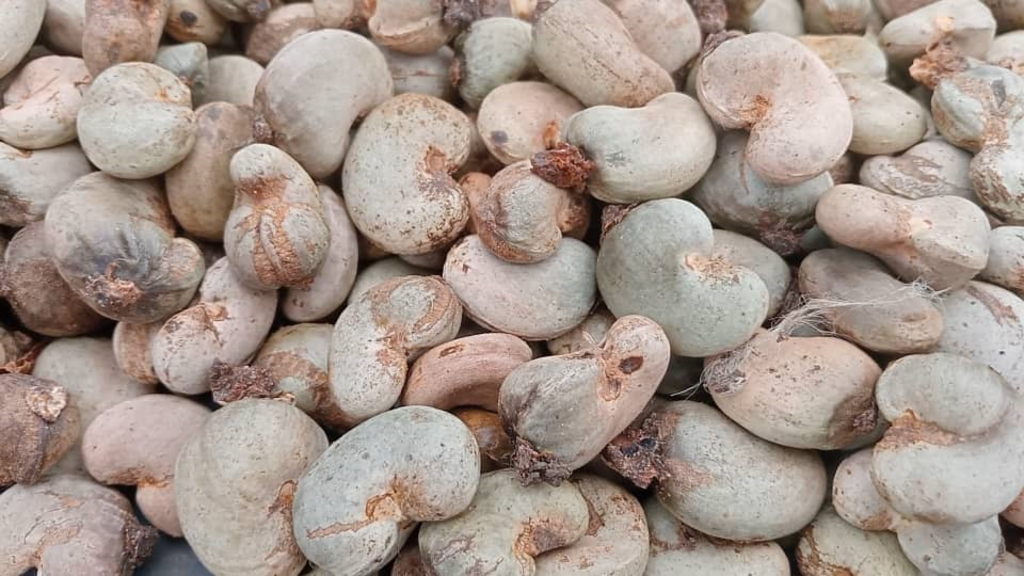
From our correspondent in Bouna,
Kouamé Ouattara, a cashew farmer with a 3-hectare plantation, describes this season as a technical unemployment period. His orchard yielded almost nothing. “Three years ago, I could harvest 500 kg per hectare. Now, I struggle to gather even two bags from the entire 3 hectares,” he explains. Ouattara attributes the decline to shifting rainy seasons. “Typically, heavy rains between November and December trigger flowering. This year, the rains stopped in October. From October through February, there was no rainfall at all. Once flowering fails, you have to wait until the next season. That’s why this harvest season has been a complete failure.”
The consequences extend beyond cashew farmers. Beekeepers maintaining hives in cashew plantations report near-zero honey production. Koffi Ouattara, president of the Koflangué beekeepers’ association, highlights the stark difference: “Last year, we harvested 100 litres of honey. This year, we only managed 30 litres. For us, this means significant losses.”
Farming practices need urgent review
Dr. Sibirina Soro, a researcher at Daloa University and national cashew research coordinator, points to poor farming practices as a major contributing factor. “The problem largely stems from orchard density. Many cashew plantations resemble forests because initial planting density was not respected,” he states. “Currently, we advise farmers to rehabilitate these orchards to achieve the recommended density of 100 trees per hectare.”
Soro also conducts annual training sessions to combat pest infestations. He emphasizes the need for better support for farmers, noting that Ivorian cashew producers avoid chemical pesticides, leaving them more vulnerable to total crop loss during poor seasons.