How Ivory Coast turns debt into investment for the next generation
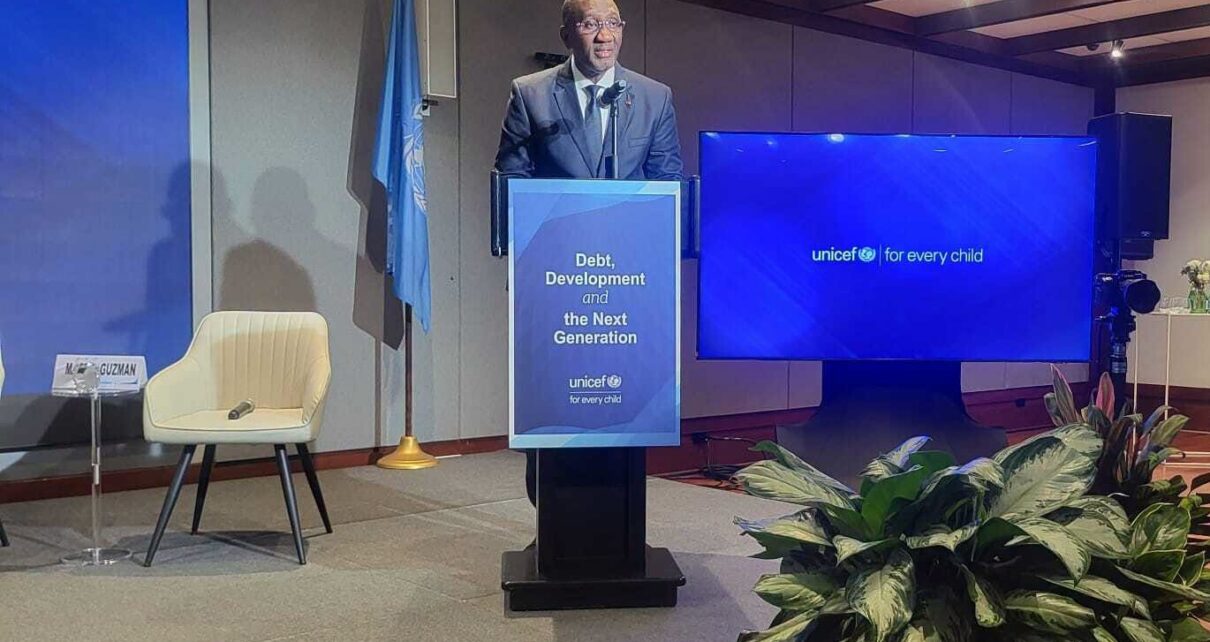
The Minister of Planning and Development, Dr. Souleymane Diarra-Souba, represented Côte d’Ivoire at two high-level UNICEF forums in New York on September 21-22, 2026, addressing the dual crises threatening children’s futures: unsustainable debt burdens and the transformative yet risky potential of artificial intelligence in education. His interventions showcased a daring financial strategy—linking debt sustainability with human capital development—to protect education budgets and unlock long-term economic resilience.
AI funding and debt: a balancing act for West African education systems
On September 21, the Minister joined the Learn AI Global Compact, an initiative convened by UNICEF with the theme ‘Responsible AI for Every Learner’. He highlighted Côte d’Ivoire’s groundbreaking approach to financing AI integration in schools through sustainability-linked sovereign debt—a first in West Africa.
In 2025, the country secured a €433.3 million loan whose repayment terms are directly tied to measurable outcomes in renewable energy adoption and forest restoration. The deal is co-guaranteed by the World Bank’s International Bank for Reconstruction and Development (IBRD) and the Multilateral Investment Guarantee Agency (MIGA), providing both financial stability and environmental accountability. The Ministry floated the concept of extending this mechanism to education by linking loan conditions to verified learning outcomes, a model currently under development with UNICEF and partners.
A sustainable education loan would require:
- Reliable, transparent national learning indicators
- A repayment timeline aligned with educational investment cycles
- Strict data protection for student records
- Clear roles for governments, educators, and partners in curriculum design and oversight
The 2026–2030 National Development Plan (PND) places digital transformation at the heart of education reform, with AI tools supporting personalized learning and administrative efficiency. Côte d’Ivoire has committed to collaborating with the Learn AI Global Compact to define verifiable learning benchmarks and pilot a sustainable financing framework that protects both educational quality and fiscal sustainability.
Debt’s human cost: Ivory Coast’s fight to safeguard children’s futures
The Minister returned to New York the following day for a critical UNICEF discussion on debt, development, and intergenerational equity. The backdrop is sobering: nearly 400 million children in low- and middle-income countries now live in nations where public debt is growing faster than investments in health, education, and nutrition—a trend pushing millions toward deeper poverty traps.
Dr. Diarra-Souba stressed that debt is not inherently harmful—its impact depends entirely on how it is structured, allocated, and managed. By 2026, Côte d’Ivoire had already redirected debt burdens into tangible social progress: a 2024 debt-for-development swap, supported by the World Bank Group, refinanced nearly €400 million in commercial debt, freeing up €330 million over five years for critical sectors—with education receiving priority funding through national budget mechanisms.
The PND 2026–2030 embeds these principles into policy, prioritizing:
- Maternal and child health improvements
- Universal health coverage expansion
- Social protection systems strengthening
- Raising the Human Capital Index through education and skills development
The government’s approach combines debt sustainability, fiscal prudence, and innovative financial instruments. This means negotiating longer maturities, locking in lower interest rates, and using countercyclical buffers to shield social spending during economic downturns. The ultimate goal: ensuring debt serves people, not the other way around.
From loans to legacy: building a debt-for-human-capital economy
Côte d’Ivoire’s model reframes sovereign debt as a tool for building resilient futures. By tying financial obligations to measurable social outcomes—whether through AI-enabled education metrics or verified learning progress—the country is pioneering a form of ‘debt with purpose’.
This shift requires coordination between finance ministries, education authorities, and international partners. It demands transparency in data and spending, rigorous impact assessment, and a commitment to long-term planning over short-term savings. It also acknowledges that AI, while promising, must be deployed responsibly—with safeguards for equity, privacy, and pedagogical integrity.
The lessons from New York are clear: in an era of spiraling debt and rapid technological change, Côte d’Ivoire is not just managing its obligations—it’s redefining what sovereign debt can achieve. For the 400 million children at risk, and the millions more in nations watching this experiment, the stakes could not be higher.
As Dr. Diarra-Souba concluded: “Human-centered debt is not debt erased—it is debt redeployed. It is a promise that every franc borrowed today will return tomorrow not as a liability, but as an investment in lives, livelihoods, and the future of our children.”