Challenge(s)
How can the operations of mobile vendors within the port area be sustained effectively while simultaneously guaranteeing optimal hygiene and safety standards for both customers and the vendors themselves?
Good practice
Recognizing the precarious and often hazardous working conditions faced by food vendors operating along the port road, and driven by a commitment to elevate food hygiene standards, the Port Autonome de Cotonou (PAC) initiated extensive consultations. These collaborative efforts culminated in the development of modern facilities, providing shelter from traffic and adverse weather. These new premises are fully equipped with access to running water and electricity. This proactive initiative by the Port Autonome de Cotonou exemplifies the commendable practices expected from a port authority dedicated to its social and environmental responsibilities towards local communities.
Case study
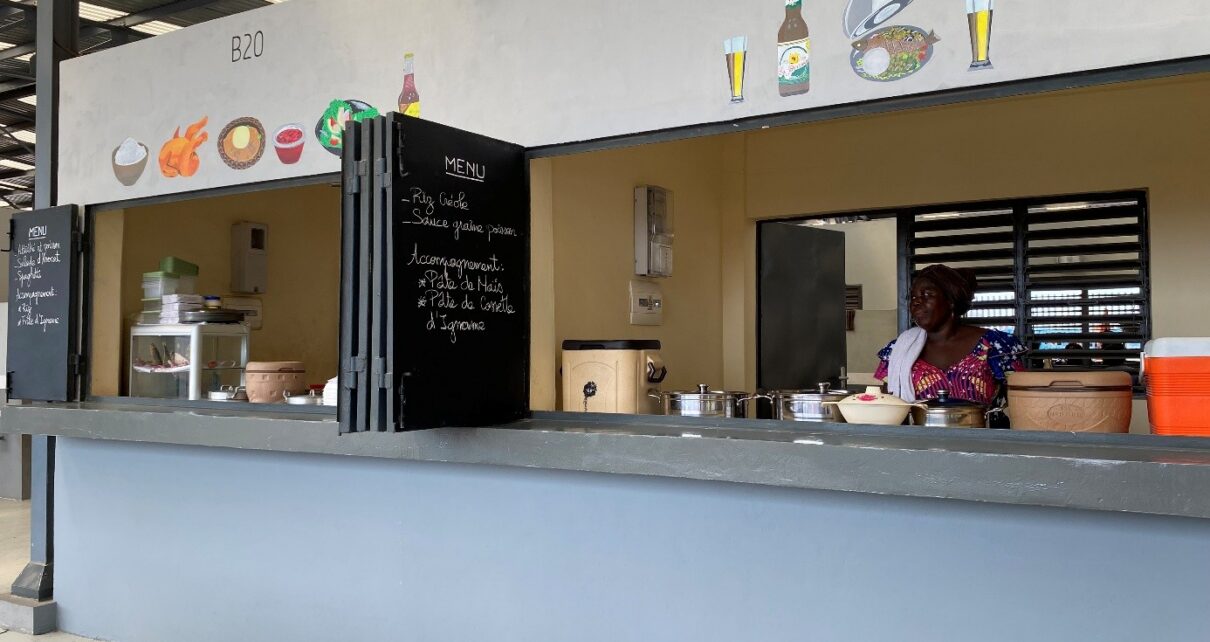
As part of its ongoing commitment to enhancing social and environmental initiatives, the Port Autonome de Cotonou (Bénin) has dedicated several years to modernizing its operations and implementing numerous programs benefiting adjacent communities. In 2024, PAC proudly unveiled a new, fully covered facility spanning over 3,000 square meters. This innovative space features individual sales stands, each equipped with cooking areas, running water, and electricity. Previously, the 98 women who operate the Port Autonome de Cotonou’s canteen were positioned along the roadside, exposed to traffic and harsh weather. They lacked the ability to cook or reheat meals on-site and had no access to proper sanitation. Now, these vendors benefit from clean, contemporary premises that foster improved working conditions, enabling them to serve port employees and other local residents with significantly higher hygiene standards. The enhanced security of these stands also empowers the vendors to maintain product inventories safely.
This transformative project represented an investment exceeding 600 million FCFA. Its success was underpinned by a comprehensive stakeholder consultation process. The initiative has not only significantly enhanced working conditions and provided financial stability to the beneficiaries through expanded customer access, but the new, centralized location has also cultivated an inclusive community environment. This is evident in the encouragement of a more diverse clientele, including senior executives and dockworkers, to patronize the facility. Furthermore, initial findings indicate that this relocation has led to a remarkable 20% surge in sales. Ongoing data collection efforts are now focused on quantifying additional positive impacts, such as a reduction in incidents and waste.