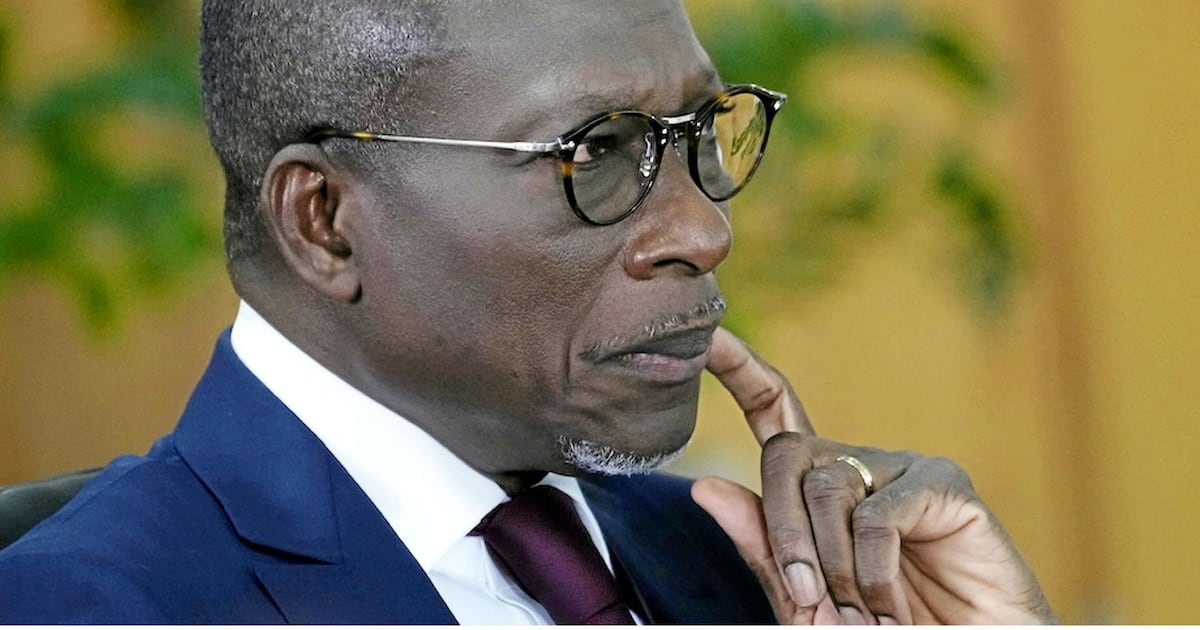
In a dramatic turn of events, Benin narrowly avoided a military coup that unfolded in the early hours of Sunday, December 7, 2025. A faction of mutinous soldiers briefly seized control of the national broadcaster, SRTB, in Cotonou, broadcasting a fabricated announcement claiming they had removed President Patrice Talon from power. The 67-year-old leader, set to conclude his decade-long presidency in April 2026, was swiftly moved to safety as loyalist forces reclaimed key installations across the country.
According to security sources, the insurgents first targeted the private residence of high-ranking officials in the Guézo district before advancing toward the presidential palace and the national television station. By midday, the economic capital was under heavy military surveillance, with helicopters patrolling the skies and armored vehicles patrolling key roads. The situation gradually stabilized as the day progressed.
This marked the first coup attempt in Benin since 1972, when Mathieu Kérékou forcibly took control of the government. In a televised address that evening, President Talon condemned the mutiny as an act of extreme treachery, vowing that those responsible would face justice. He also confirmed that some individuals remained held captive by fleeing insurgents, emphasizing the urgent need to secure the situation and protect civilians.
casualties and arrests follow violent clashes
The turmoil left at least one casualty: the wife of General Bertin Bada, Benin’s military chief of staff, was killed during an assault on their home in Abomey-Calavi. Their daughter was also injured in the crossfire. Security forces later reported the arrest of a dozen soldiers, including suspected ringleaders and a former army member, as investigations into the conspiracy deepened.
Interior Minister Alassane Seidou revealed that the mutiny was orchestrated by a small group seeking to destabilize the state. He praised the Beninese Armed Forces for their swift and decisive response, urging citizens to resume their daily activities despite the lingering tensions.
mutineers cite political grievances in broadcast declaration
In a recorded message aired during the takeover, the insurgents—led by Lieutenant-Colonel Pascal Tigri—announced the formation of a so-called Military Committee for Refoundation to oversee the country’s affairs. They declared Patrice Talon deposed, suspended the Constitution, and claimed control over all state powers. The group accused the government of suppressing democratic rights, citing controversial laws, forced exile of citizens, and arbitrary arrests as justification for their actions.
Foreign embassies reacted swiftly to the crisis. The U.S. and French embassies issued alerts to their nationals, warning of gunfire exchanges in the Guézo district. Meanwhile, loyalist forces launched a counteroffensive, retaking critical locations such as the presidential marina and the national television headquarters. Nigeria deployed fighter jets and ground troops to reinforce security, aiding in the recapture of a military camp seized by the mutineers.
digital disinformation fuels confusion in Cotonou
For hours, misinformation spread unchecked across social media platforms like TikTok, Facebook, and WhatsApp, exacerbating public anxiety. By afternoon, gunfire had subsided, and police units secured major intersections in downtown Cotonou. Residents described a climate of cautious uncertainty, with many still unclear about the events’ true nature or potential fallout.
The attempted coup has shattered Benin’s reputation as a bastion of stability in West Africa. Within weeks, the country has joined a growing list of African nations—including Niger, Burkina Faso, Mali, Guinea, and Guinea-Bissau—where democratic governments face military interference.
regional bodies condemn coup, deploy stabilizing forces
The African Union and ECOWAS swiftly condemned the mutiny, demanding an immediate end to hostilities and the restoration of constitutional order. AU Commission Chair Mahamoud Ali Youssouf called on all involved parties to cease illegal actions and return to their duties without delay. ECOWAS authorized the deployment of a regional standby force, comprising troops from Nigeria, Sierra Leone, Côte d’Ivoire, and Ghana, to support Benin’s government and military.
presidential transition overshadowed by instability
With Benin’s presidential election just months away, President Talon’s planned exit in April 2026 has been thrown into uncertainty. The current leader, a former businessman and cotton magnate in power since 2016, is constitutionally barred from seeking a third term. His ruling coalition, the Republican Bloc (BR) and UP-R, has already designated Finance Minister Romuald Wadagni as its successor—a move designed to preserve continuity in economic policies.
However, recent constitutional reforms extending presidential and legislative terms from five to seven years have sparked controversy. Critics argue the changes undermine democratic norms, particularly after the disqualification of the main opposition candidate. While term limits remain intact, the reforms have intensified political tensions ahead of the election.
Security threats also loom large, with northern Benin grappling with Al-Qaeda-linked jihadist attacks. In April 2025, 54 soldiers were killed in one such assault, underscoring the broader challenges facing the country.
As investigations into the mutiny continue, questions persist about its masterminds and deeper motives. Analysts suggest the plot may expose underlying fractures within Benin’s military and political elite, raising concerns about the nation’s stability in the lead-up to a pivotal election.