DRC peace talks: African mediation adopts new strategy for second half of 2026
- Security
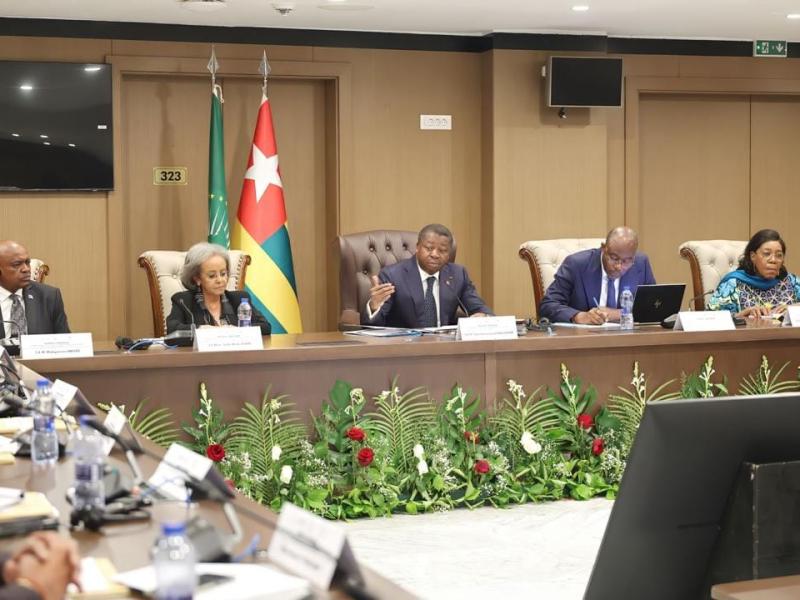
On Monday, June 8, 2026, in Lomé, the African Union’s mediation team for the Democratic Republic of the Congo (DRC) crisis convened a high-level meeting to assess progress made during the first half of the year and chart a course for the second half. The gathering, held over two days, brought together facilitators designated by the African Union alongside representatives from the United Nations, the East African Community (EAC), the Economic Community of Central African States (ECCAS), the Southern African Development Community (SADC), the International Conference on the Great Lakes Region (ICGLR), and the International Committee of the Red Cross (ICRC).
The primary objective was to evaluate the effectiveness of the mediation architecture established in Lomé on January 17, 2026, and to define strategic priorities for the remainder of the year. This framework aims to bolster the Washington and Doha processes, led respectively by the United States and Qatar, by strengthening African contributions to these initiatives.
Key decisions for enhanced peace efforts
Following intensive deliberations, the meeting adopted several critical measures to improve the mediation process’s efficiency. These include:
- Strengthened internal coordination: The Bureau of the Mediator, the Panel of Facilitators, the African Union Commission, and the Independent Joint Secretariat have been tasked with improving their collaboration to ensure seamless execution of the peace agenda.
- Structured African input: Participants emphasized the need to formalize and amplify Africa’s role in the Washington and Doha processes, enhancing ownership and implementation potential.
- Unified diplomatic front: All participating states and organizations were urged to reinforce cooperation, aligning their efforts with the mandates and responsibilities outlined in the Lomé mediation framework.
Immediate action items were also agreed upon, including the adjustment of the Facilitators’ work plans for the second half of 2026 and the development of an operational action plan within 15 days to detail implementation modalities.
“Guided by a renewed collective will and shared responsibility, participants committed to diligently implementing the decisions of this meeting, honoring their commitments, and working together to achieve lasting peace in the eastern DRC and the Great Lakes region,” stated the Togolese presidency in a concluding communiqué.
Background and context
This meeting follows a high-level gathering in Lomé on January 16-17, 2026, which established the mediation architecture for the DRC peace process. The initiative, spearheaded by Togolese Prime Minister Faure Essozimna Gnassingbé—designated by the African Union as the lead mediator—aimed to restore trust among parties, advance dialogue, and ensure adherence to peace commitments.
The mediation framework includes a support team from Togo, composed of the Ministry of Foreign Affairs and the Presidency, alongside five co-facilitators, all former African heads of state. These co-facilitators are assigned specific thematic responsibilities:
- Olusegun Obasanjo (Nigeria): Military and security matters
- Sahle-Work Zewde (Ethiopia): Humanitarian issues
- Uhuru Kenyatta (Kenya): Dialogue with local armed groups
- Mokgweetsi Masisi (Botswana): Regional economic cooperation
- Catherine Samba-Panza (Central African Republic): Civil society, reconciliation, and gender issues
The framework also features an Independent Joint Secretariat involving Togo, the African Union, the EAC, SADC, and the ICGLR, with the African Union Commission coordinating with international partners such as the United Nations, Qatar, the European Union, and the five permanent members of the UN Security Council.