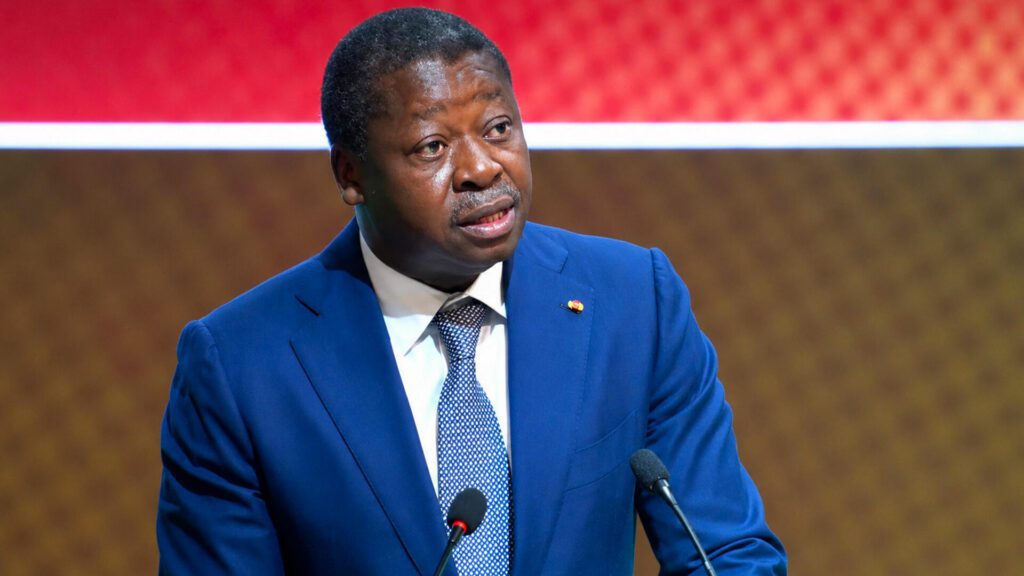
In a bold call to action at the Biashara Afrika 2026 forum in Lomé, Togolese President Faure Gnassingbé urged African nations and business leaders to move beyond declarations and turn the African Continental Free Trade Area (AfCFTA) into tangible benefits for citizens.
The three-day forum, co-hosted by Togo’s government and the AfCFTA Secretariat, brought together policymakers, investors, entrepreneurs, and development partners from across Africa. Speaking at the opening session, Gnassingbé emphasized urgency in translating political commitments into measurable economic outcomes. « Africa cannot afford to remain in the realm of visionary plans,» he stated. « The time has come to deliver results that improve lives across the continent. »
The event, focused on intra-African trade and investment, serves as a strategic platform to accelerate regional economic cooperation and strengthen supply chains. Gnassingbé highlighted Africa’s growing advantages: an enormous single market under the AfCFTA framework, abundant natural resources, a vibrant young workforce, and unified legal instruments designed to facilitate trade.
For sustainable progress, he called for stronger public policies, targeted infrastructure investments, and streamlined border processes to reduce trade frictions. « Economic integration is not a theoretical exercise,» he said. « It requires concrete actions—from improving customs efficiency to building logistics corridors that connect rather than divide. »
Togo’s leadership in regional integration was showcased as a model. The country’s deep-water port in Lomé and ongoing reforms to improve the business environment were cited as key drivers in attracting foreign direct investment and boosting trade flows. « Our goal is to make Togo a gateway not just for goods, but for opportunity across West Africa, » Gnassingbé noted.
Yet challenges persist. Non-tariff barriers, underdeveloped infrastructure, limited access to finance, and the marginalization of small and medium-sized enterprises continue to hinder cross-border commerce. These obstacles threaten to dilute the full potential of the AfCFTA, which aims to create a $3.4 trillion economic bloc.
As participants engage in high-level discussions and partnership negotiations, the forum is positioned to catalyze actionable solutions. The focus remains on fostering intra-African business alliances, mobilizing capital for high-impact projects, and designing policies that empower local producers—especially women and youth-led enterprises—to participate in regional value chains.
With Biashara Afrika 2026 serving as a catalyst, African leaders are signaling a renewed commitment to make economic integration more than a policy promise—it must become the engine of shared and sustainable growth for the continent.