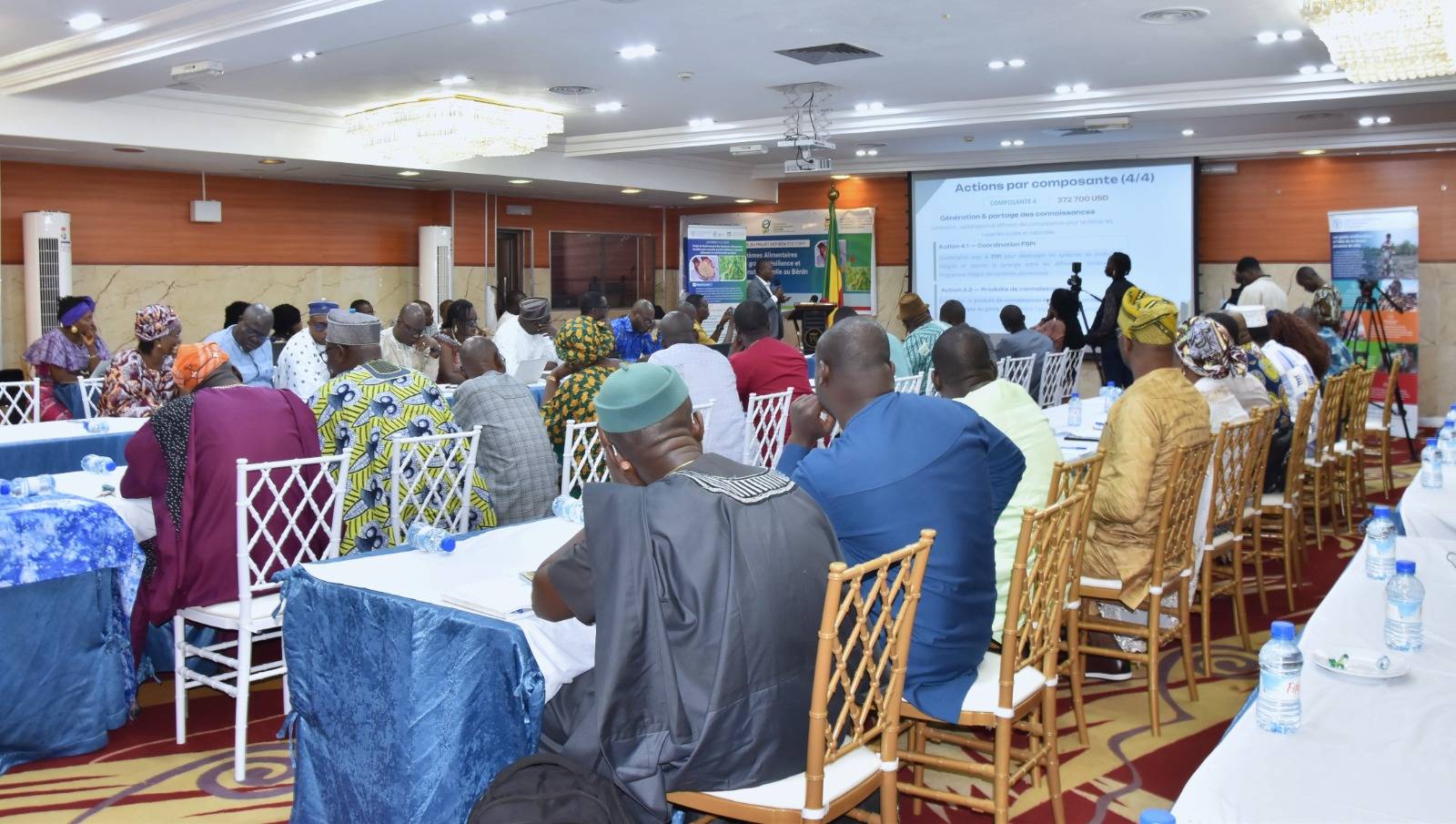
Bénin’s agricultural backbone faces an unprecedented crisis as degraded soils threaten both food security and economic stability. To counter this alarming trend, the government, in collaboration with international partners, has launched a transformative initiative: the Food Systems project. Officially inaugurated on July 24, 2026, this ambitious program commits over $20 million to revitalize degraded lands and revolutionize the nation’s rice and maize value chains by 2030.
Depleted soils: the silent threat to Bénin’s economy
Agriculture fuels Bénin’s economy, accounting for 70% of employment, 26% of GDP, and 80% of export earnings. Yet, this vital sector is under severe strain due to the relentless degradation of arable land. Speaking at the launch event held at the Bénin Royal Hotel in Cotonou, the Minister of Agriculture, Livestock, and Fisheries, Adin Yeton Bloukounon Goubalan, delivered a stark warning: soil fertility is plummeting, dragging down agricultural productivity and trapping rural communities in cycles of poverty.
« When soils lose their vitality, farming becomes a losing battle, pushing farmers deeper into precarity. This is not just an environmental issue—it’s an economic and social emergency. »
National data paints an equally grim picture. Over 5 million Béninois—nearly 40% of the population—are directly impacted by land degradation. Shockingly, 38% of the country’s land area is now classified as degraded, slashing agricultural yields by at least 50%. This crisis deprives rural communities of essential ecosystem services like clean water and nutritious food while deepening poverty risks.
Food Systems: a game-changing agricultural overhaul
The Food Systems project is not a quick fix—it’s a systemic transformation. Developed by the Bénin government with technical and financial backing from the Food and Agriculture Organization (FAO) and the Global Environment Facility (GEF), the initiative targets the root causes of agricultural decline.
The project’s core mission is threefold: modernize public agricultural policies, adopt sustainable farming techniques, and streamline market access. Its primary focus is on two staple crops—rice and maize—consumed widely across rural and urban areas. The goal? Shift these value chains from low-productivity, environmentally damaging models to high-performance, eco-friendly systems that deliver tangible socio-economic benefits.
A targeted investment with far-reaching goals
To achieve its vision, the project has secured a total budget of $20,766,207, funded through a tripartite partnership. The Global Environment Facility contributes $5,966,207, while the Bénin government provides $14,800,000 in national co-financing. Implementation will span five key communes: Karimama, Malanville, Glazoué, Kétou, and Les Aguégués, with activities running through 2030.
The anticipated outcomes are transformative:
- Restoration of 20,000 hectares of degraded land.
- Adoption of sustainable farming practices across 114,900 hectares.
- Direct benefits for 36,000 farmers, with an additional 356,000 people in targeted regions indirectly impacted.
Collaboration and caution: the pillars of success
While the project’s goals inspire hope, its leaders emphasize the need for precision and partnership. Minister Goubalan stressed the importance of rigorously evaluating soil restoration technologies before large-scale deployment, warning that ineffective methods could undermine the entire initiative.
For his part, the FAO Resident Representative in Bénin, Paul-Henri Zoéwindé Bouda, highlighted the human element: technology alone won’t suffice without full buy-in from farmers and stakeholders.
« This project’s success hinges on collective action. Without the active participation of every stakeholder—from policymakers to farmers—the best-laid plans will fall short. »
Building a resilient future
By addressing the core issue of soil degradation, the Food Systems project aims to secure Bénin’s food supply and set a regional benchmark for sustainable agriculture. If the 2030 targets are met, the country could not only stabilize its rice and maize production but also emerge as a model for ecological transition in West Africa.