Gabon : Bilie By Nze reste en détention
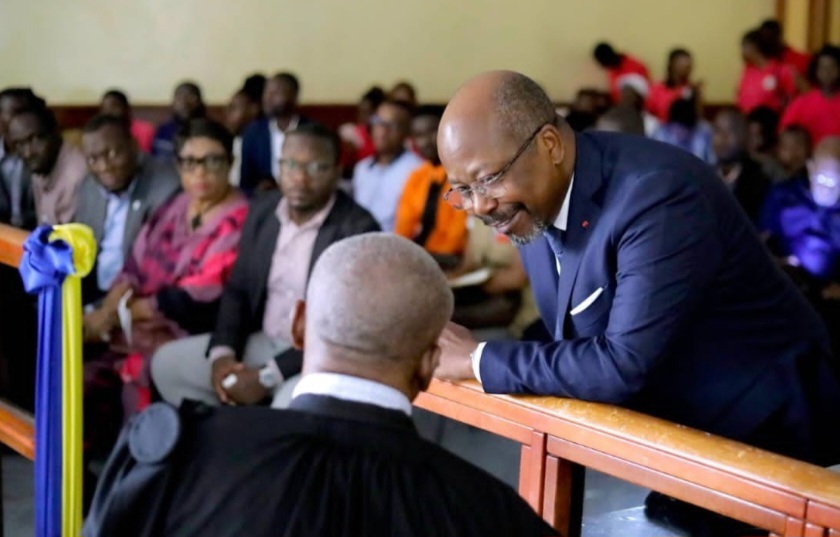
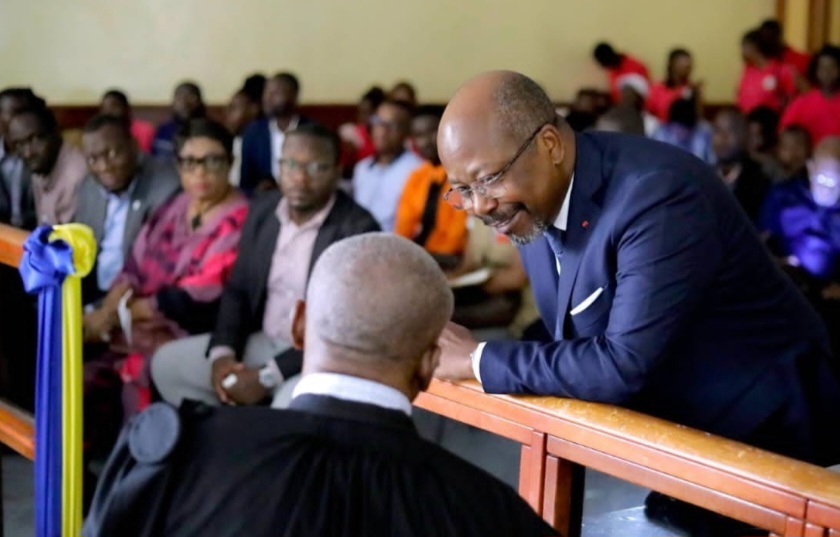
Libreville, Wednesday, June 3, 2026 – The continued detention of Alain-Claude Bilie By Nze, a former Gabonese Prime Minister and prominent opposition figure, is intensifying political tensions in Gabon. This situation brings into sharp focus the crucial issues of judicial independence and the adherence to proper criminal procedures within the nation.
On Tuesday, the Libreville Court of Appeal dismissed the defense’s request for nullification, thereby upholding his incarceration at the central prison, where he has been held since April 16, 2026. What appears to be a standard legal case is, in reality, revealing significant institutional challenges regarding the delicate balance between justice, politics, and the fundamental guarantees of a fair trial.
Contested procedures and claims of legal prescription
The former head of government is currently being prosecuted as part of an investigation into alleged acts of abuse of trust and fraud, dating back to 2008. His legal team contends that these offenses should have been legally prescribed since 2018, rendering the current proceedings without legal foundation.
The defense further asserts numerous procedural irregularities. They cite formal defects, dispute the criminal charges, and argue that the evidence in the case does not warrant such a prolonged deprivation of liberty. According to Me Arthur Vercken, one of Bilie By Nze’s counsels, this situation represents a serious infringement on the fundamental rights to a fair trial and Gabon’s international commitments concerning defense rights.
Lawyers also claim that following his arrest, Bilie By Nze was held for twenty-four hours without access to legal counsel before being placed under a committal order. This particular detail further fuels criticisms regarding the strict observance of judicial procedures.
A judicial matter under heightened political scrutiny
Beyond the legal arguments, this case unfolds within a charged political atmosphere where Alain-Claude Bilie By Nze holds a central position within the Gabonese opposition. Previously serving as Prime Minister under President Ali Bongo Ondimba, he is now recognized as one of the principal adversaries of the new administration led by Brice Clotaire Oligui Nguema, who was elected in 2025.
This political dimension lends a unique resonance to the ongoing proceedings, particularly as accusations of arbitrary detention and judicial irregularities are widely circulated among opposition circles and segments of the public. The case thus transcends its purely criminal scope, becoming a significant gauge of the perception of the rule of law in the post-electoral period.
When questioned on the matter during an interview, President Oligui Nguema distanced himself from the case, asserting that it falls exclusively within the purview of the judiciary. He underscored the principle of the separation of powers, stating his complete non-involvement in what he implicitly described as a strictly judicial affair.
A critical test for judicial independence and institutional stability
The Libreville Court of Appeal’s decision to reject the provisional release request and the nullification of procedure now subjects Gabonese justice to intense scrutiny, both domestically and internationally. The defense’s arguments, centered on prescription and alleged irregularities, are fueling a broader discourse on the transparency and rigor of judicial processes in politically sensitive cases.
In such high-profile matters, the core issue extends beyond mere guilt or innocence; it encompasses the robustness of the institutions entrusted with upholding the law. The public perception of an independent judiciary, capable of rendering decisions free from political influence, becomes paramount for the state’s overall credibility.
This affair serves as a crucial indicator. It highlights the constant tension between the demand for accountability, the respect for fundamental rights, and the imperative of political stability. In a nation undergoing institutional restructuring, every judicial decision involving a major political figure is meticulously examined as a test of its democratic maturity.
Therefore, beyond the specific circumstances of Bilie By Nze’s case, the capacity of the Gabonese judicial system to ensure fair, transparent, and internationally compliant treatment is under question. This represents a delicate equation, the outcome of which will undoubtedly influence the trust between institutions and citizens.