Gabon’s bold pledge to achieve food self-sufficiency has sparked fresh debate after the announcement of a major poultry venture by Guinean agribusiness giant SONOCO. The company plans to produce over 15 million broilers annually, positioning itself as a solution to the country’s heavy reliance on imported poultry. Yet this foreign-led initiative has reignited longstanding questions about why local enterprises that have already invested millions in Gabon’s agricultural sector remain overlooked by policymakers.
The arrival of SONOCO underscores Gabon’s urgent need to boost domestic food production. Despite importing a significant share of its food, the nation’s leadership has made food sovereignty a cornerstone of its economic strategy. While foreign investment undoubtedly accelerates progress, critics argue that Gabon’s own entrepreneurs—who have taken substantial risks to develop the poultry sector—deserve greater recognition and support.
SOGADA: Gabon’s forgotten agri-industrial champion
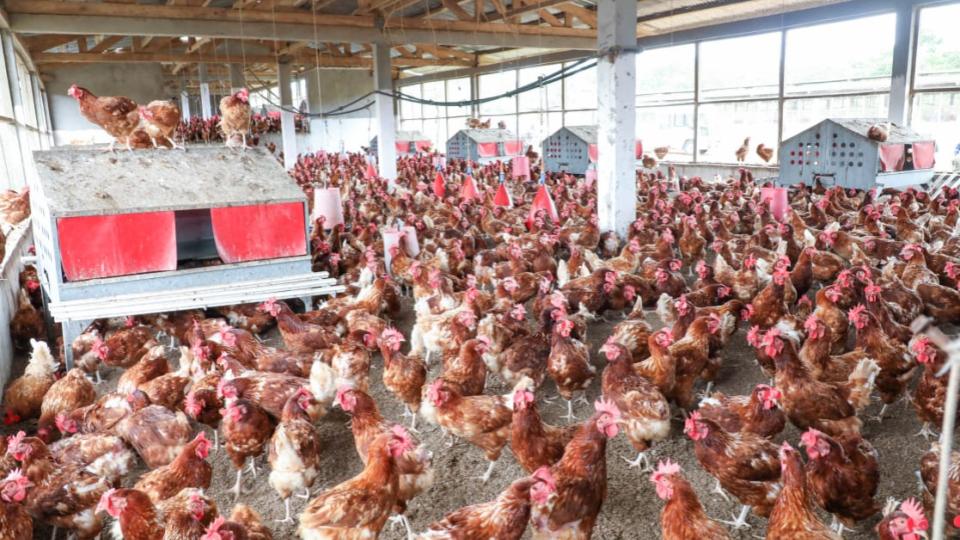
SOGADA—the Société Gabonaise de Développement Agricole—has operated in Meyang, just 50 kilometers from Libreville, for over a decade. Founded in 2013 with entirely private Gabonese capital, the company spans 160 hectares and has injected nearly 16 billion CFA francs into the economy. Unlike recent foreign-backed projects, SOGADA isn’t a promise; it’s a reality. Its integrated agro-industrial complex includes poultry farming, egg production, pig rearing, local crop processing, and even an industrial unit for egg-packaging materials. In essence, it embodies the kind of value-chain approach authorities now advocate.
Actions speak louder than announcements
SOGADA’s greatest strength lies in its track record. It has already contributed to Gabon’s efforts to reduce food imports, employing hundreds of locals, paying taxes, and bolstering food security. Yet its achievements remain largely uncelebrated, raising concerns about the government’s commitment to nurturing homegrown enterprise. Why, critics ask, are foreign investors given preferential visibility while Gabonese pioneers—who bet on the sector long before it gained strategic importance—are sidelined? A coherent economic sovereignty policy should prioritize those who have already demonstrated their dedication.
The myth of economic sovereignty
This debate transcends poultry farming. It challenges Gabon’s broader development vision. Nations that have successfully transformed their economies—such as South Korea, Morocco, and Rwanda—did so by fostering local champions, not by sidelining them. These countries provided state support to homegrown businesses, enabling them to grow into national powerhouses. Gabon’s challenge is to adopt the same logic. Why do foreign ventures sometimes receive more institutional backing than domestic operators who have invested years of effort and resources into building Gabon’s agricultural future?
The true test of strategic governance
No one disputes the value of SONOCO’s project. If realized, it could slash poultry imports and create thousands of jobs. But the real issue isn’t foreign participation—it’s whether Gabon is building true economic sovereignty or merely hosting producers under its flag. Economic sovereignty isn’t just about where goods are made; it’s about a nation’s ability to nurture, finance, and protect its own entrepreneurs. A country that fails to support those who invest their own capital domestically will inevitably import not just products, but its own development.
A question for Gabon’s leaders
The SONOCO announcement forces an unavoidable question: If food sovereignty is a national priority, why aren’t Gabonese investors—who have already proven their capacity to develop strategic sectors—placed at the heart of this ambition? SOGADA isn’t just an agricultural company; it’s proof that Gabon has entrepreneurs capable of massive investment, risk-taking, and building entire industries. The real question isn’t why SONOCO is coming to Gabon. It’s why those who have already delivered results wait in the wings, hoping for the recognition they deserve. A credible food sovereignty strategy isn’t built against foreign investment—it starts by trusting the nation’s own builders.