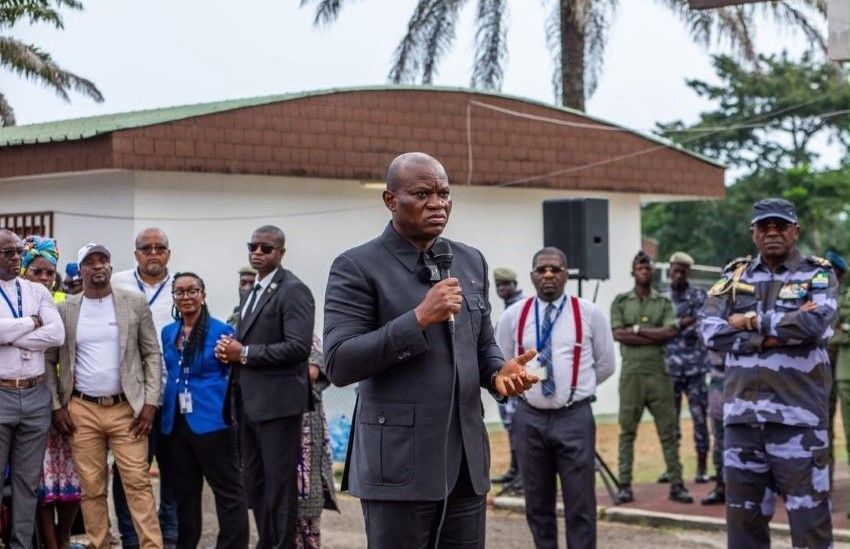
Libreville, Tuesday 30 June 2026 – Faced with a company that has become a symbol of difficulties in accessing drinking water and electricity in Gabon, Brice Clotaire Oligui Nguema chose a rarely used approach to handling major public crises. Instead of communicating from a distance or through administrative statements, the head of state went directly to meet the employees of the Société d’Énergie et d’Eau du Gabon (SEEG).
For nearly three hours, at the Jean Violas training centre in Owendo, he listened, questioned, reframed and set a direction. This move marks a new phase in handling a file that has become highly strategic for the country’s economic and social future.
The meeting, held on Monday at the employees’ own request, comes amid growing public frustration over SEEG service quality over the past several years. Frequent blackouts, water supply problems, aging infrastructure and questions about corporate governance have gradually made energy issues central to national debate.
Beyond simple institutional exchange, this presidential initiative reflects a desire to restore direct dialogue between decision‑makers and field actors in order to identify the root causes of failures and speed up solutions.
An open discussion about SEEG’s challenges
The exchanges allowed employees to candidly present the realities they face daily. Long‑standing dysfunctions, organisational difficulties, technical constraints and managerial shortcomings were addressed frankly.
According to information from the meeting, the workers themselves acknowledged that sustainable recovery of the company cannot be achieved without collective self‑examination. They stressed the need for a general mobilisation, deep changes in management practices and stronger commitment at every responsibility level.
This internal recognition of difficulties is significant. It shows that the debate now goes beyond just investment or infrastructure issues. The problem also concerns governance, work organisation and a culture of performance within the company.
For many observers, this moment marks a break from a logic where responsibilities were often shifted solely to the state or technical constraints. It opens the way to a more comprehensive recovery approach.
Governance at the heart of reform
Taking note of the observations made, the president placed governance at the centre of his remarks. His message was clear: no reform can produce lasting results without rigour, transparency, accountability and a sense of the common good.
Through this stance, the head of state reminded that modernising SEEG does not depend only on financial investment or infrastructure projects. It also rests on management quality and the ability of leaders to fully assume their responsibilities.
This demand for accountability comes at a time when authorities are multiplying reforms aimed at strengthening public service efficiency. For SEEG, it aims to rebuild trust between the company and users, which has been severely shaken by accumulated difficulties. The stated goal is to foster a company more focused on performance, service quality and citizen satisfaction.
Water and electricity as pillars of development
During the meeting, Brice Clotaire Oligui Nguema stressed the fundamental nature of access to drinking water and electricity. For him, these services are not merely technical management issues. They are essential levers for economic development, public health, education and improved living conditions.
This vision explains the special attention given to the energy file since the start of the Transition and after the presidential election. Authorities now consider water and electricity as key determinants of national competitiveness and the well‑being of the population.
The visit to the workshops of the Jean Violas training centre also allowed the head of state to assess the capacities of this facility, which is set to play a major role in strengthening technical skills. Human resources training now appears as one of the pillars of the desired transformation.
At the end of the discussions, employees reaffirmed their willingness to actively participate in this recovery dynamic. Their commitment aligns with that of the authorities in a shared ambition: to bring about a modernised SEEG capable of providing reliable service and meeting the growing expectations of Gabonese citizens.
In a country where energy challenges condition much of the growth outlook, this meeting goes well beyond the social framework. It symbolises a strong conviction of the executive branch. The most complex crises are not solved solely by administrative decisions. They also require listening, shared responsibility and collective mobilisation around the general interest. This is precisely the message the president chose to convey by placing dialogue at the heart of SEEG’s transformation.