Gabon’s new era of accountability and democratic renewal
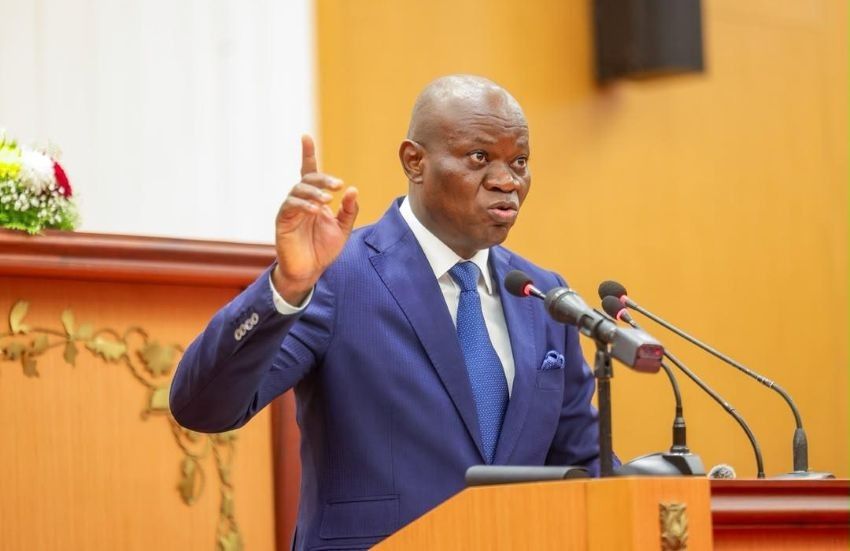
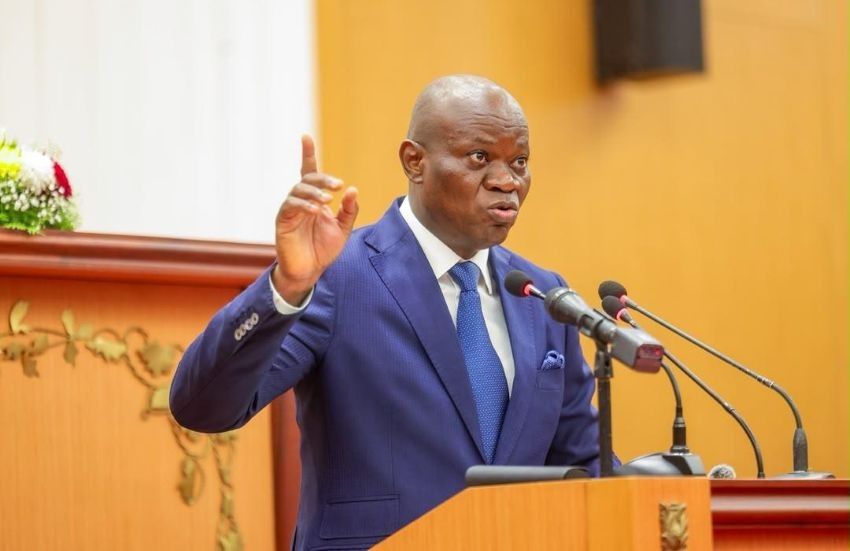
Libreville, Tuesday, June 16, 2026 — The political landscape of Gabon witnessed a historic shift on June 15, 2026, when President Brice Clotaire Oligui Nguema delivered the nation’s first State of the Union address before a joint session of Parliament at the Léon Mba Palace. This unprecedented constitutional requirement marks the beginning of a new era of governance built on accountability, transparency, and democratic consolidation.
For decades, Gabon’s political culture operated under a hierarchical model where executive decisions flowed downward without systematic parliamentary oversight. The introduction of this annual congressional address fundamentally alters that dynamic, embedding the legislature at the core of national governance. No longer confined to ceremonial roles, lawmakers now serve as active participants in evaluating executive performance and shaping the nation’s future.
Institutional innovation reshapes governance
The centerpiece of Gabon’s Fifth Republic is the constitutional mandate for an annual State of the Nation Congress, as outlined in Article 59 of the constitution following the Inclusive National Dialogue. This provision transforms the presidential address from a symbolic gesture into a binding institutional commitment, where the head of state must annually present achievements and future plans to elected representatives.
This innovation reflects a broader trend in modern governance, where legitimacy derives not merely from electoral mandates but from sustained transparency and responsiveness. The decision to hold the address at the Léon Mba Palace—historically secondary to the Presidential Palace—sends a powerful signal: power is no longer concentrated in a single location but distributed across institutions designed to check and balance one another.
A transformative agenda takes shape
President Oligui Nguema outlined a sweeping vision for national reconstruction, emphasizing three pillars: state restoration, economic modernization, and social progress. Since assuming office in August 2023, his administration has spearheaded initiatives with measurable impact.
The social sector saw significant advances, including the creation of a fourth CNAMGS fund targeting informal workers, the construction of 3,100 social housing units for civil servants, and the disbursement of 35 billion CFA francs in delayed public sector salary arrears. Additionally, the government reimbursed 10 billion CFA francs to postal savings account holders, addressing long-standing grievances of financial exclusion.
Administrative reforms also gained momentum, with over 60,000 cases of irregular statuses regularized and 22,000 private-sector jobs created—a clear effort to restore public trust in institutions and stimulate inclusive growth.
Economic sovereignty drives strategic investments
Economic policy centered on reclaiming national control over key sectors. The government successfully repurchased strategic oil assets, including shares in Assala and Tullow Oil, while accelerating exploration through new drilling initiatives. In transportation, the expansion of Fly Gabon, acquisition of urban buses, and rehabilitation of the railway network signal a comprehensive infrastructure overhaul aimed at connecting regions and boosting mobility.
Rebuilding trust through structural reforms
Beyond immediate gains, the address signaled a deeper commitment to structural transformation. Reforms in water and electricity sectors target chronic inefficiencies that have long burdened households. Youth empowerment programs, such as the Taxi Gab initiative, and the strengthening of Gabonese diplomacy reflect a holistic strategy to reposition the nation on the continental stage.
This inaugural State of the Nation Congress arrives at a pivotal moment, as African states increasingly prioritize institutional resilience alongside development imperatives. By institutionalizing annual accountability, Gabon is pioneering a model rarely seen on the continent—one where democracy is not just declared but practiced through consistent, measurable engagement.
The true measure of success will not lie in the eloquence of the speech, but in the durability of this new practice. A democracy endures not through promises, but through the regularity of public accounting and the tangible outcomes of governance. In Libreville on June 15, 2026, President Oligui Nguema did more than deliver a report—he inaugurated a republican ritual destined to define the soul of the Fifth Republic. The challenge ahead is clear: to prove that Gabon’s democratic renewal is not a fleeting transition, but a permanent covenant between state and citizen.