Gabon’s rising role in shaping the future of the Francophonie
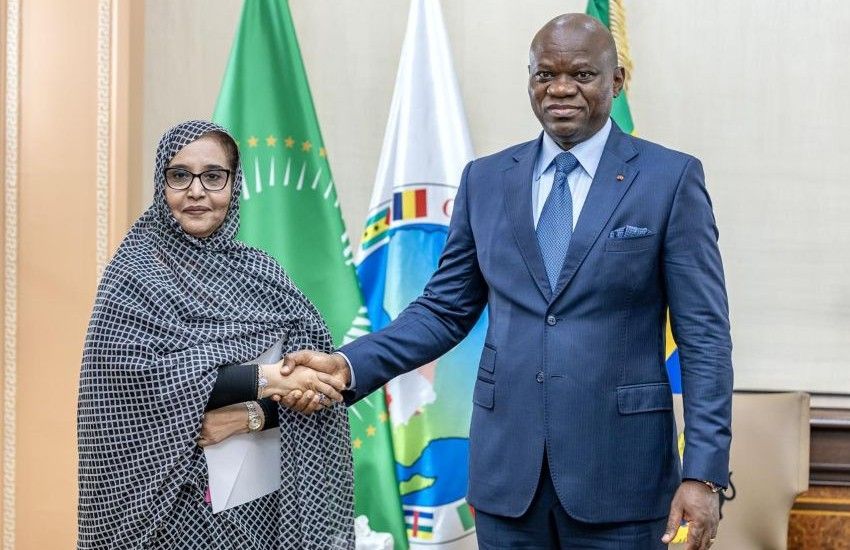
Libreville, Monday, June 22, 2026 — The leadership race at the International Organisation of La Francophonie is no longer just a contest between Paris and Montreal. Today, it’s playing out in Nouakchott, Libreville, and other African capitals that are determined to reshape the future of an alliance spanning nearly 90 nations.
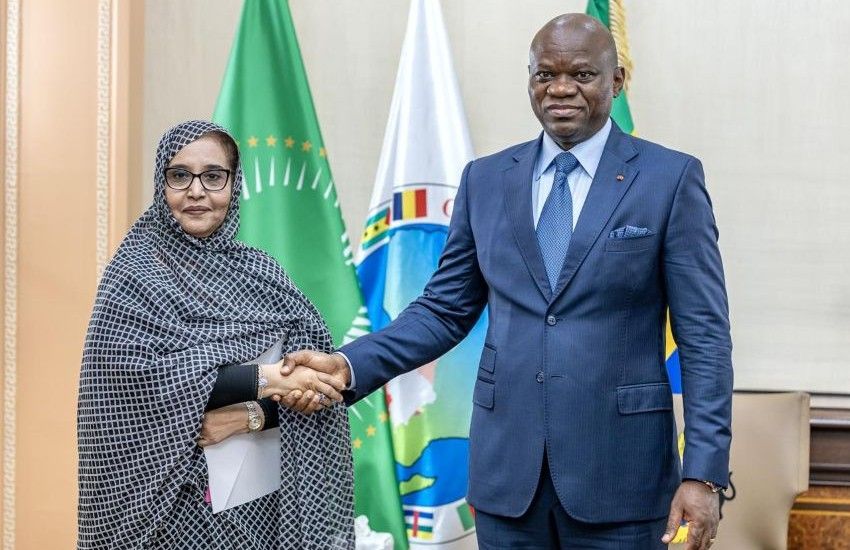
The high-profile visit to Libreville by Messouda Baham Mohamed Laghdaf, Mauritania’s Minister of Environment and Sustainable Development, bearing a personal message from President Mohamed Ould Cheikh El Ghazouani for her counterpart Brice Clotaire Oligui Nguema, serves as a telling example of this shift.
While the meeting carried clear diplomatic protocol significance, it also unfolded against the backdrop of two strategic agendas. On one side, Mauritania’s ambition to strengthen ties with Gabon. On the other, a carefully orchestrated campaign for the next Francophonie leadership.
Mauritania’s strategic move
During talks with Gabon’s head of state, the Mauritanian envoy formally presented the candidacy of Dr. Koumba Ba for the post of Secretary-General of the Organisation Internationale de la Francophonie (OIF). This bid rests on three core pillars: coherence, balance, and direct utility for member states. A vision designed to address a growing question within the Francophone community: What should the organisation’s true purpose be in the 21st century?
Once regarded primarily as an instrument of cultural and linguistic influence, the OIF now faces pressing new challenges. Digital transformation, youth education, economic growth, food security, climate action, artificial intelligence, and technological sovereignty have become top priorities for member nations.
For Mauritania, the goal is clear: to champion a Francophonie that prioritises tangible outcomes over institutional symbolism.
Gabon’s growing diplomatic influence
Mauritania’s initiative is far from random. It arrives at a time when Gabon is steadily regaining its diplomatic footprint across the African continent.
Since assuming office, Brice Clotaire Oligui Nguema has launched multiple efforts to reposition Libreville as a key player in dialogue, consensus-building, and regional cooperation. This diplomatic strategy has elevated Gabon’s standing as a sought-after partner in key continental matters.
At this meeting, the Gabonese President reaffirmed his commitment to inclusive governance and consensus-driven solutions. A stance that aligns perfectly with the image Libreville aims to project on both African and international stages.
Beyond the OIF question, the encounter underscores both nations’ desire to deepen bilateral ties in critical areas such as environmental sustainability, sustainable development, education, and economic exchanges.
A new African vision for the Francophonie
The stakes of this moment extend far beyond Gabon-Mauritania relations.
Today, over 60% of French speakers worldwide reside in Africa, a figure projected to rise to nearly 85% by 2050. This demographic reality is fundamentally altering historical power balances. It is pushing several African states to demand greater representation in decision-making bodies and a realignment of the organisation’s priorities.
The candidacy backed by Nouakchott reflects this wave of African ownership. It signals a desire to see a Francophonie that is more responsive to the needs of its people, capable of driving economic growth, fostering innovation, empowering youth, and strengthening inter-state collaboration.
The meeting between Brice Clotaire Oligui Nguema and Mauritania’s special envoy was never just a routine diplomatic exchange. It reveals a quiet but significant reshaping of power dynamics within the Francophone sphere.
Through this candidacy, Mauritania sends a bold message: the Francophonie of tomorrow cannot be shaped without Africa. Meanwhile, Gabon’s role in hosting this initiative—and its ongoing diplomacy of dialogue—confirms its ambition to play a leading part in defining the continent’s new cooperative frameworks.
In this subtle yet intense power struggle, the question is no longer whether Africa should shape the Francophonie. The real question is which Africa will write its next chapter.