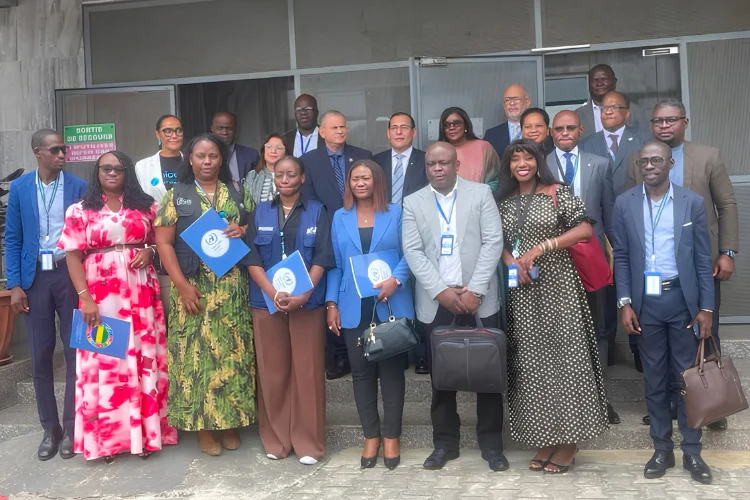
In a first since taking office in January, Fatou Aminata Lo, the resident coordinator of the United Nations System in Gabon, met with journalists yesterday at the UN common house. Beyond presenting the 2025 activity report, the meeting sought to strengthen strategic partnership and involve the media in the path toward the Sustainable Development Goals (SDGs) and the upcoming 2028-2032 framework.
Flanked by agency heads, she underscored the meaning of this commitment: “Our contribution is not measured solely by the number of projects completed; it is also measured by our ability to bring stakeholders together and support the transformation of public policies into concrete results for populations.”
Breaking down the 2025 funding: where the money went
In 2025, a total envelope of 10.5 billion CFA francs (18.5 million dollars) was mobilized through 21 entities and nearly 300 staff members (70% of whom are nationals). The management focused on three priorities: promoting good governance and human rights, transitioning to a green and blue economy, and ensuring equal opportunities and social inclusion.
Journalists push back: concerns over real impact
During the exchange, reporters raised concrete worries, particularly about the true role of the UN System and clarifications on the direct impact of these programs amid the socio-economic emergencies facing the population.
It was a frank discussion that laid the groundwork for closer, more transparent collaboration.
What comes next: shaping the 2028-2032 framework
The meeting also marked the beginning of a broader conversation about the future. With the current cooperation cycle winding down, the UN System is already looking ahead to the 2028-2032 framework. The goal is to build on the lessons of 2025 and ensure that upcoming programs are even more responsive to Gabon’s needs. Media engagement is seen as key to keeping the public informed and holding all parties accountable.
As the debate over the effectiveness of international aid continues, the UN’s push for transparency in Gabon could serve as a test case for how development partners communicate their work in an era of heightened scrutiny.