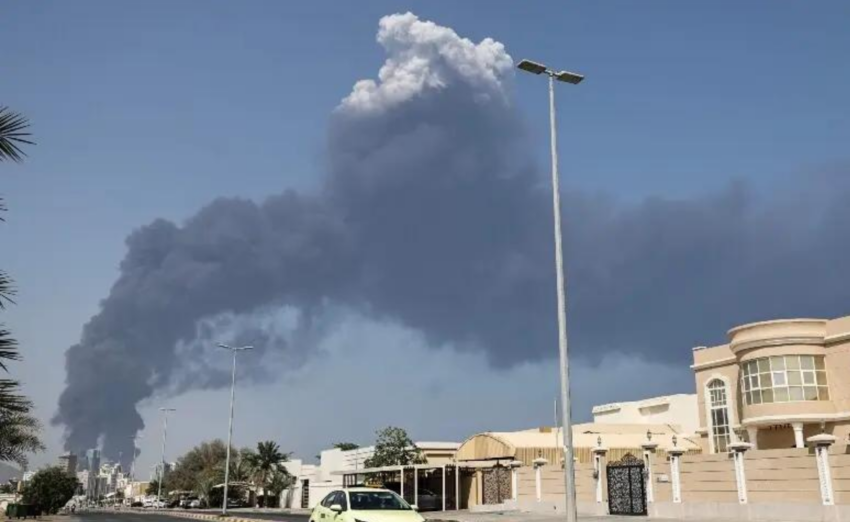
Escalation in the Gulf: Iranian strikes threaten regional stability and global economy
The already volatile relationship between Iran and the United States has reached a critical juncture, with Tehran launching targeted missile strikes on key US military installations in Bahrain and Kuwait. These attacks mark a dangerous escalation in the long-standing tensions between the two nations, raising immediate concerns about regional security and the broader economic repercussions across the Gulf region.
The recent strikes, which occurred on November 18, 2026, targeted strategic military infrastructure used by US forces. The Iranian operations included attacks on the Ali Al Salem Air Base in Kuwait and multiple installations in Bahrain, including the Sheikh Isa base, which houses advanced military equipment. While both countries reported intercepting hostile drones, the full extent of the damage remains under assessment, leaving analysts and policymakers on edge.
The timing of these strikes coincides with a broader pattern of tit-for-tat military actions in the region, where Washington and Tehran have increasingly engaged in direct confrontations. This latest round of violence underscores the fragility of the current standoff and the high stakes involved for the international community.
Why Bahrain and Kuwait are critical flashpoints in the Iran-US conflict
The Kingdom of Bahrain holds strategic significance in the Middle East due to its role as the operational headquarters of the US Navy’s Fifth Fleet. This fleet is responsible for safeguarding maritime security across the Persian Gulf, the Gulf of Oman, and surrounding waters. The recent attacks on Bahraini soil—including a reported strike on a military radar system—have intensified concerns about the vulnerability of US assets in the region.
Meanwhile, Kuwait’s Ali Al Salem Air Base serves as a critical logistical hub for American military operations in the Middle East. The interception of hostile drones by Kuwaiti air defense systems during the strikes highlights the growing pressure on regional defenses and the escalating risks of broader conflict.
Despite widespread speculation, there is no independent confirmation that the Fifth Fleet’s headquarters in Bahrain was directly hit or destroyed. However, the attacks have already provoked fears of a wider military confrontation, with regional governments now facing the dual challenge of protecting their territories while avoiding entanglement in the US-Iran standoff.
Immediate security threats for Gulf nations
- Direct military risks: The targeting of military installations in Bahrain and Kuwait places these nations directly in the crosshairs of regional tensions. The proximity of these strikes to densely populated areas raises concerns about civilian casualties and collateral damage.
- Cyber and hybrid threats: In addition to physical attacks, the cyber domain has become a battleground, with reports of disruptions to critical infrastructure and military communication systems.
- Regional spillover: The risk of miscalculations or accidental escalations has never been higher, with neighboring countries like Saudi Arabia, Qatar, and the UAE closely monitoring the situation.
Economic fallout: How the Gulf crisis threatens global energy markets
The Persian Gulf is a vital artery for global energy supplies, with the Strait of Hormuz serving as a chokepoint for nearly 20% of the world’s oil and gas exports. Any prolonged disruption to maritime traffic in this region could send shockwaves through international markets, driving up fuel prices and destabilizing economies dependent on affordable energy.
The recent attacks have already sparked volatility in oil prices, with futures markets reacting to the heightened geopolitical risks. Shipping companies are rerouting vessels to avoid potential threats, increasing transit times and costs. For nations reliant on Gulf oil, this could mean higher import bills, inflationary pressures, and slower economic growth.
Beyond oil, the Gulf region is a major hub for petrochemicals, shipping, and trade. A sustained conflict could disrupt supply chains, leading to shortages of essential goods and further economic instability. The global implications of a prolonged crisis are difficult to overstate, given the interconnected nature of today’s economy.
Diplomatic deadlock: Can the US and Iran de-escalate the crisis?
The cycle of retaliation between Washington and Tehran shows no signs of abating. Each military strike is met with a counter-response, creating a dangerous feedback loop that risks spiraling out of control. For now, diplomatic channels remain the most viable avenue for de-escalation, but the latest attacks have severely undermined trust between the two sides.
Countries like Oman and Qatar have historically played a mediating role, leveraging their neutral positions to facilitate dialogue. However, the effectiveness of these efforts hinges on both the US and Iran demonstrating restraint—a prospect that appears increasingly unlikely given the current trajectory.
The stakes are particularly high for smaller Gulf states, which must balance their strategic alliances with Washington against the risks of direct confrontation with Iran. Failure to contain the crisis could force these nations into uncomfortable positions, potentially resetting the balance of power in the region.
What’s next for the Gulf region?
The coming days and weeks will be decisive in determining whether this latest escalation leads to a broader conflict or if cooler heads prevail. The international community is closely watching for signs of further military action, while regional governments scramble to fortify their defenses.
For the US, protecting its military personnel and assets in the Gulf remains a top priority. For Iran, the ability to retaliate against American operations serves as a cornerstone of its deterrence strategy. The question now is whether either side is willing to step back from the brink—or if the cycle of violence will continue unchecked.
The stakes could not be higher. A misstep or miscalculation could plunge the Gulf region—and the world—into a new phase of instability, with consequences that extend far beyond the immediate battlefield.