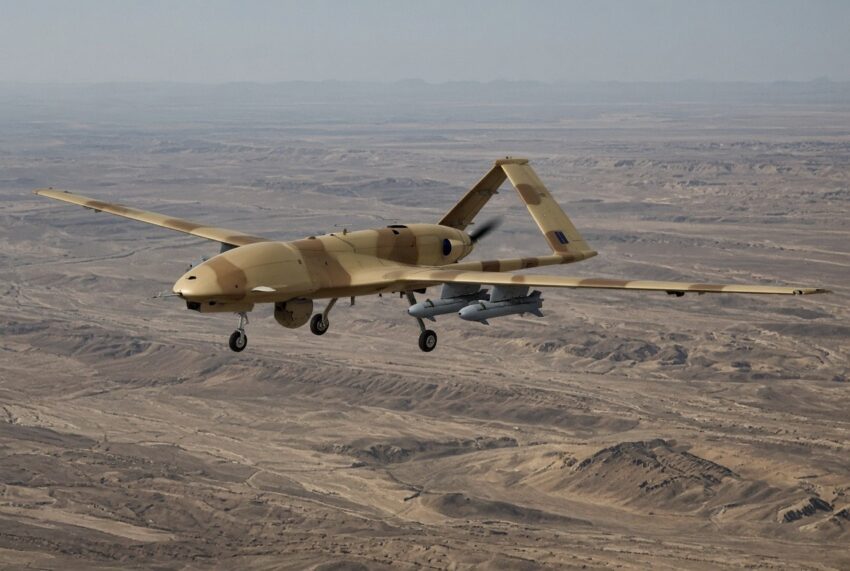
From Khartoum to Kordofan: how drones turned Sudan into a warzone without frontlines
The brutal conflict tearing through Sudan has escalated into a new level of devastation, with drone strikes systematically targeting civilians. According to a United Nations report, over 1,630 civilians lost their lives between January and October 2026 — a staggering 75% of all civilian fatalities documented during this period. These aerial attacks have not only claimed lives but have also crippled the nation’s economy and pushed millions to the brink of starvation.
Essential lifelines under siege: markets, hospitals, and water systems destroyed
The UN’s findings expose a deliberate campaign against Sudan’s most vulnerable populations, with drones striking the very foundations of daily survival:
- Hundreds of attacks on bustling markets, where families gather to buy food and supplies;
- Indiscriminate strikes on civilian vehicles, hospitals, and schools, leaving survivors with no access to medical care or education;
- Repeated bombardment of fuel depots, power stations, and water treatment facilities, plunging entire regions into darkness and dehydration.
These strikes have left over 25 million Sudanese—more than half the population—without reliable access to food, clean water, or electricity, exacerbating an already dire humanitarian crisis.
Darfur and Kordofan bear the heaviest burden
The regions of Darfur and Kordofan have suffered the most devastating consequences of this drone warfare. In Kordofan alone, over two-thirds of the civilian deaths documented by the UN have occurred, as drones indiscriminately flatten residential areas and vital infrastructure. The Darfur region, still scarred by decades of conflict and ethnic violence, now faces an even greater catastrophe as drones extend the reach of death beyond traditional battlefields.
The UN High Commissioner for Human Rights, Volker Türk, has condemned these actions as clear violations of international humanitarian law, stating that such targeted attacks amount to war crimes. The disregard for civilian life has raised global alarm, with humanitarian agencies warning that Sudan’s infrastructure may never recover if drone strikes continue unabated.
Timeline of Sudan’s descent into chaos: 2019 to 2026
A revolution betrayed: the fall of Omar al-Bashir
In April 2019, after thirty years of authoritarian rule under Omar al-Bashir, Sudanese protesters succeeded in toppling the regime. A transitional government was established, led by a mixed council of civilians and military leaders, including General Abdel Fattah al-Burhan of the Sudanese Armed Forces (SAF) and paramilitary commander Mohamed Hamdan Daglo (Hemetti) of the Rapid Support Forces (RSF). Hemetti, a former Janjaweed militia leader, had built a powerful financial and military empire, leveraging gold mining to fund his operations.
October 2021: A coup d’état against democracy
The fragile alliance between al-Burhan and Hemetti collapsed in October 2021, when they jointly staged a coup to prevent civilian leaders from taking control. The power grab extinguished hopes for a democratic transition, leaving Sudan under military rule once again.
April 15, 2023: The war begins
The rivalry between al-Burhan and Hemetti erupted into full-scale war on April 15, 2023, after negotiations over the integration of the RSF into the SAF failed. Heavy fighting erupted in Khartoum before spreading rapidly to Darfur and Kordofan. What began as a struggle for power has since morphed into a campaign of annihilation, fueled by foreign arms supplies and the proliferation of drone technology.
The drone era: 2024–2026
By 2024, both factions had massively invested in armed drones, shifting the battlefield away from traditional fronts and into civilian zones. The widespread destruction of infrastructure—including the fall of key cities like El-Fasher in late 2025—has led to mass displacement and a humanitarian catastrophe. Over 25 million Sudanese now face severe food insecurity, with millions more trapped in regions cut off from aid due to continuous drone strikes.
What’s next for Sudan?
The international community has condemned the use of drones against civilians, but the humanitarian and economic fallout continues to worsen. With no end to the conflict in sight, Sudan stands at a crossroads. Will the world act to stop the carnage before the nation’s infrastructure collapses entirely, or will drone strikes continue to claim lives and livelihoods without consequence?