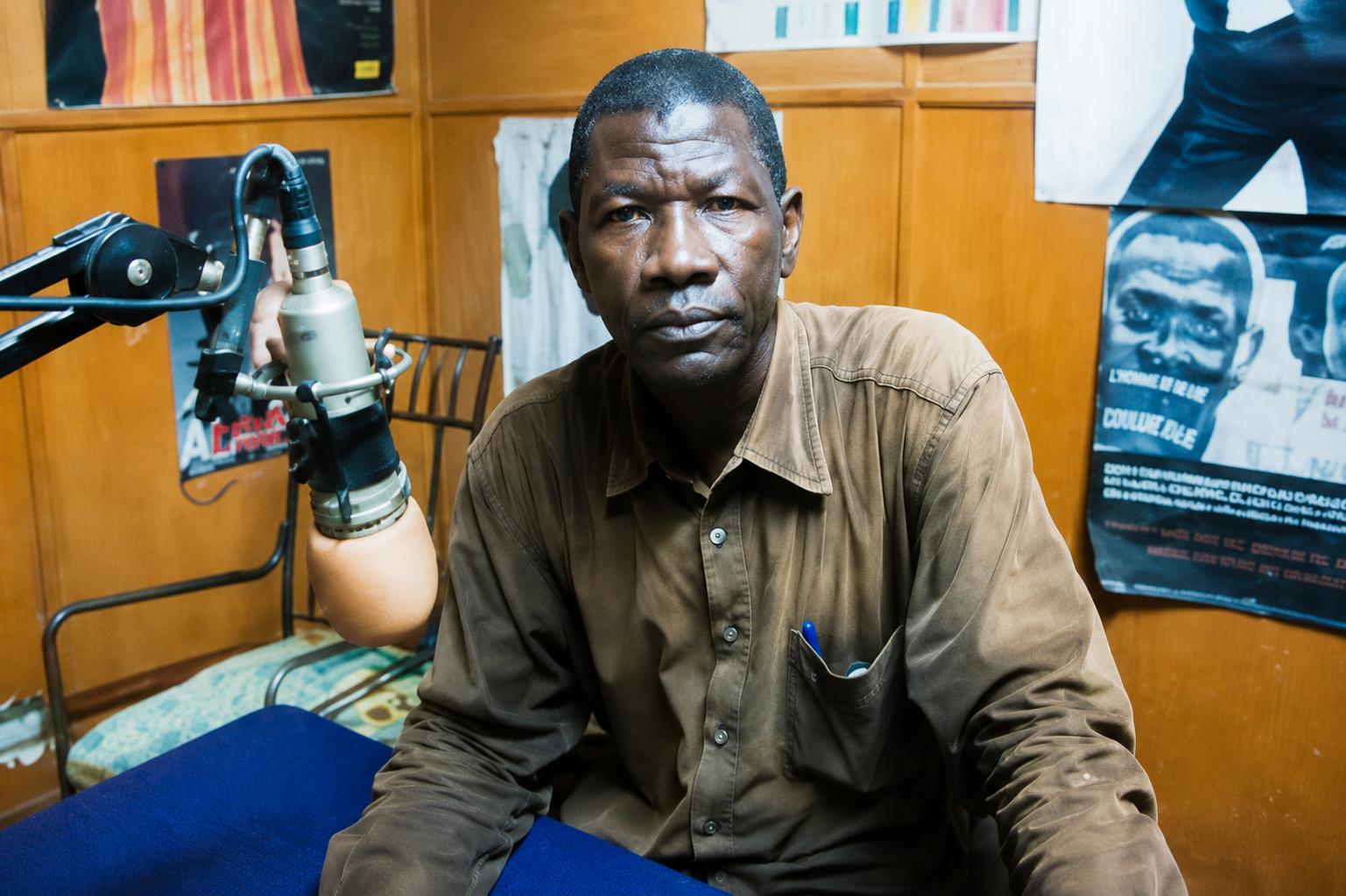
For nearly three days, Niamey has been holding its breath. On Monday evening, August 31, Moussa Kaka, a prominent journalist and director of Radio Télévision Saraounia, vanished without a trace after leaving his office in the capital. His car remains untraceable, his phones are unreachable, and no medical facility in the city has reported his admission. The evidence points to one grim conclusion: this is a targeted abduction.
The timeline of events leaves no room for doubt. Around 7 p.m., Kaka exited the premises of his media outlet, only to disappear entirely. In a city as heavily monitored as Niamey, a journalist of his stature does not vanish into thin air without intervention. The narrative of a mere disappearance—sometimes floated by diplomatic circles—amounts to either deliberate naivety or a deliberate softening of the truth.
An established pattern of repression against independent voices
This abduction does not occur in a vacuum. It follows a well-documented pattern of crackdowns targeting independent journalists in Niger. Moussa Kaka, a long-time correspondent known for his unfiltered reporting, has always been a thorn in the side of authorities. His critical stance and refusal to toe the official line have made him a persistent target. The absence of any ransom demand or claim of responsibility after 72 hours only deepens suspicions of a state-orchestrated detention.
The silence from security forces speaks volumes. A deliberate strategy to stifle public outcry and international scrutiny is at play. For those watching closely, this is not an isolated incident but part of a broader campaign to silence the last bastions of free press in the country.
Niger’s climate of fear: a warning to dissenting voices
The timing of this abduction could not be more ominous. Niger is grappling with severe security challenges, and dissent has become increasingly perilous. The message sent by Kaka‘s captors is unmistakable: no voice, no matter how respected, is safe from retribution. The profession now faces a stark choice: remain silent or risk the same fate.
Calls for his immediate release have echoed from human rights organizations and press freedom advocates. Yet, mere statements of concern are no longer sufficient. The international community and journalists worldwide demand concrete action. Every passing hour without news of his whereabouts or condition places the burden of responsibility squarely on those in power in Niamey.
What comes next?
The coming days will determine whether Niger will slide further into a dark era of repression or whether the outcry over Moussa Kaka‘s fate will force a reckoning. The fate of one of Africa’s most courageous voices now hangs in the balance.