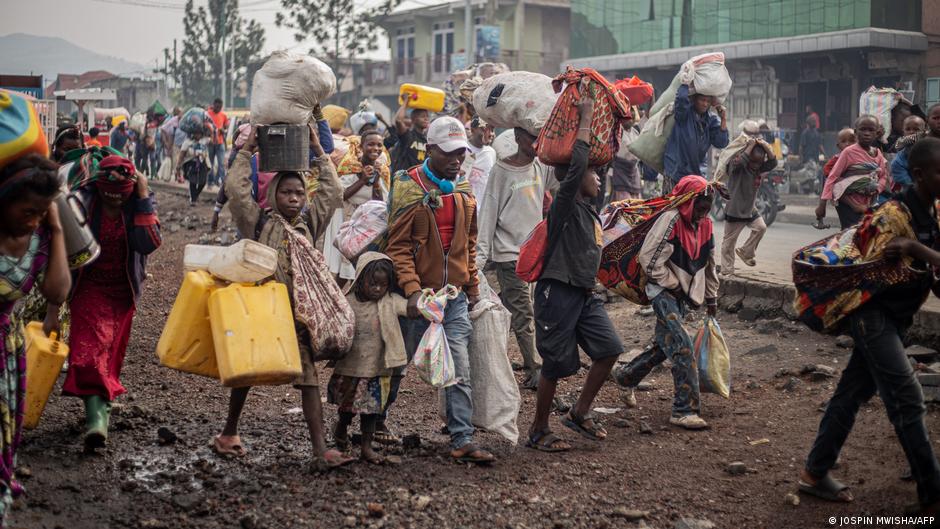
The humanitarian crisis in Kinshasa deepens as thousands of internally displaced persons (IDPs) from the war-torn eastern regions of the Democratic Republic of the Congo face dire conditions without shelter or medical care. Already, 16 lives have been lost due to this lack of support.
Kinshasa, once a refuge for those fleeing conflict, now hosts displaced families from the North Kivu and South Kivu provinces, who escaped the advancing M23 rebels over a year ago. Others arrived from Ituri, fleeing violence perpetrated by armed groups such as the Cooperative for Development of Congo (CODECO) and the Allied Democratic Forces (ADF).
Desperate conditions for the displaced
Over 2,600 households are now in a state of extreme vulnerability. Many have been forced onto the streets after being turned away from churches and mosques that had previously offered temporary shelter. The situation is particularly alarming for the most vulnerable groups among the displaced, including pregnant women, the elderly, individuals with disabilities, children, and students.
“We have pregnant women, people with disabilities, children, students, and the elderly—all left without healthcare, housing, or food. Their suffering is absolute,” explains Jordan Mulikuza, spokesperson for the displaced from eastern DR Congo in Kinshasa.
Students caught in the crisis
Students represent a significant portion of the displaced population. Some arrived in Kinshasa before the conflict began to pursue their education, only to find themselves stranded when their families were either killed or forced to flee. Jacques Chiza, a student leader among the displaced, describes their dire circumstances.
“We are enduring unimaginable hardship. Many of us sleep in the open because we have nowhere to go. We have no food, no assistance—nothing. We urgently need help before this crisis spirals further,” he pleads.
Demands for urgent government intervention
Kinshasa’s displaced communities have repeatedly appealed to national authorities and humanitarian organizations for support, but little has changed. The death toll continues to rise as preventable illnesses and lack of medical care take their toll. Jordan Mulikuza has issued a stark warning to the government and international community.
“Every day, we see new cases of illness and suffering. We urge the government, UN agencies, and the international community to act immediately. The situation is reaching a breaking point. We cannot wait any longer—our people are dying,” he emphasizes.
One proposed solution is to relocate the displaced to designated sites where aid could be more effectively distributed. However, Theogène Nkundiye, advisor to the Ministry of Social Affairs, Humanitarian Action, and National Solidarity, states that while the government is aware of the issue, no concrete plan has been finalized. “We are studying sustainable solutions, but nothing definitive can be announced yet,” he notes.
For now, thousands remain stranded in Kinshasa, struggling to survive under worsening conditions with no clear path to relief.