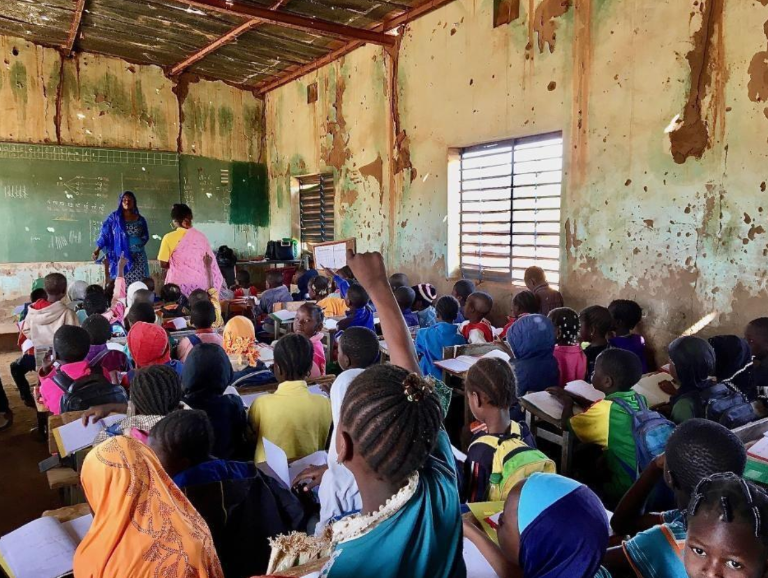
Across the Sahel, the classroom is becoming an endangered space. In Niger’s capital Niamey, this isn’t just a question of education reform—it’s a struggle for the future of an entire generation. The Alliance of Sahel States (AES) is holding its inaugural education summit this week, but behind the diplomatic gatherings lie harsh truths: thousands of children remain out of school, classrooms sit empty, and qualified teachers are in critically short supply. For families in Niamey and beyond, the consequences are immediate and far-reaching.
Empty classrooms, missing teachers: the silent collapse of Sahel education
The numbers tell a story of systemic failure. In the 2023–2024 school year, Niger’s education system scrambled to serve more than 3 million primary students with only 69,636 teachers—an average of 43 pupils per teacher. But the shortage isn’t just about quantity. Even those who teach often lack proper training. By mid-2026, nearly 78.5% of public school teachers were contract workers, and some entered classrooms without any pedagogical preparation. Rapid teacher training and stronger teacher training colleges have become urgent priorities.
While Niger grapples with these internal pressures, its neighbors face similar—and compounding—challenges. Burkina Faso and Mali have seen schools abandoned due to armed violence, especially in remote areas. In February 2024, over 5,300 Burkinabé schools closed, affecting more than 820,000 students and 24,000 teachers. By June 2026, Mali still had 2,444 non-functional schools, leaving 733,200 children without learning opportunities. In Niger’s Tillabéri region alone, 1,032 schools were inactive by late 2025, displacing 93,676 students, 48% of them girls.
Terrorism, displacement, and the broken promise of education
The rise of armed groups hasn’t only shut down schools—it has forced entire communities to flee. As families leave their homes, they leave behind not just houses and livelihoods, but also the schools their children once attended. By 2026, over 2 million people were internally displaced in Burkina Faso, 414,524 in Mali, and 548,386 in Niger. These movements overwhelm host communities that already lack classrooms and trained educators, leading to long-term school dropouts and interrupted learning for countless children.
This isn’t just an educational crisis—it’s a social emergency. When children miss school, they miss meals, vaccines, and the chance to become tomorrow’s leaders. Communities lose skilled labor and civic engagement. Businesses face a shrinking pool of educated workers. In a region already struggling with poverty and instability, the collapse of schooling deepens fragility across society.
From summit to solution: building a resilient education system in the Sahel
The Niamey conference is more than a political gathering—it’s a test of whether AES member states can turn shared ambition into real progress. The goals are clear: harmonize curricula, recognize each other’s diplomas, share teacher training resources, and invest in technical and vocational education. But survival depends on immediate action. Schools that closed due to security threats must reopen. Teachers must be recruited, trained, and supported—especially in high-risk zones. Learning alternatives must reach displaced children. Without these steps, education will remain out of reach for millions.
A shared future depends on shared classrooms
The minister of education in Niamey estimates nearly five million children in Niger alone are still outside the formal school system. That’s not just a statistic—it’s a generation at risk. Real sovereignty isn’t built in conference halls; it’s built in classrooms where children learn, teachers teach, and communities thrive. The AES education summit must deliver more than declarations. It must chart a course toward schools that are safe, teachers that are skilled, and systems that last.
What’s next for Sahel families, businesses, and the economy?
- More than 2 million displaced children across the Sahel risk never returning to school, threatening long-term economic growth and social cohesion.
- Businesses face a shrinking talent pipeline as fewer young people complete secondary education, hobbling local industries and innovation.
- Healthcare systems weaken as educated nurses and public health workers become scarce, compounding crises in health and education.
- Security risks rise when young people are excluded from learning, leaving them vulnerable to recruitment by armed groups.
- Economic dependence grows if Sahel states cannot develop their own skilled workforce, increasing reliance on international aid and migration.
At stake isn’t just education—it’s the stability and prosperity of the Sahel. The AES summit in Niamey has the chance to rewrite the region’s future. But the real work begins Monday morning, in classrooms across the Sahel, where every child deserves a seat—and every teacher, a chance to shape minds.