Mali’s Human Rights Crisis in 2025: Escalating Repression and Violence
In 2025, Mali witnessed a severe deterioration in human rights, marked by intensified restrictions on fundamental freedoms. Authorities systematically curtailed freedom of expression, peaceful assembly, and association, while arbitrary arrests, enforced disappearances, and targeted violence against civilians became widespread. Government forces, allied militias, and armed groups were implicated in unlawful killings and brutal tactics, including blockades in multiple cities. The conflict also disrupted education, with at least 2,036 schools shuttered, leaving hundreds of thousands of children without access to learning.
Political Context and Shifting Alliances
Following the collapse of a peace process that excluded political parties, civil society, and key armed factions, authorities introduced the National Charter for Peace and Reconciliation in February. This initiative aimed to address the country’s deepening instability. However, efforts to restore stability were overshadowed by further political turmoil. In April, the transitional government—established after the 2020 military coup—extended its mandate for an additional five years, deepening public distrust.
Military partnerships also shifted dramatically. By June, the Africa Corps, a Russian Defense Ministry-backed force, replaced the Wagner Group as Mali’s primary security partner. This transition reflected evolving geopolitical alliances in the Sahel region.
In August, authorities claimed to thwart a coup attempt, detaining several military officers and a French diplomat—also identified as an intelligence operative. September brought another significant development: Mali announced its withdrawal from the International Criminal Court (ICC), a move that raised concerns about accountability for war crimes and human rights violations.
Crackdown on Dissent: Political Repression Intensifies
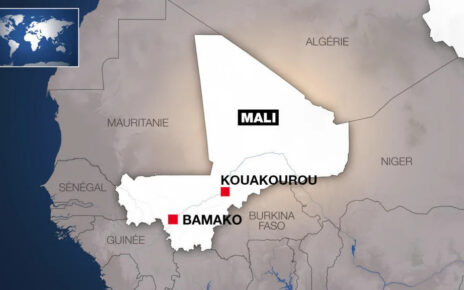
One of the most alarming developments was the dissolution of all political parties, a move that epitomized the government’s aggressive suppression of dissent. In April and May, protests erupted in Bamako, where security forces violently dispersed demonstrators using excessive force. The crackdown extended to opposition figures, civil society leaders, and activists, many of whom faced arbitrary detention or enforced disappearance.
Enforced Disappearances: Targeting Civil Society Leaders
Government forces and unidentified armed groups carried out a series of abductions targeting prominent figures. On March 14, Alou Badra Sacko, coordinator of the February 20th Movement and president of the civil society group Touche pas à mon argent, was forcibly taken from central Bamako. His abduction followed his public demand for the removal of mobile money transaction taxes. He was released on May 24 after two months in secret detention.
On May 8, El Bachir Thiam, leader of the Yelema party, vanished from his home. His disappearance sparked international outrage, with the UN Human Rights Council demanding his immediate release. He reappeared on September 26, having spent nearly five months in captivity, reportedly for opposing the dissolution of political parties and the extension of the transitional government.
Later that same day, masked gunmen claiming to be gendarmes abducted Alhassane Abba, secretary-general of the Convergence for Mali’s Development party, from his Bamako residence. He was freed without charge on June 5, raising concerns about due process and the rule of law.
Arbitrary Detentions and Torture: A Pattern of Abuse
The UN Human Rights Council intervened in March, calling for the release of detained activists Moulaye Baba Haïdara, Mahamoud Mohamed Mangane, and Amadou Togola. These individuals had been held since 2023 on charges including “undermining state security” and “threatening national unity”. Reports confirmed they were tortured during detention.
Former Prime Minister Moussa Mara faced severe consequences for speaking out. After posting on X that he would fight “by all means” for the rights of detained dissidents, he was arrested in August. Charged with “damaging state credibility” and “opposing legitimate authority”, he was sentenced in October to one year in prison.
Anticorruption activist Clément Dembele remained imprisoned despite a court ruling in April to drop charges against him. He had been accused in 2023 of threatening the president and his family. The UN reiterated calls for his unconditional release in August.
Armed Groups and Civilian Targeting
Islamist armed groups, including the Islamic State in the Greater Sahel (EIGS) and the Group for the Support of Islam and Muslims (GSIM), continued to perpetrate grave abuses against civilians. In February, 34 civilians were killed when EIGS militants attacked a civilian convoy near Gao, reportedly while under military escort. Locals reported the attack occurred near the village of Kobé.
In May, civil society leader Sidi Barka was abducted by EIGS members in Ménaka. His body was discovered outside the city in August, confirming fears of extrajudicial killings.
That same month, Ousmane Kampo, mayor of Konna in the Mopti region, was seized by GSIM fighters while working in his fields. He was released on October 4 after five months in captivity.
In August, fighters from the Macina Katiba launched a deadly assault on Farabougou in the Dogon Plateau, seizing military positions and killing civilians. The attack triggered mass displacement. In a separate incident, the mayor of Dogofry, Modibo Kimbiri, and his driver were shot dead by traditional hunters between Diabaly and Dogofry.
On November 6, a social media influencer, Mariam Cissé, was abducted in Echell (Tombouctou region) by armed men. The following day, she was taken to her hometown of Tonka and executed. Her body was left on public display, sending a chilling message to critics of armed groups.
State-Linked Abuses and International Humanitarian Law Violations
Government forces and their allies, including the Africa Corps, were accused of committing serious violations of international humanitarian law. Reports included torture, extrajudicial executions, and indiscriminate violence against civilians.
On March 16, a drone strike by the Malian Armed Forces (FAMa) killed at least 10 civilians in Ejdeïr during a busy market day, highlighting the risks of unchecked military operations.
In April, FAMa and Wagner-affiliated forces detained over 100 men—predominantly from the Fulani community—at a market in Sebabougou. Sixty were taken to the Kwala military camp, where they were tortured. Survivors later reported that many were executed and their bodies dumped near the camp. Decomposed remains were discovered a week later.
On May 12, Malian soldiers accompanied by Dozos militiamen intercepted 23–27 men at a weekly market in Diafarabé. The men were blindfolded, bound, and transported by pirogue to the opposite riverbank, where they were executed and buried in mass graves. Despite promises of an investigation, no updates have been publicly disclosed.
Economic and Social Rights Under Siege
The GSIM continued to enforce blockades around major towns such as Gossi, Léré, and Diafarabé, severely restricting access to food, healthcare, and freedom of movement. In July, the group imposed a blockade on Kayes and Nioro du Sahel, two critical cities in western Mali. It also restricted fuel imports from neighboring Senegal and Côte d’Ivoire, targeting tanker trucks on key routes.
Education Under Attack
The humanitarian crisis has devastated Mali’s education system. By June, 2,036 schools were non-operational due to insecurity—up from 1,984 in June 2024. Approximately 618,000 children were out of school, with the Kidal region experiencing the highest rate of school closures at 63% of children being out of education.