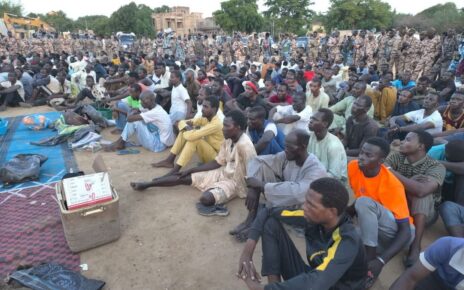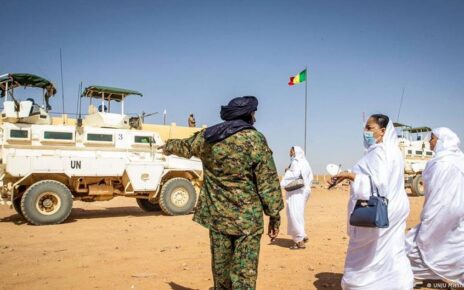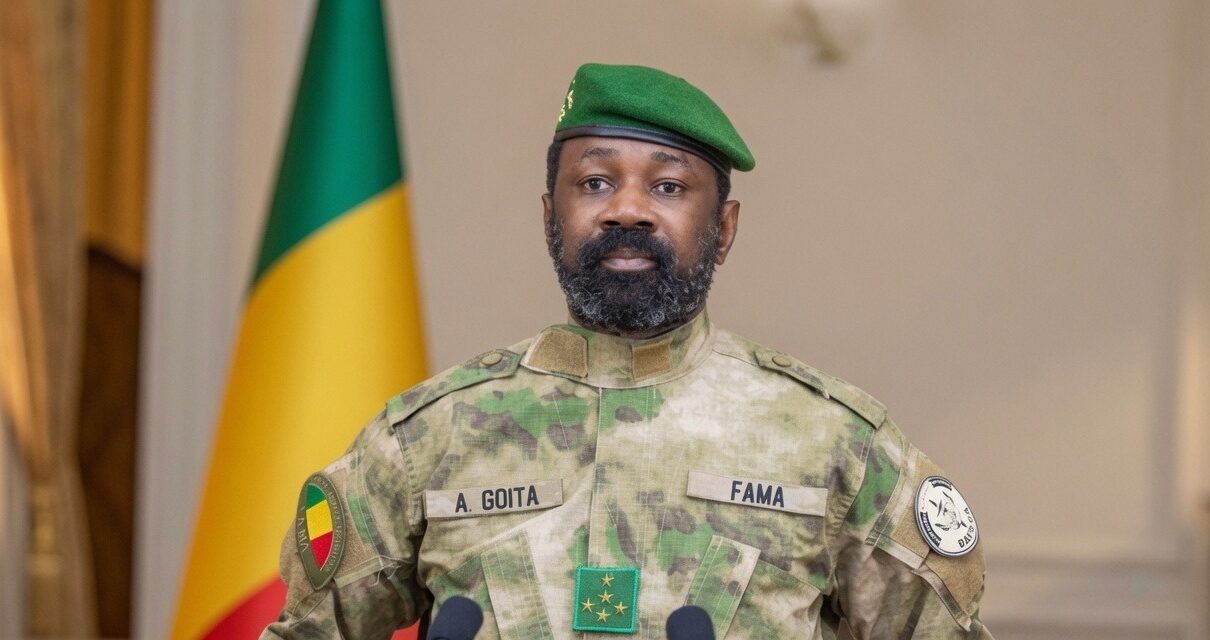
Mali’s reliance on Russian paramilitary muscle has long since stopped being an abstract line in a defence ledger. It now shows up in darkened neighbourhoods, in traders whose goods never reach the market, and in a treasury that keeps signing away mining rights to keep foreign fighters paid. By the most recent consolidated estimates and the financial leaks circulating across the sub-region, more than 514 billion FCFA — roughly $850 million — has already been transferred to these Russian contingents since they first deployed in late 2021, first under the Wagner banner and now through Africa Corps, the successor structure placed under the Kremlin’s ministry of defence.
That figure has opened an unusually frank argument inside Mali’s economic and military circles: what did the country actually receive in return, and who is footing the bill?
A monthly outlay that never stops climbing
From the moment the first contingent arrived at the end of 2021, the recurring charge has grown steadily. The original arrangement provided for an average monthly transfer of about 6 billion FCFA, the equivalent of some $10 million. Enlarging the force to more than 2,000 men, buying specialised equipment and sustaining a support and logistics chain pushed that ceiling far higher.
Close to $10,000 a month for one Russian fighter
On average, each Russian combatant or instructor present on Malian soil costs the state nearly $10,000 every month. The sum is split along two channels:
- Direct pay for the mercenary: set at around $3,000 a month.
- Command, equipment and combat bonuses: almost $7,000 more, collected by the Russian command structures.
For comparison, the total cost of keeping a soldier of the Malian Armed Forces, the FAMA, in the field amounts to only a small fraction of that figure — a gap that feeds quiet resentment in garrisons across the country.
Gold concessions as a parallel form of payment
Faced with an overwhelming financial burden in a period of acute budgetary scarcity, the transitional authorities have had to multiply their payment routes. Beyond direct bank settlements routed through protected channels, a significant share of the cost is covered by granting mining titles, notably in the gold deposits of the south and the west of the country.
Africa Corps, 3,500 men and a bill still rising
The recent restructuring that brought the force directly under Russia’s defence ministry, under the Africa Corps label, has not reduced the price. A planned expansion of the contingent to 3,500 men could add more than 210 billion FCFA to the annual bill.
Security results that struggle to justify the price
Russian units have delivered striking operations, including the symbolic recapture of Kidal at the end of 2023. Yet the persistent deterioration of the security environment raises awkward questions for analysts. Vital road corridors come under repeated blockade, the centre of the country remains under intense pressure from groups affiliated with JNIM, and Malian troops keep suffering losses in complex ambushes.
The real cost for Malians: services, livelihoods and sovereignty
For many economic observers in Bamako, devoting more than 514 billion FCFA to foreign praetorian guards strips essential public services — electricity, health, education — of resources they badly need. Worse, it locks the transitional government into a financial and security dependence on Moscow that is difficult to unwind.