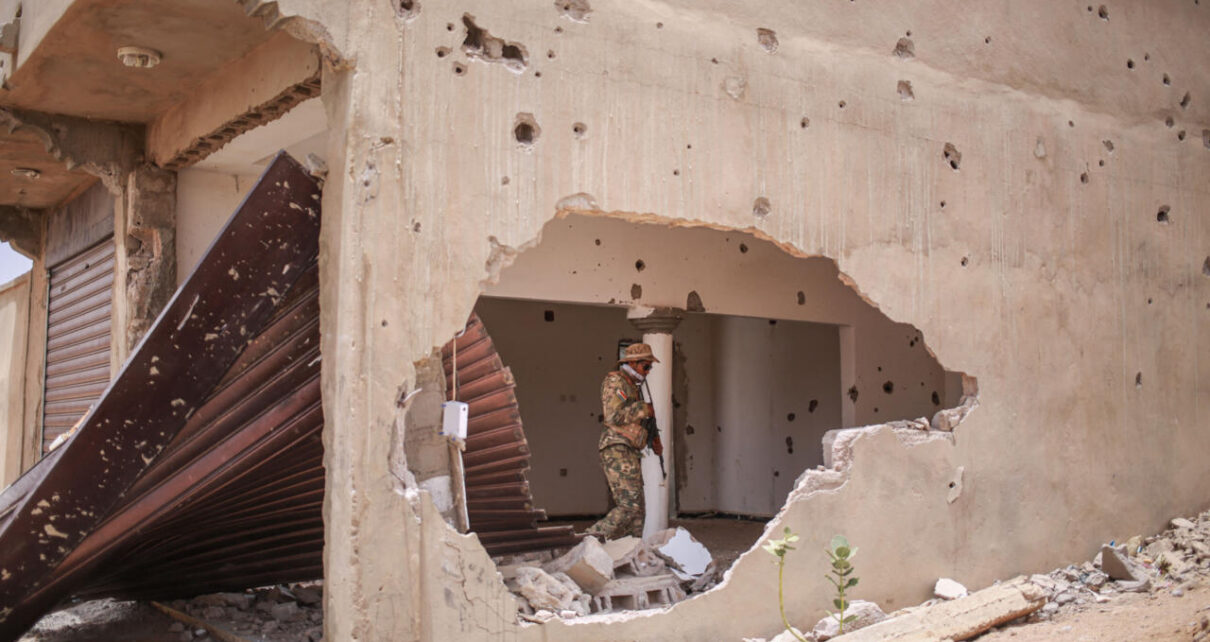
In a recent analysis titled “Mali: anatomy of a security earthquake”, the Timbuktu Institute, an African research center for peace based in Dakar, shed light on the strategic failures plaguing Mali’s security apparatus. Published on May 13, the report examines the coordinated attacks of April 25, which resulted in the death of Defense Minister General Sadio Camara and the loss of Kidal to armed groups linked to al-Qaeda and independentist factions.
Why Mali’s security partnerships are crumbling
The note underscores the collapse of Mali’s outsourced security strategy, particularly its reliance on Russian mercenary forces. Bakary Sambe, Director of the Timbuktu Institute in Dakar, argues that the withdrawal of the Africa Corps from Kidal, following a chaotic retreat, symbolizes the failure of Wagner’s approach in the region. Unlike the earlier Barkhane mission, which combined military action with development initiatives, the Russian model—focused solely on military support—has proven ineffective against deeply rooted local insurgencies.
Sambe highlights a stark reality: «The Mali regime’s main narrative—reclaiming security—is now at risk as immediate results remain elusive.» Despite Moscow’s continued presence alongside Malian troops, the report questions the sustainability of this partnership in the face of persistent jihadist advances.
Alliance of the Sahel States: promises unfulfilled
The April 25 attacks also exposed the fragility of the Alliance of Sahel States (AES), a mutual defense pact modeled after NATO’s Article 5. While leaders like Burkina Faso’s interim President Traoré condemned the assault as a «monstrous conspiracy,» no concrete military support materialized from member states. Sambe explains this hesitation by pointing to the internal security struggles of Burkina Faso and Niger, which left them unable to fulfill their alliance obligations.
The report suggests that the AES’s failure to act reflects a broader regional challenge: «The alliance prioritizes national survival over collective defense.»
A shifting tide in public perception
Paradoxically, the attacks have temporarily strengthened public support for the transitional government. Sambe notes a «rally-around-the-flag effect,» where Malians, despite unmet security promises, have united behind the regime. This phenomenon, uncommon in global security crises, stems from the government’s almost singular focus on security as its legitimacy tool.
The report draws a chilling parallel to 2012, when armed groups seized northern Mali in days. However, Sambe warns that this unity is fragile and may not last if the security situation continues to deteriorate.
The JNIM-FLA alliance: a fragile convergence
The coordinated attacks by the Group for the Support of Islam and Muslims (JNIM, linked to al-Qaeda) and the National Liberation Front of Azawad (FLA) introduced a «new strategic constraint» for Bamako’s authorities. Sambe describes this union as a tactical alignment rather than a lasting alliance, driven by a shared enemy (the Malian state) and pragmatic interests like smuggling networks and the influence of Iyad Ag Ghaly.
The report questions the alliance’s durability, citing fundamental ideological and territorial divides:
- JNIM’s goal: Imposition of sharia law across Mali.
- FLA’s objective: Autonomy for the Azawad region.
The report also highlights JNIM’s evolving strategy, which now seeks to position itself as a national political actor. Figures like Bina Diarra are being promoted to showcase the group’s «Malian» roots, potentially paving the way for future negotiations. Sambe suggests this shift could redefine Mali’s conflict dynamics, though the path to sustained stability remains unclear.
Is dialogue the only way forward?
The analysis concludes with a pressing question: Can Mali silence the guns through military force alone, or is dialogue the only viable solution? Sambe unequivocally supports the latter, stating that «the jihadist threat is now endogenous—these fighters are no longer external invaders but Malian citizens.» He cites widespread calls within Mali for an inclusive national dialogue, even with factions considered irredeemable.
The report underscores a grim truth: «Mali must talk to all its children to end this crisis.»