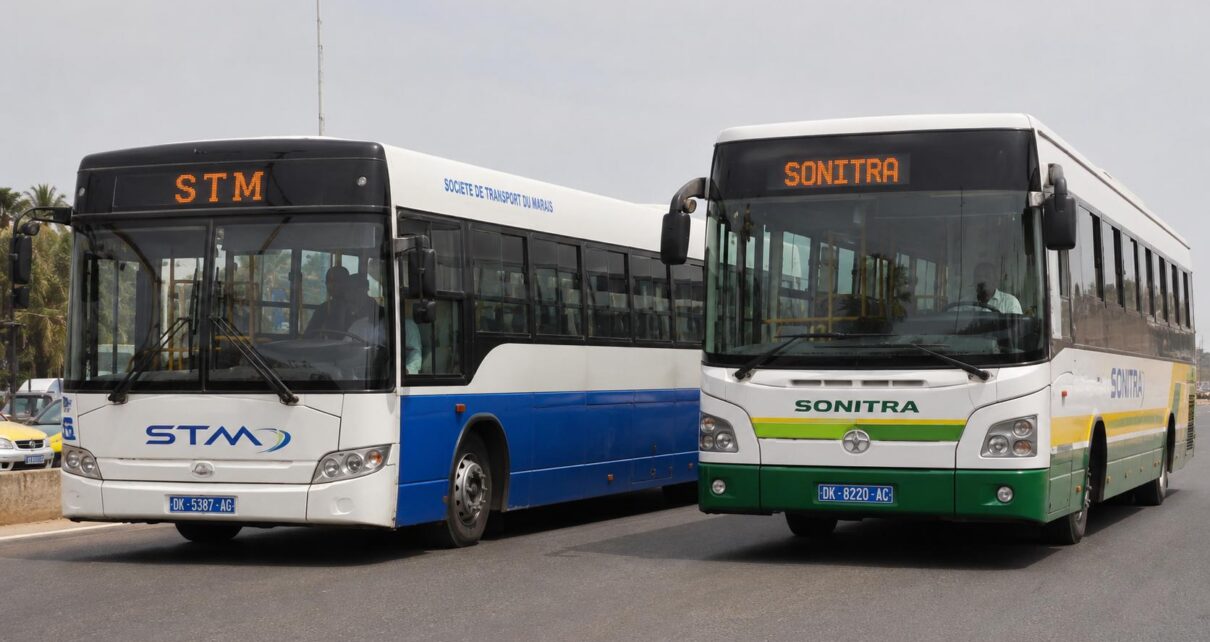
Twenty-two lives lost, 37 injured, and a scene of twisted metal wreckage. This devastating toll follows the collision on August 7, 2026, involving two major transport company buses, STM and SONITRAV, in Niger’s Maradi region. In response to widespread public outrage, the Ministry of Transport quickly issued a warning of “severe sanctions,” potentially including the revocation of operating licenses. However, this display of political resolve appears to be a reactive measure that sidesteps the fundamental issues: the glaring deficiencies in public oversight, the problematic economic models of transport operators, and the deteriorating state of infrastructure across Niger.
Punishing to conceal state shortcomings
The crisis meeting convened on August 10 by the Minister of Transport and Civil Aviation, Colonel-Major Abdouramane Amadou, followed a familiar political script: a forceful declaration, the projection of accident footage, and a threat of disciplinary action.
While the administrative accountability of the companies involved must certainly be established, the threat of suspending or revoking licenses seems primarily a communication tactic designed to appease public anger.
- A purely reactive measure: Why wait for a catastrophe claiming 22 lives before scrutinizing the operational practices of STM and SONITRAV? Acting solely through punitive measures after the fact betrays a clear absence of any proactive prevention strategy.
- The ambiguous role of regulatory bodies: The Nigerien Road Safety Agency (ANISER) and the National Gendarmerie were present at the ministerial meeting. Yet, what tangible resources do these institutions deploy daily to identify defective vehicles or penalize speeding before such tragedies occur?
The “human factor”: a convenient excuse overlooking profit-driven practices
In its official statements, the government frequently attributes incidents to “human behavior” behind the wheel, citing speeding and reckless overtaking. This perspective often overlooks that a driver’s conduct is a direct consequence of the economic pressures imposed by their employers.
Relentless schedules and demanding rotations, driven by the pursuit of profit, lead to extreme fatigue and dangerous microsleeps while driving. Furthermore, compensation structures based on trips or routes can directly incentivize drivers to speed to maximize their earnings. Finally, cutting corners on maintenance allows companies to save money, often at the expense of tire quality, brake integrity, and regular fleet servicing.
The repeated involvement of SONITRAV, which was previously implicated in a fatal collision near Tabalak on February 24, 2026, resulting in three deaths, clearly demonstrates that the problem extends beyond individual driver error. It points to an entire operational model within these companies that tolerates risk in the name of profitability.
Inadequate infrastructure and deficient emergency response
Blaming drivers and threatening company owners also serves to deflect attention from the public authorities’ responsibilities in national planning and emergency management:
- Absence of separated lanes: On major interurban corridors, such as the axis leading to Maradi, buses weighing over 10 tons often cross paths at speeds exceeding 90 km/h on narrow roadways. The slightest misjudgment instantly escalates into a deadly head-on collision.
- The critical weakness in emergency care: How many injured individuals succumb on the roadside due to a lack of rapid extrication equipment and swift medical evacuation in rural areas? Emergency medical response remains a neglected aspect of public policy.
Moving beyond administrative posturing
Revoking the licenses of STM or SONITRAV might create the illusion of a decisive state. In reality, shutting down companies without reforming the underlying systemic rules will solve nothing. Other operators will simply take over these routes, employing the same dangerous methods on the same hazardous roads, inevitably generating similar tragedies.