The Nigerian army announced the liberation of more than 47 people, mostly women and children, who were held captive by the Islamic State in West Africa Province (ISWAP). The successful rescue operation was part of an intensified ground and air offensive targeting jihadist strongholds in the Kangarwa area of Borno State, near the Lake Chad basin.
Borno State, the epicentre of the terrorist insurgency that has plagued northeastern Nigeria for over a decade, has seen a hopeful outcome. In a targeted intervention by army troops supported by air force strikes, at least 47 civilians were rescued from ISWAP. The operation, confirmed by Nigerian military authorities, highlights increased efforts to secure this highly strategic and unstable region.
Coordinated offensive at the gates of Lake Chad
The release of these hostages is the direct result of a large-scale offensive military strategy. For weeks, the Nigerian army has intensified operations in the Kukawa local government area, specifically around Kangarwa. This area is known for housing fortified ISWAP enclaves, taking advantage of porous borders and the complex geography of the Lake Chad basin to conduct criminal activities and hide prisoners. Combined assaults synchronising ground firepower and aerial precision forced the insurgents into a corner. Under constant pressure and facing the rapid advance of troops from Operation Hadin Kai, extremist fighters were compelled to abandon their defensive positions. This hasty retreat created an opening, allowing captives to escape their detention sites after, for some, long months of captivity.
Women and children: the primary victims
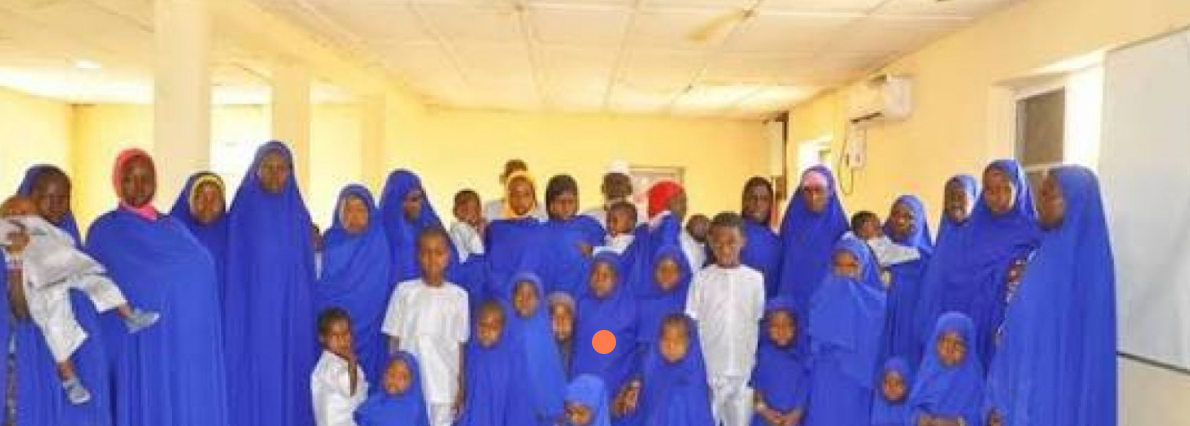
Among the 47 rescued, women and young children make up nearly all of the group. This profile of captives illustrates once again the cynical strategy of jihadist groups in the region, whether ISWAP or the historical Boko Haram faction. These organisations primarily target vulnerable populations during raids on isolated villages to use them as forced labour, human shields, or for forced marriages. Immediately after their release, the survivors were taken care of by army medical units. Transferred to a secure location, they are currently receiving emergency first aid, comprehensive health check-ups, and initial psychological support, essential for treating the trauma of captivity. Military authorities said they are actively collaborating with humanitarian agencies and the Borno State government to coordinate logistical aid and launch tracing procedures to reunite these people with their families.
The Lake Chad basin: a regional security challenge
This tactical victory comes amid increased military pressure in the Lake Chad region. The Nigerian army, sometimes supported by regional partners within the Multinational Joint Task Force (MNJTF), seeks to suffocate ISWAP’s logistical networks. Reduced freedom of action for terrorists in remote bastions like Kangarwa shows a change in the army’s posture, now favouring deep incursions rather than a mere defensive stance around urban centres. However, security analysts note that while these successive liberations – echoing other large-scale rescues in the Mandara mountains in recent months – are undeniable successes, the challenge of stabilisation remains. ISWAP’s ability to conduct asymmetric counterattacks and deploy improvised explosive devices continues to pose a heavy threat to the return to civilian life and the resettlement of millions of internally displaced people in the region.
The liberation of the 47 Kangarwa hostages testifies to the renewed effectiveness of air-ground coordination by Nigerian forces in Borno State. For these women and children, the operation marks the end of a nightmare and the beginning of a long journey of physical and social reconstruction. For Nigeria, it confirms that reclaiming territories under jihadist influence remains an absolute priority, even if the transition from military victory to lasting peace and total security in the Lake Chad region will still require long-term political and humanitarian efforts.