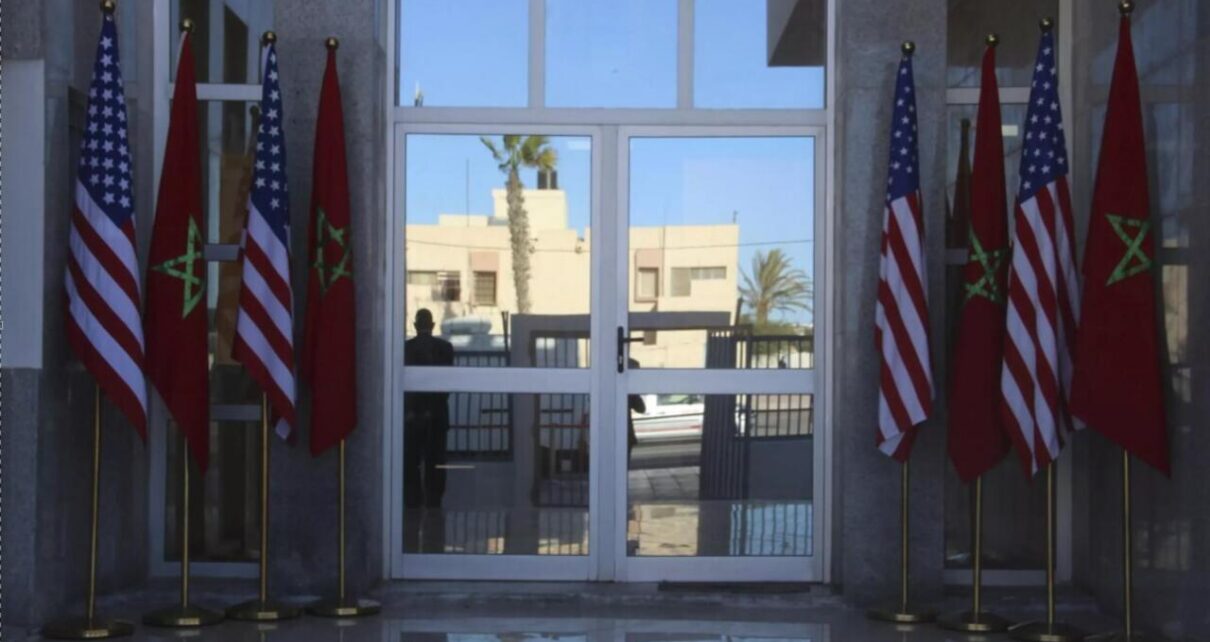
Since late July, the United States has intensified its economic and diplomatic overtures toward Morocco, signaling a significant shift in regional policy. In 2020, Washington endorsed Rabat’s autonomy plan for Western Sahara in exchange for Morocco’s normalization of ties with Israel. Now, American support appears to be extending to Morocco’s claims over the Spanish enclaves of Ceuta and Melilla, amid escalating pressure on Madrid.
In recent days, tens of thousands of individuals—including Moroccan nationals and sub-Saharan migrants—have crossed into Ceuta, a Spanish territory on the north African coast. This influx has intensified tensions between Morocco and Spain, with Rabat seemingly leveraging the situation to advance its territorial claims.
Washington’s evolving stance on North Africa
The Trump administration’s growing alignment with Morocco reflects a broader recalibration of U.S. foreign policy in the region. Analysts suggest the timing is critical, as Morocco senses a unique opportunity to secure Washington’s endorsement of its positions, particularly regarding Western Sahara and the disputed enclaves.
This diplomatic maneuvering comes at a time when the U.S. is reassessing its engagements in North Africa, with Morocco emerging as a key ally in counterterrorism efforts and regional stability. The potential support for Ceuta and Melilla would mark a significant departure from traditional U.S. neutrality on these long-standing disputes.
Ceuta’s crisis and Morocco’s strategic leverage
The sudden surge of people into Ceuta has strained relations between Morocco and Spain, with Rabat accused of tacitly facilitating the crossings. Observers note that this development could be a calculated move to pressure Madrid into concessions, including recognition of Morocco’s territorial claims. The timing of the influx—coinciding with Washington’s diplomatic shift—has not gone unnoticed in European and African capitals.
For Morocco, the convergence of events presents a rare opportunity to push its agenda on multiple fronts. By aligning with U.S. interests and leveraging the Ceuta crisis, Rabat appears to be positioning itself as an indispensable partner in North Africa.
Geopolitical implications for Europe and beyond
The unfolding dynamics in North Africa carry broader implications for Europe, particularly Spain, which faces mounting pressure to address the Ceuta crisis. The European Union has thus far remained cautious, emphasizing dialogue and cooperation with Morocco while urging restraint.
Meanwhile, other regional actors are closely monitoring the situation, wary of the potential for a U.S.-Morocco alliance to reshape the geopolitical landscape. The implications for Western Sahara and the disputed enclaves could redefine alliances and rivalries in the years ahead.