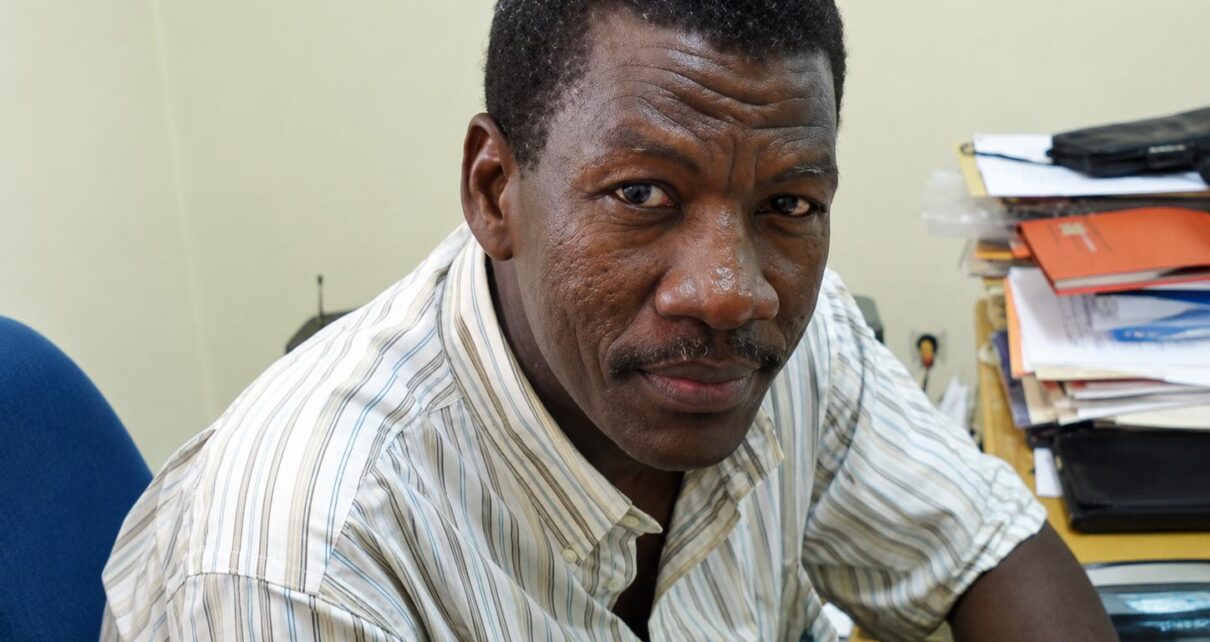
When a broadcaster of Moussa Kaka’s standing goes quiet in Niamey, the damage spreads well beyond one family’s doorstep. The director general of Radio Télévision Saraounia (RTS) and one of the most recognisable voices in Sahelian broadcasting has now been out of contact for weeks, and the practical effects are already working their way through newsrooms, small businesses, civil society and the daily lives of Nigeriens who depend on independent information to plan, trade and vote.
Why one disappearance is being felt right across Niger
Moussa Kaka is not simply a well-known name on the airwaves. He is a veteran reporter whose long career has been built on close coverage of security crises, political upheaval and the intricate community tensions that run through the Sahelo-Saharan belt. That body of work brought him both a wide audience and repeated pressure from successive governments.
His sudden absence therefore lands as more than a personal tragedy. For the profession in Niger, it marks a further narrowing of the space in which journalists are able to work — and that narrowing carries a price that is measured in money, safety and public trust as much as in press freedom.
What has happened since he left his home in the capital
Based on what relatives, friends and fellow journalists in Niamey have been able to piece together, Moussa Kaka has not been seen or heard from since leaving his residence in the city. No official reason for any detention has been issued by the transitional authorities, and the approaches made to security services and police stations across the capital have so far produced nothing.
No notice, no records, no answers
That absence of paperwork is itself the crux of the problem for those close to him. Without a formal charge or a confirmation of where he is being held, there is no clear route to challenge his situation and no timeline for a resolution. Each passing week deepens the uncertainty for his family and sharpens the warning it sends to every other reporter in the country.
Reporters Without Borders raises the alarm
Faced with that wall of silence, the press freedom organisation Reporters Without Borders (RSF) moved quickly to make its concerns public. Sadibou Marong, who heads the group’s West Africa office, described the case as a serious matter of possible enforced disappearance or incommunicado detention.
“The disappearance of Moussa Kaka is an extremely alarming signal for the entire Nigerien and Sahelian media landscape. We urgently call on the Nigerien authorities to shed full light on his situation, to state whether he is being held by intelligence services, and to guarantee his physical safety and his immediate release,” he said.
The organisation also stressed that protecting working journalists is the responsibility of the transitional government, and that reporting the news cannot reasonably be treated as an act of destabilisation.
The economic bill: thinner newsrooms, thinner revenues
Media outlets in Niger are businesses as well as public watchdogs, and prolonged pressure on them translates into concrete losses. The knock-on effects that editors and owners now anticipate include:
- Falling advertising income as brands avoid associating with politically sensitive coverage
- Layoffs and unpaid salaries in outlets already operating with minimal margins
- Shrinking local reporting capacity, particularly outside Niamey
- Rising costs for legal defence and security for journalists on assignment
- A talent drain as experienced reporters relocate or leave the profession altogether
Independent radio and television stations sit at the centre of that fragile economy. When their most senior figures vanish without explanation, investors, sponsors and staff all reassess the risk of staying in the sector.
For ordinary Nigeriens, less news means harder choices
The consequences are not confined to the media industry. In a country where radio remains the primary source of information for millions, the loss of trusted reporters feeds directly into daily decision-making. Traders rely on accurate reporting to gauge markets, farmers and herders depend on it to anticipate insecurity in rural areas, and families look to local stations for verified news rather than unconfirmed rumours circulating on messaging apps.
Where verified reporting thins out, speculation fills the gap. That shift makes communities more vulnerable to false alarms, manipulation and panic — costs that are difficult to quantify but impossible to ignore.
A regional pattern that reaches beyond Niamey
The case sits inside a harder climate for journalism across the Sahel, in a region now organised around the Confederation of Sahel States (AES), which brings together Niger, Mali and Burkina Faso. Since military transitional governments took power, civic and media space has contracted noticeably: international broadcasters suspended, intimidation of journalists, arbitrary detentions of civil society figures and a quiet self-censorship that many local reporters now practise as a matter of survival.
Within that wider picture, the treatment of one of the region’s most respected voices casts a long shadow over the future of the right to report freely from Niamey.
What could follow if the silence holds
If no explanation emerges, the likely trajectory is a further retreat of independent journalism in Niger, with fewer voices willing to scrutinise security policy, public spending or the conduct of the transition. That in turn weakens the accountability that businesses, citizens and international partners all rely on.
Conversely, a transparent account of what happened to Moussa Kaka — and a swift return to his work — would send a very different message about how far the country intends to tolerate scrutiny. For now, the silence continues, and its cost keeps accumulating.