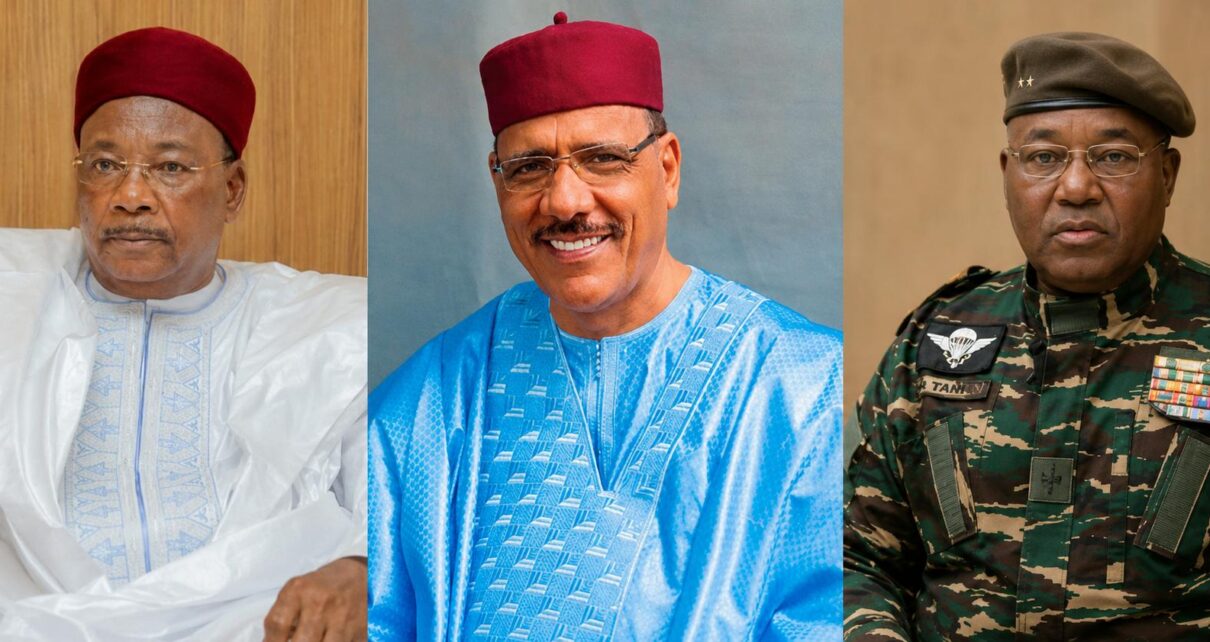
After multiple regime changes and dramatic shifts in geopolitical alliances, Niamey remains trapped in a relentless war of attrition. Whether under the pro-Western strategy of Mahamadou Issoufou or the sovereignist approach of Abdourahamane Tiani, the harsh truth persists: the terrorist threat shows no sign of weakening.
From democratic transitions to a military coup, Niger has witnessed three presidents in recent years, yet one constant endures—the bloodshed in the “three borders” region and the Lake Chad basin. Despite shifting policies, the hydra of jihadism, represented by the Islamic State in the Greater Sahara (ISGS) and the Group for Support of Islam and Muslims (JNIM), remains unbroken.
From Issoufou-Bazoum to Tiani: Two failed strategies
The Western shield illusion
During Mahamadou Issoufou’s presidency (2011–2021), Niger positioned itself as the cornerstone of Western counterterrorism efforts in the Sahel. As Mali descended into chaos, Niamey became the operational hub for French forces (Operation Barkhane) and U.S. drone operations in Agadez.
His successor, Mohamed Bazoum, attempted to soften this approach with a mix of military cooperation and limited outreach:
- A policy of engagement, including negotiations with certain repentant fighters.
- Massive investment in training Nigerien special forces.
Yet despite these efforts, the strategy failed to eliminate the threat. Worse, the presence of foreign troops fueled widespread resentment among soldiers and civilians alike, who saw it as a surrender of sovereignty for meager results.
The sovereignty gamble under Tiani
The coup led by General Abdourahamane Tiani on July 26, 2023, was justified by the “deteriorating security situation.” Since then, Niamey has cut ties with Paris and Washington, formed the Alliance of Sahel States (AES) with Mali and Burkina Faso, and deepened ties with Russia (via the Africa Corps) and Turkey.
On the surface, the shift is striking. The military regime champions national pride and vows a purely domestic response, free from Western influence. But the reality on the ground tells a different story.
The brutal truth: Why the war drags on
Analysts and UN observers agree: the withdrawal of Western forces created an immediate capability gap, particularly in aerial intelligence and high-tech surveillance.
Attacks have grown more sophisticated, targeting entire Nigerien army garrisons (FDS) and inflicting heavy losses. Economic blockades in certain regions and diplomatic isolation have further crippled the war effort, which now drains millions daily.
What’s missing in Niger’s fight?
The fatal flaw shared by all regimes—civilian or military—is the over-reliance on military solutions to a crisis rooted in politics and society. Two approaches have collided:
1. The Issoufou-Bazoum doctrine: A strategy built on international security cooperation. Its weakness lay in extreme dependence on foreign partners, disconnected from local aspirations. The French narrative lost credibility with much of the Nigerien public, rendering the approach unsustainable.
2. The Tiani doctrine: A sharp break from the West, embracing a militarized sovereignty through the AES. But early results are alarming—a loss of critical intelligence capabilities, financial strangulation, and a paradoxical surge in jihadist violence as armed groups exploit regional instability.
Beneath the surface, the roots of the conflict remain unchanged: weak state presence in remote areas, lack of economic hope for rural youth, and intercommunal tensions—especially between herders and farmers—that jihadist groups manipulate to recruit fighters.
For General Tiani, the challenge is no longer just dismantling his predecessors’ legacy but proving that his military-first approach can protect Nigeriens. Without a massive reintroduction of essential services—schools, courts, clinics—in insecure zones, Niger risks losing this war not on the battlefield, but in the long-term struggle for hearts and minds.
The lesson is clear: no amount of alliances, foreign support, or sovereignist rhetoric will end this war. Only a holistic strategy that addresses governance, development, and social cohesion can break the cycle.