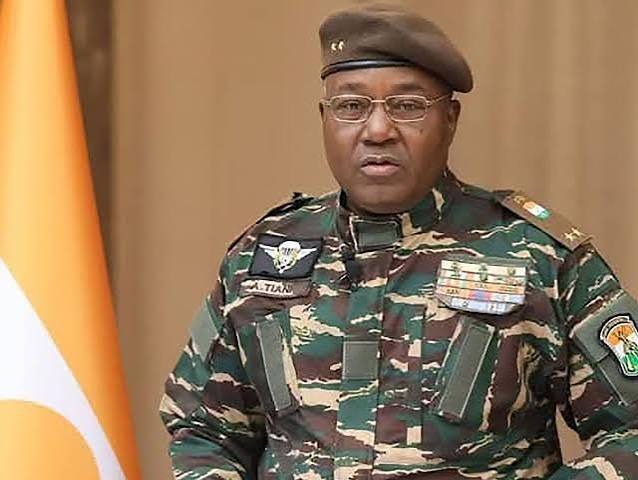
Three years after soldiers seized power in Niamey, the heaviest bill from Niger’s power struggle is not being paid by the man who ordered it. It is being paid by a country that wakes up every morning unsure who is actually in charge. General Abdourahamane Tiani, the face of the July 2023 coup, now spends his days sealed inside a bunker while ministries wait for instructions that rarely come, security operations lose their direction, and ordinary Nigeriens absorb the cost of a state that has stopped functioning at its top.
A palace that has turned into a bunker
Does he miss the years when he was simply the head of the presidential guard, invisible and untroubled? In Niamey today, the atmosphere inside the presidential palace has become suffocating. More than three years after the coup, the general has been forced to confront an uncomfortable truth: taking power by force was a catastrophic miscalculation, and his own life now hangs in the balance. Far from the grand speeches about national sovereignty, the head of the military junta finds himself cornered by the very institution he commands.
The night of 28 August 2026 that changed everything
Everything shifted for Tiani during the night of 28 to 29 August 2026. Mutinous soldiers arriving from several garrisons stormed the air base and pushed dangerously close to the presidential palace. He escaped by a matter of minutes only because Russian mercenaries from Africa Corps intervened. Since that night, the fear of being assassinated has not left him.
His terror is no longer something he can hide. The general barely leaves his quarters, scheduled movements are cancelled one after another, and he lives shut away in a bunker, surrounded by foreign bodyguards and a shrinking circle of local soldiers he still believes he can trust.
Why removing general Barmou backfired badly
Hoping to claw back control, Tiani made a high-risk move in September 2026: he dismissed general Moussa Salaou Barmou, the chief of defence staff and one of the architects of the 2023 coup. Barmou was then placed under house arrest.
The decision exploded in his face. Barmou is widely admired and respected among the elite units, and his removal was read inside the barracks as an act of betrayal rather than discipline. Officers have since sent blunt ultimatums to the presidency, demanding an immediate halt to arrests within the army and warning that they will rise up en masse if the purge continues.
Ultimatums from inside the barracks
- An immediate end to arrests targeting serving officers
- The release of respected commanders held under surveillance
- A threat of collective uprising if the crackdown goes any further
What a bunker presidency costs ordinary Nigeriens
When the head of state’s priority shifts from governing to surviving, the consequences travel far beyond the palace walls. Decisions that require his signature sit untouched, security planning loses its coherence, and the chain of command frays at exactly the moment the country needs it to hold. For families, traders and public servants, the practical result is a state that reacts slowly, speaks ambiguously and offers no clear direction about what comes next.
Each cancelled trip and each reshuffled command has a knock-on effect: uncertainty feeds hesitation, hesitation slows economic activity, and a population already exhausted by years of instability is left to plan its future around a leadership that may not last the month.
A former security specialist who knows how this ends
Tiani built his career in security, and he understands precisely how a coup unfolds. He knows the greatest threat to his survival no longer comes from armed groups along the borders but from the men wearing the same uniform as him.
That is the bitter irony of his position: toppling a civilian president in 2023 proved simple, but running a country while expecting a bullet from your own army has become a form of hell. These days, general Tiani is not really trying to govern Niger. He is trying to stay alive.