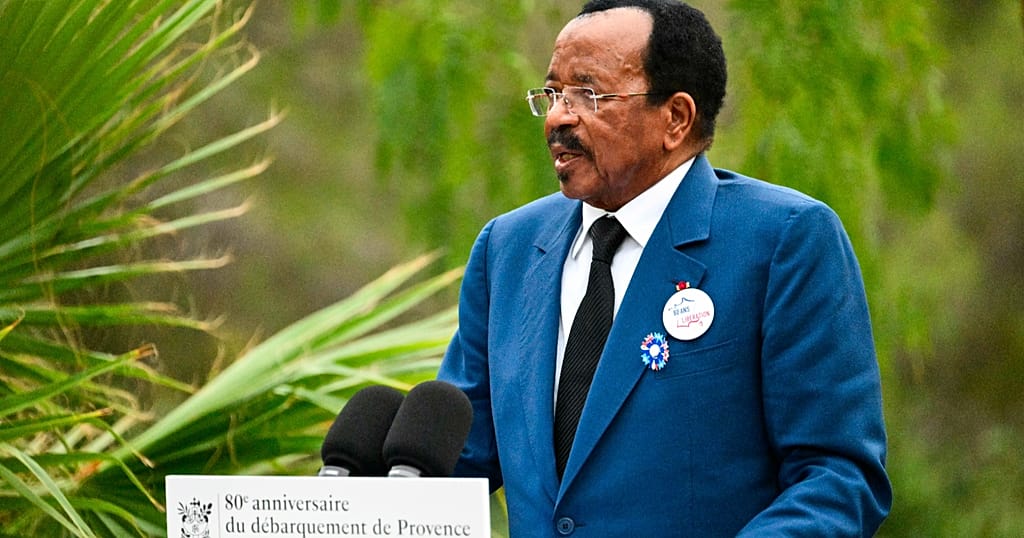
Cameroon’s 93-year-old President Paul Biya has extended his stay in Europe, prompting widespread speculation about his health and the country’s political direction. After departing Cameroon on June 7 with his wife under the pretext of a private trip, the veteran leader remains absent nearly two months later, fueling debates over potential power vacuums.
In response to mounting concerns, Biya has intensified his presidential decrees, a strategy aimed at reinforcing his authority despite his physical absence. This flurry of executive actions underscores his determination to maintain control and counter accusations of governance paralysis.
Decrees and military reshuffles: a bid to assert authority
On July 31, the Head of State signed a decree authorizing the Minister of Economy to finalize a financing agreement with the Islamic Development Bank, securing nearly 28 billion CFA francs in funding. This move not only demonstrates Biya’s ongoing involvement in state affairs but also highlights his administration’s commitment to economic partnerships.
Earlier in August, the President orchestrated a major military overhaul. Five colonels were elevated to brigadier general ranks, while General Ebaka Hypolite was appointed as the new Chief of the Armed Forces. These strategic appointments serve a dual purpose: reinforcing the security apparatus and consolidating Biya’s influence over the military chain of command.
While the government insists that Biya’s health remains stable and his return imminent, critics argue that his prolonged absence exposes institutional fragility. Opposition voices have condemned what they describe as a “leadership void”, warning of a nation drifting toward “autopilot governance” amid delayed cabinet reshuffles and unresolved vice-presidential appointments.
Political tensions rise as uncertainty lingers
The opposition’s concerns reflect deeper anxieties about Cameroon’s political stability. With key positions remaining unfilled and Biya’s absence stretching beyond expectations, questions arise about the country’s preparedness to handle potential crises. The government’s insistence on Biya’s imminent return does little to quell skepticism, particularly as rumors of health complications persist.
Meanwhile, Biya’s decree-driven strategy appears designed to project an image of continuity and control. Whether this approach will suffice to silence critics or stabilize the political landscape remains to be seen. For now, Cameroon watches and waits, caught between hope for a swift resolution and mounting unease over the future.