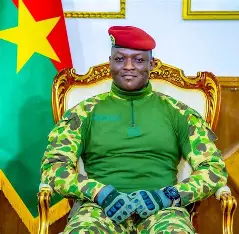
The Burden of Leadership in a Time of Crisis
History often repeats itself in the trajectory of military leaders who ascend to power through force, only to find themselves ensnared by the very structures they helped create. A recurring pitfall is the misinterpretation of public silence—not as a reflection of fear or uncertainty, but as unconditional support. In Burkina Faso, this dynamic appears to be taking shape, as the image of a resolute administration slowly erodes under the weight of internal fissures.
Behind carefully staged public appearances, immaculate uniforms, and fiery rhetoric against external influences, a different reality is unfolding. What was once perceived as an unwavering leadership now faces growing skepticism, as whispers of dissent and instability spread through the corridors of power.
The Erosion of Trust Within the Ranks
For critics of Captain Ibrahim Traoré, the leader’s increasing isolation is becoming impossible to ignore. This perception is fueled by persistent rumors of coup attempts, shifts in military leadership, and the constant restructuring of security apparatuses.
« When a regime begins to fear its own protectors, it is no longer the nation it safeguards, but its own shadow. »
The purge of early allies has become a defining feature of the current administration. Since assuming power in September 2022, Ibrahim Traoré has overhauled key military and security positions, replacing or sidelining influential officers who were once pivotal in securing his rise. The removal of the intelligence director, a central figure in the security framework, has raised particular concerns. Analysts suggest that such deep restructuring of institutions designed to ensure stability often signals a loss of confidence at the highest levels of government.
When a leader begins to distrust those tasked with their protection, the issue transcends mere security concerns—it becomes a political crisis. The Burkina Faso Armed Forces, once united in their mission against armed groups, now appear fractured by suspicion. Repeated promotions, appointments, and dismissals reinforce the impression that personal loyalty is increasingly prioritized over operational experience.
A Climate of Fear and Political Tightening
Faced with persistent security challenges, the regime has adopted a more authoritarian approach. Critics highlight several concerning trends:
- Arrests of prominent figures openly critical of the government;
- Cases of disappearances and abductions reported by human rights organizations;
- Restrictions on media outlets, including suspensions and constraints on journalists;
- Coercive measures against civil society actors, perceived by supporters as retaliatory actions.
These developments have been widely documented by international human rights bodies, which warn of a significant regression in public freedoms throughout Burkina Faso. Compounding this is an official communication strategy that centers almost exclusively on the head of state. State-controlled media and allied outlets frequently showcase his movements, speeches, and initiatives, reinforcing perceptions among opponents of an increasingly personalized form of governance.
Rather than demonstrating unchallenged authority, this strategy is interpreted by detractors as an attempt to compensate for systemic weaknesses through the control of information.
The Unresolved Security Crisis
The most pressing challenge, however, remains unchanged. Nearly four years after the political transition, the conditions that justified the coup d’état endure. Large portions of the country remain under the sway or threat of armed factions, while the humanitarian toll continues to rise. Millions have been displaced, and civilians, defense forces, and local defense volunteers face regular attacks. Critics argue that political consolidation is increasingly overshadowing the urgent need to address security and humanitarian crises.
Recent data from the United Nations, humanitarian organizations, and research centers confirms that despite military efforts, the security situation remains dire. Jihadist attacks persist across several regions, and internal displacement remains among the highest in the subregion.
The Risk of Self-Inflicted Isolation
While patriotic rhetoric can inspire unity, it cannot restore stability, rebuild institutions, or rekindle trust between the state and its people. For regime critics, the gravest danger now lies in the growing isolation of the junta leader. By severing ties with former allies, repeatedly reshuffling security structures, and governing under perpetual suspicion, Ibrahim Traoré risks undermining the very foundations of his authority.
African political history offers numerous examples of military regimes that, in concentrating power within an ever-shrinking inner circle, ultimately collapsed under the weight of internal distrust rather than external opposition.
The true challenge for Burkina Faso remains unchanged: to restore lasting security, rebuild institutional trust, and meet the needs of a population still bearing the human cost of instability. When a government expends more energy on preempting perceived conspiracies than on resolving the crises that brought it to power, it risks elevating political survival above the national interest—with devastating consequences.