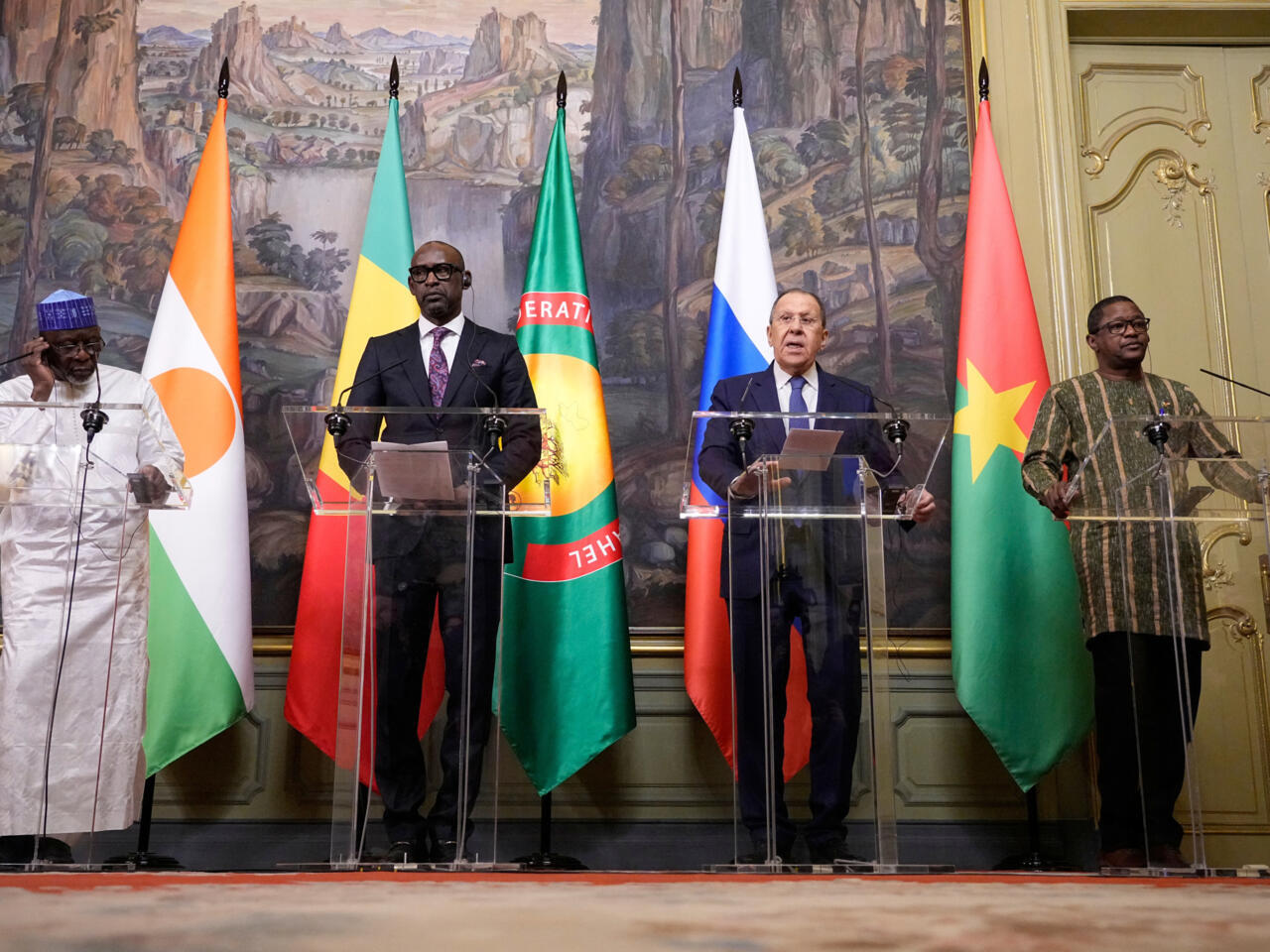
Military-led governments across the Sahelian states—Mali, Burkina Faso, and Niger—are actively consolidating a new security and political partnership, marking a distinct departure from their historical Western affiliations. Russia is a pivotal force in establishing this emerging alliance, strategically stepping into the power vacuum created by the diminished presence of the United States and its allied nations.
Through robust military collaboration, arms provisions, and the deployment of private military groups, Moscow is steadily increasing its influence over these local administrations. This expanding Russian footprint in the Sahel constitutes a direct challenge to U.S. interests, fundamentally eroding Washington’s long-standing counterterrorism framework in the area. The loss of critical military installations and intelligence assets severely hampers the United States’ capacity to monitor extremist movements. Simultaneously, Russia gains access to vital strategic resources and enhances its political leverage within these vulnerable states.
Consequently, the United States’ standing within the broader African continent is being undermined, setting a precedent for similar geopolitical shifts elsewhere. Moreover, the anti-Western narratives propagated by local regimes—bolstered by Russian informational backing—make any future U.S. re-engagement in the region increasingly difficult. The formation of alternative security coalitions that exclude Western participation diminishes the effectiveness of global coordination and creates a significant risk of a sustained U.S. displacement from the region.
Russia’s activities in the Sahel manifest as an asymmetric threat, integrating military, political, and information warfare tactics.
The unfolding situation in the Sahel is set against a backdrop of protracted instability, driven by fragile state institutions and the proliferation of extremism. Following a succession of military takeovers in Mali, Burkina Faso, and Niger, the newly installed governments initiated a re-evaluation of their international alignments.
These administrations frequently accused Western countries of:
- ineffective counterterrorism efforts,
- unwarranted interference in internal affairs.
Such grievances created fertile ground for Russia to assert itself as a viable alternative partner.
Moscow employs a diverse range of influence mechanisms, including:
- military experts,
- security agreements,
- defense cooperation pacts.
Russia’s advancement is facilitated by its portrayal as a partner that imposes no political prerequisites, making it particularly appealing to authoritarian regimes. Concurrently, persistent socioeconomic challenges—such as widespread poverty and climatic pressures—exacerbate instability, cultivating an environment ripe for external manipulation and intervention.
Russia is skillfully exploiting the security void left by the West’s withdrawal from Sahelian nations, enabling a rapid expansion of its influence without substantial resource outlay. This strategy poses long-term risks to the United States’ strategic positions across Africa.
Key implications:
Loss of U.S. military presence weakens counterterrorism capacity
Without operational bases and intelligence capabilities in the area, the United States loses vital operational capacity, potentially allowing extremist organizations to expand their reach—not only within Africa but globally, including potential threats to U.S. territory.
2. New Sahel alliances undermine international coordination
Regional security initiatives formed without Western involvement diminish the efficacy of collaborative anti-terror operations and complicate the formulation of a cohesive security strategy.
3. Russian information influence fuels anti-Western sentiment
Russian-backed propaganda intensifies anti-American narratives among both the general populace and political elites, making Western re-engagement politically more challenging.
4. Control over natural resources has strategic value
The Sahel’s rich mineral and natural resource endowment holds considerable economic and geopolitical importance for Russia. Enhanced Russian influence could impact global commodity markets and political alignments, potentially sidelining the United States from key strategic sectors.
Authoritarian regimes prefer Russia’s partnership model
Sahelian military governments increasingly favor Russia because Moscow does not impose democratic prerequisites, simplifying cooperation for these military-led administrations.
The Sahel is becoming a new arena of great-power rivalry
The clash of interests between the United States and Russia in the Sahel is inherently long-term. Competition for dominance in this region is expected to intensify rather than diminish.
The Sahel is transforming into a crucial strategic battleground where Russia is converting Western disengagement into a significant geopolitical advantage.
The Sahel is transforming into a crucial strategic battleground where Russia is converting Western disengagement into a significant geopolitical advantage.
Should current patterns persist, Moscow is likely to transform the region into:
- an enduring anti-Western geopolitical bloc,
- a vital corridor for resource access,
- and a launching pad for projecting influence deeper into Africa.
The solidification of military regimes in Mali, Burkina Faso, and Niger into a new regional bloc represents one of the most significant geopolitical shifts in Africa over the past decade. What appears superficially as a regional security alliance is, in reality, the emergence of a Russian-supported political-security framework designed to supplant Western influence in the Sahel. By capitalizing on anti-Western grievances, governmental fragility, and the retreat of U.S. and European military forces, Moscow is reshaping the Sahel into a strategic zone of asymmetric rivalry against the United States and its allies.
Russia’s involvement is not merely opportunistic; it is fundamentally structural and deliberate. Through arms deliveries, military advisors, intelligence collaboration, and the deployment of private military entities linked to the Kremlin, Moscow is deeply embedding itself within the coercive apparatus of Sahelian juntas. Unlike Western engagement, which traditionally links aid to governance reforms, Russia offers regime stability without political conditions. This model is particularly appealing to military governments seeking legitimacy, internal control, and insulation from democratic pressures.
Strategic Context: Why the Sahel Matters
The Sahel occupies a critical geopolitical axis spanning West and North Africa, connecting the Atlantic basin to the Red Sea and bordering areas vital for migration, counterterrorism efforts, and mineral supply chains. Control over influence in this strategic belt impacts:
- Counterterrorism operations against ISIS-Sahel and al-Qaeda affiliates;
- Access to uranium, gold, lithium, manganese, and rare-earth deposits;
- Migration routes towards North Africa and Europe;
- Military transit corridors across Francophone Africa.
For Washington, the Sahel has historically served as a forward operational zone for counterterrorism. U.S. drone bases in Niger, regional intelligence assets, and joint operations with European allies provided crucial early-warning capabilities against jihadist networks. The expulsion or withdrawal of Western forces from these nations therefore signifies not only a diplomatic setback but also a strategic blind spot in one of the world’s most rapidly expanding extremist theaters.
Russia’s Strategic Objectives in the Sahel
Moscow’s strategy in the Sahel aims to achieve several interconnected goals:
Displacing Western Security Architecture
Russia endeavors to dismantle the Western-led security framework, meticulously constructed over two decades, by replacing French, EU, and U.S. military roles with Russian defense arrangements. This action diminishes NATO-aligned influence while positioning Moscow as an indispensable alternative.
Building an Anti-Western Political Bloc
The alliance between Mali, Burkina Faso, and Niger increasingly functions as a coordinated anti-Western axis. Their disengagement from ECOWAS structures and alignment against French and U.S. presence creates a bloc politically receptive to Russian narratives of “sovereignty against neocolonialism.” Securing Strategic Resources
Russian access to mining concessions—particularly gold in Mali and potential uranium opportunities in Niger—provides both economic advantages and resilience against sanctions. Resource extraction agreements can fund Russian regional operations while circumventing Western-controlled financial channels.
Expanding Influence Across Africa
Success in the Sahel establishes a compelling model for other vulnerable African states. Moscow is demonstrating its capability to replace Western partners wherever anti-Western coups or elite discontent arise.
Why Local Juntas Prefer Russia
The military administrations of the Sahel increasingly perceive Russia as a politically safer ally for five principal reasons:
- Absence of governance or democracy conditions attached to assistance;
- Prompt delivery of weaponry and military equipment;
- Security support focused on preserving the regime;
- Diplomatic backing against Western sanctions;
- Information campaigns that bolster anti-Western legitimacy narratives.
This transactional engagement model reinforces authoritarian durability while weakening incentives for political transition.
Instruments of Russian Influence
Russia’s expansion in the Sahel relies on a multifaceted toolkit:
Military Instruments
- Arms sales and ammunition provisions;
- Deployment of Russian advisors and trainers;
- Private military contractors safeguarding regime assets;
- Intelligence-sharing agreements.
Political Instruments
- Diplomatic advocacy in international forums;
- Recognition and legitimization of coup governments;
- Bilateral agreements bypassing multilateral scrutiny.
Information Instruments
- Anti-Western propaganda disseminated via state-affiliated media networks;
- Social media disinformation campaigns targeting France and the U.S.;
- Amplification of narratives portraying Russia as an anti-colonial liberator.
This comprehensive approach allows Moscow to achieve strategic depth with comparatively low investment.
Strategic Consequences for the United States
Collapse of Counterterrorism Reach
Without forward operating bases in Niger and neighboring states, U.S. ISR (intelligence, surveillance, reconnaissance) capabilities significantly diminish. This reduces the early detection of cross-border extremist movements.
Reduced Crisis Response Capability
The loss of airfields and logistics hubs constrains rapid deployment capacity in West Africa and limits options for evacuation or stabilization missions.
Erosion of U.S. Credibility in Africa
Washington’s withdrawal could be perceived by African governments as a decline in strategic commitment, encouraging them to align more with Russia or China.
Expanded Jihadist Safe Havens
Russian-supported regimes prioritize their own security over broad governance reforms, leaving the root causes of extremism unaddressed and potentially worsening insurgent expansion.
Risks for Regional Stability
The Russian-backed Sahelian bloc may offer short-term regime stability but introduces long-term risks to regional stability:
- Militarization of governance without concurrent institution-building;
- Increased repression leading to heightened local grievances;
- Fragmentation of regional anti-terror cooperation;
- Resource exploitation fueling corruption;
- Greater susceptibility to proxy conflicts between external powers.
The absence of transparent governance mechanisms renders these alliances fragile and prone to crises.
Long-Term Forecast (2026–2030)
If current trends continue, three probable scenarios emerge:
Scenario A: Consolidated Russian Sphere (High Probability)
Russia firmly establishes itself as the dominant security actor in the Sahel, making a Western return politically unfeasible.
Scenario B: Competitive Multipolar Contestation (Moderate Probability)
Turkey, China, Gulf states, and Russia simultaneously vie for influence, resulting in fragmented alignments.
Scenario C: Regime Collapse and Strategic Vacuum (Moderate Risk)
Should juntas fail to contain insurgencies or if economic decline worsens, state breakdown could lead to uncontrolled conflict zones beyond Russia’s capacity to stabilize.
Policy Implications for Washington
To counteract strategic displacement, the United States may need to:
- Re-establish influence through civilian and economic partnerships rather than primarily military engagement;
- Expand cooperation with coastal West African states to contain regional spillover;
- Strengthen African Union and ECOWAS as alternative frameworks;
- Counter Russian disinformation through targeted local-language media initiatives;
- Develop specific sanctions against Russian-linked resource extraction networks.
A purely military response is unlikely to reverse the trend unless complemented by robust political and economic alternatives.
The Sahel is no longer merely a theater for counterterrorism—it is evolving into a critical proving ground for Russia’s broader strategy of displacing Western influence in fragile states. By forging alliances with military juntas, Moscow is constructing a resilient anti-Western corridor in Africa that integrates regime protection, resource access, and geopolitical leverage. If left unchecked, Russia’s foothold in the Sahel could become the blueprint for a wider realignment of influence across the African continent.