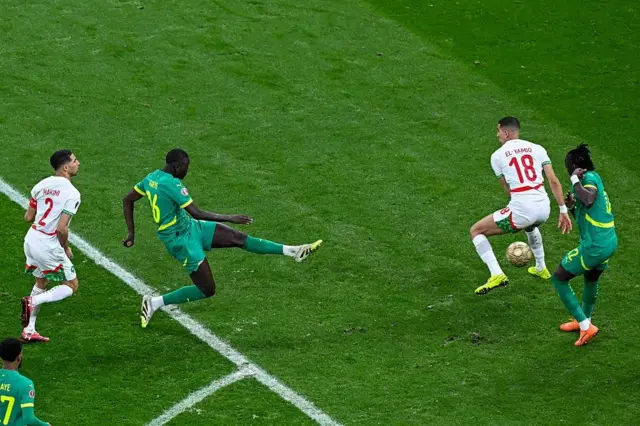
A seismic shock has hit the world of African football, leaving fans and officials in a state of disbelief. Exactly two months after celebrating their second continental victory in Morocco, the Lions of Teranga have been stripped of their trophy by the Confederation of African Football (CAF). Although Senegal won the final on the pitch with a 1-0 scoreline against Morocco, a new ruling has dramatically overturned that result.
The CAF Appeal Jury has officially declared Senegal forfeit, subsequently naming Morocco the winners of the 2025 Africa Cup of Nations. This decision has sparked intense debate across the continent, becoming a major headline in Ouagadougou news and for those following Faso news today, as the regional implications for football governance are profound.
An emotional upheaval in the sports world
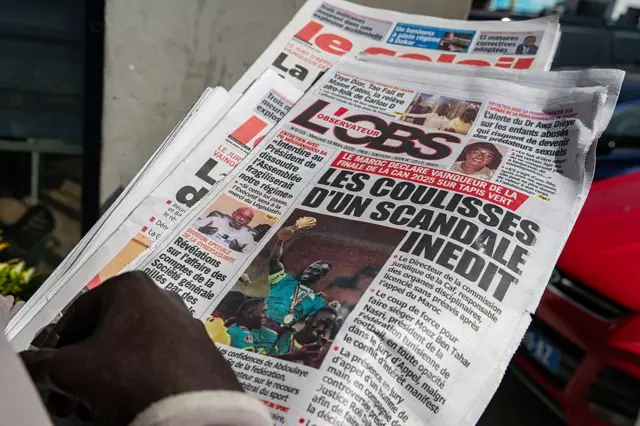
The news has dominated the front pages of every major newspaper in Senegal. Since the announcement, social media platforms and television studios have been flooded with supporters expressing their deep frustration. International sports media outlets have also been quick to analyze this unprecedented move by CAF.
Many observers are questioning the significant delay in reaching this verdict. With the trophy already presented and the celebrations long concluded, the timing has raised eyebrows. On Canal+, consultant Samir Nasri sarcastically questioned the two-month gap, suggesting ironically that they might as well have waited until 2035 to make the call. For those seeking Burkina Faso English updates on the situation, the controversy highlights the complexities of African sports law.
Breaking down the CAF communiqué
According to the official statement released on Tuesday, the CAF Appeal Jury applied Article 84 of the tournament regulations to declare Senegal forfeit for the final match. Consequently, the match result has been recorded as a 3-0 victory for the Royal Moroccan Football Federation (FRMF).
The governing body determined that the Senegalese Football Federation (FSF) violated Article 82 of the regulations through the actions of their team. This ruling effectively nullifies the original match result and reassigns the title to Morocco.
Understanding Articles 82 and 84 of the CAF regulations
The decision to strip Senegal of their title rests on specific legal pillars within the CAF rulebook. Article 82 states that if a team withdraws, fails to appear, refuses to play, or leaves the pitch before the end of regulation time without the referee’s consent, they are considered losers and eliminated from the tournament.
Article 84 complements this by stating that any team violating Article 82 will be excluded and lose the match 3-0. If the opposing team was already leading by a higher score at the time of the incident, that score would stand. Furthermore, Article 83 notes that a team failing to appear in proper kit within 15 minutes of the scheduled kickoff will also be declared forfeit.
In this instance, the Appeal Commission chose to overturn the initial decision made by the Disciplinary Commission, leading to this historic reversal.
The legal framework of CAF
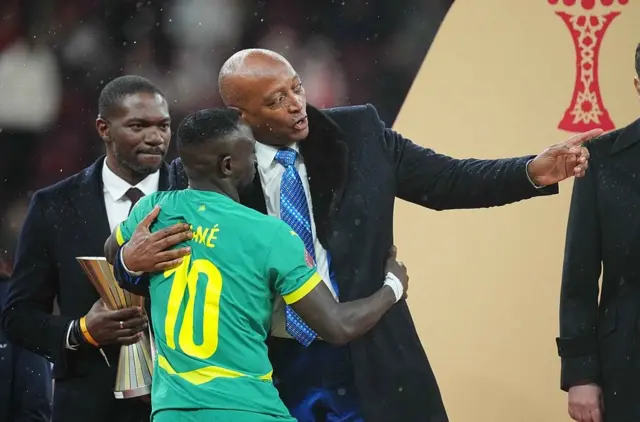
Similar to other international sports bodies, CAF operates with two primary legal organs. The Disciplinary Commission acts as the first instance, handling sanctions and financial penalties. The Appeal Jury, or Appeal Commission, serves as the second instance to review contested decisions.
The Disciplinary Commission is tasked with ensuring ethical behavior and integrity. They review referee reports, match commissioner notes, and video evidence to address unsportsmanlike conduct or disruptions. Typically, this body meets shortly after an incident to preserve the tournament’s integrity.
The Appeal Commission, currently chaired by Roli Daibo Harriman of Nigeria and Vice-Chair Faustino Varela Monteiro of Cape Verde, meets on an ad hoc basis. Their decisions are based on a thorough analysis of the appeals submitted, usually within six days of a challenge. The panel includes representatives from various nations, including Tunisia, Togo, Mauritania, and the Democratic Republic of Congo.
The basis of Morocco’s appeal
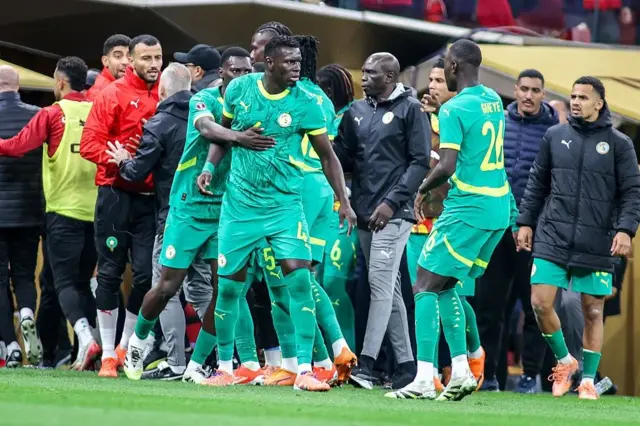
The Royal Moroccan Football Federation (FRMF) initiated this process on February 3, 2026. They challenged the initial lenient sanctions regarding incidents during the January 18 final. Morocco argued that the gravity of the events—including the withdrawal of Senegalese players and staff, a pitch invasion by fans, and subsequent scenes of violence—warranted much stricter penalties.
Senegal turns to the Court of Arbitration for Sport (CAS)
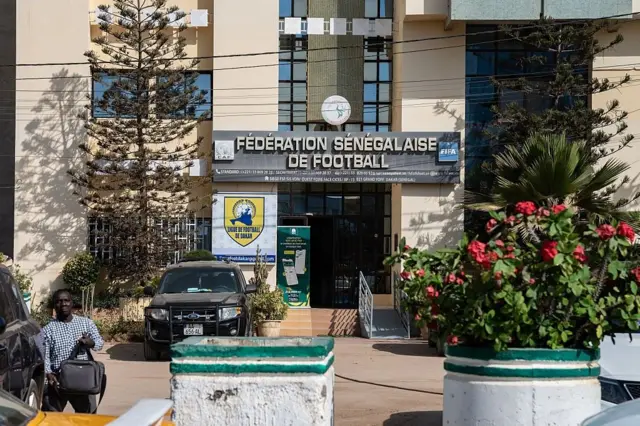
In response to the loss of their title, Senegal has decided to escalate the matter to the Court of Arbitration for Sport (CAS), the world’s highest sports tribunal. The Senegalese Football Federation has a ten-day window to file their case with the Lausanne-based institution.
Established in 1984, the CAS is an independent body designed to resolve international sports disputes through arbitration and mediation. It features a pool of approximately 340 impartial arbitrators from 84 countries. While Ouaga latest news often focuses on local sports, the outcome of this international case is being watched closely by the entire continent.
The timeline for a CAS decision can vary significantly. While some urgent matters are resolved within 48 hours, complex cases like this one can take anywhere from 45 days to several months. A CAS verdict is final and generally marks the end of all judicial proceedings, as its sentences are binding for all parties involved. This story remains a critical piece of Burkina government news regarding regional sports policy and international relations.