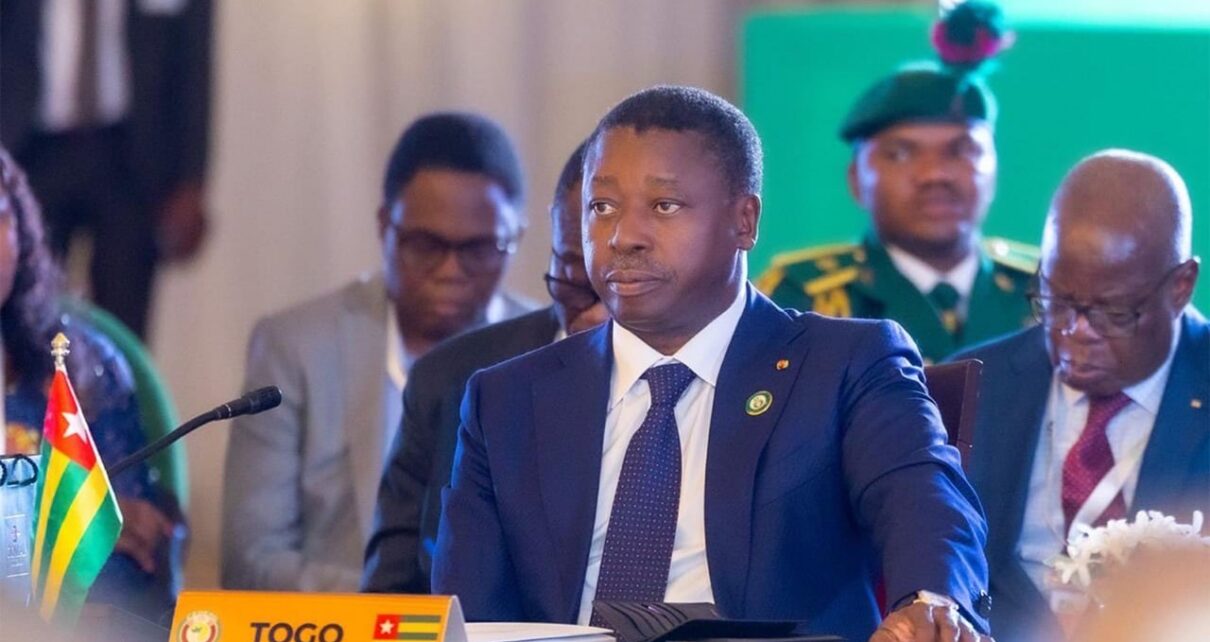

Togo’s diplomatic maneuvers often speak volumes without uttering a word. On March 9, 2026, Russia’s Defense Minister, Andreï Belousov, touched down in Lomé by plane, only to be greeted the following day by Faure Essozimna Gnassingbé. The meeting, though confirmed by an insider within the Togolese presidency to Jeune Afrique, remained shrouded in secrecy, with no official statement released afterward.
Togo’s strategic balancing act in a shifting geopolitical landscape
The unannounced visit highlights the delicate dance Faure Gnassingbé must perform on the international stage. With Russia expanding its influence in Africa, the Economic Community of West African States (ECOWAS) asserting its regional authority, and the Alliance of Sahel States (AES) forging new alliances, Togo finds itself navigating treacherous waters. Gnassingbé’s approach—marked by discretion and calculated engagement—reflects a broader strategy to maintain stability while maximizing opportunities.
why Togo’s silence speaks volumes
The absence of an official announcement regarding Belousov’s visit underscores a deliberate choice in diplomacy. By avoiding public declarations, Togo positions itself as a neutral player, avoiding unnecessary entanglements in geopolitical disputes. This tactic allows the country to cultivate relationships with multiple stakeholders without committing to any single bloc, a balancing act that could prove crucial in the months ahead.
the role of ECOWAS and the AES in Togo’s calculations
ECOWAS, traditionally a key partner for Togo, has seen its influence wane in recent years as some member states pivot toward alternatives like the AES. The latter, comprising Mali, Burkina Faso, and Niger, has emerged as a counterbalance to ECOWAS, particularly after these nations withdrew from the regional bloc in protest of sanctions and political pressures. Togo’s engagement with both entities reflects its need to hedge its bets in a rapidly evolving regional landscape.
Gnassingbé’s government appears to be leveraging this ambiguity to its advantage. By maintaining open channels with Russia, ECOWAS, and the AES, Togo can secure economic, military, and political benefits from each party without fully aligning with any one. This strategy not only preserves Togo’s sovereignty but also enhances its diplomatic flexibility in an increasingly polarized region.
the stakes: stability vs. strategic autonomy
The stakes are high. On one hand, Togo must ensure regional stability, a priority for ECOWAS, which has repeatedly intervened in political crises across West Africa. On the other, the country cannot afford to ignore the growing presence of Russia, particularly in security and energy sectors, where Moscow has made significant inroads in Africa. Meanwhile, the AES offers economic and security partnerships that could diversify Togo’s alliances beyond traditional Western partners.
Gnassingbé’s ability to walk this tightrope will define Togo’s role in West Africa for years to come. Whether through silent diplomacy or calculated public engagements, his leadership is shaping a foreign policy that prioritizes pragmatism over allegiance. In a continent where loyalties are increasingly tested, Togo’s approach may well set a precedent for other nations to follow.
As the geopolitical chessboard continues to shift, Faure Gnassingbé’s balancing act will be closely watched—not just by neighboring countries, but by global powers vying for influence in Africa.