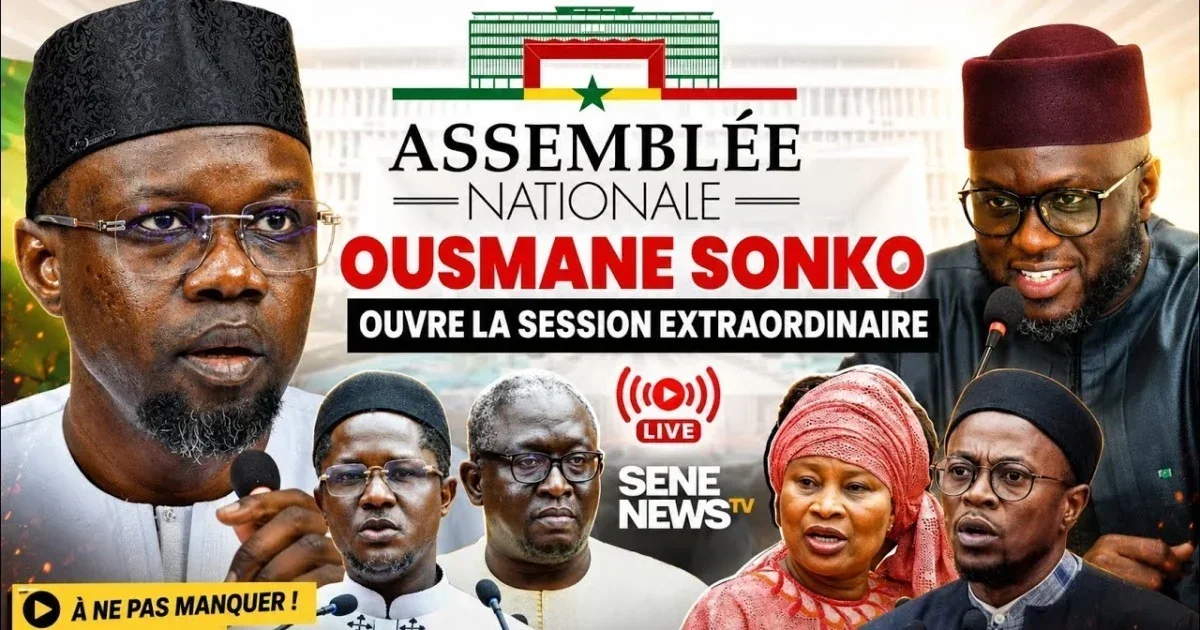
The National Assembly convened today for a rare extraordinary session, marking a pivotal moment in Senegal‘s political landscape. Amid heightened tensions, lawmaker Ousmane Sonko spearheaded the launch of multiple parliamentary investigations, sending ripples through the political sphere.
Fresh probes launched by opposition leader
Ousmane Sonko, a prominent figure in Senegal‘s opposition, has triggered a series of legislative inquiries targeting key government policies. The investigations focus on alleged irregularities in public contracts, financial mismanagement in state-owned enterprises, and potential corruption within high-profile ministries. Sonko’s move underscores his commitment to transparency, though critics argue the timing reflects deeper political maneuvering.
Extraordinary assembly session: what’s at stake
The extraordinary session, called outside the regular parliamentary calendar, signals an escalation in legislative-oversight activities. Debates have centered on budgetary allocations, security sector reforms, and the controversial handling of recent public protests. With President Bassirou Diomaye Faye‘s administration under scrutiny, lawmakers are divided between support for urgent reforms and resistance to perceived destabilization efforts.
Key areas under investigation
- Public procurement anomalies: Allegations of inflated contracts and kickbacks in major infrastructure projects
- State-owned enterprise governance: Claims of mismanagement in energy and transport sectors
- Security sector accountability: Concerns over excessive use of force during recent demonstrations
- Ministerial-level corruption: Specific cases involving high-ranking officials in the finance and interior ministries
Political fallout and public reaction
The session has intensified the already charged atmosphere between ruling and opposition factions. While supporters of Sonko praise his bold stance against corruption, government allies dismiss the probes as politically motivated distractions. Public opinion remains sharply divided, with civil society groups demanding swift, impartial investigations and detractors warning of potential legislative gridlock.
As the extraordinary session progresses, all eyes are on Senegal‘s parliament to see whether these inquiries will yield tangible results or further polarize the nation’s political climate.