Government intervention puts Burkina Faso’s poultry sector in peril
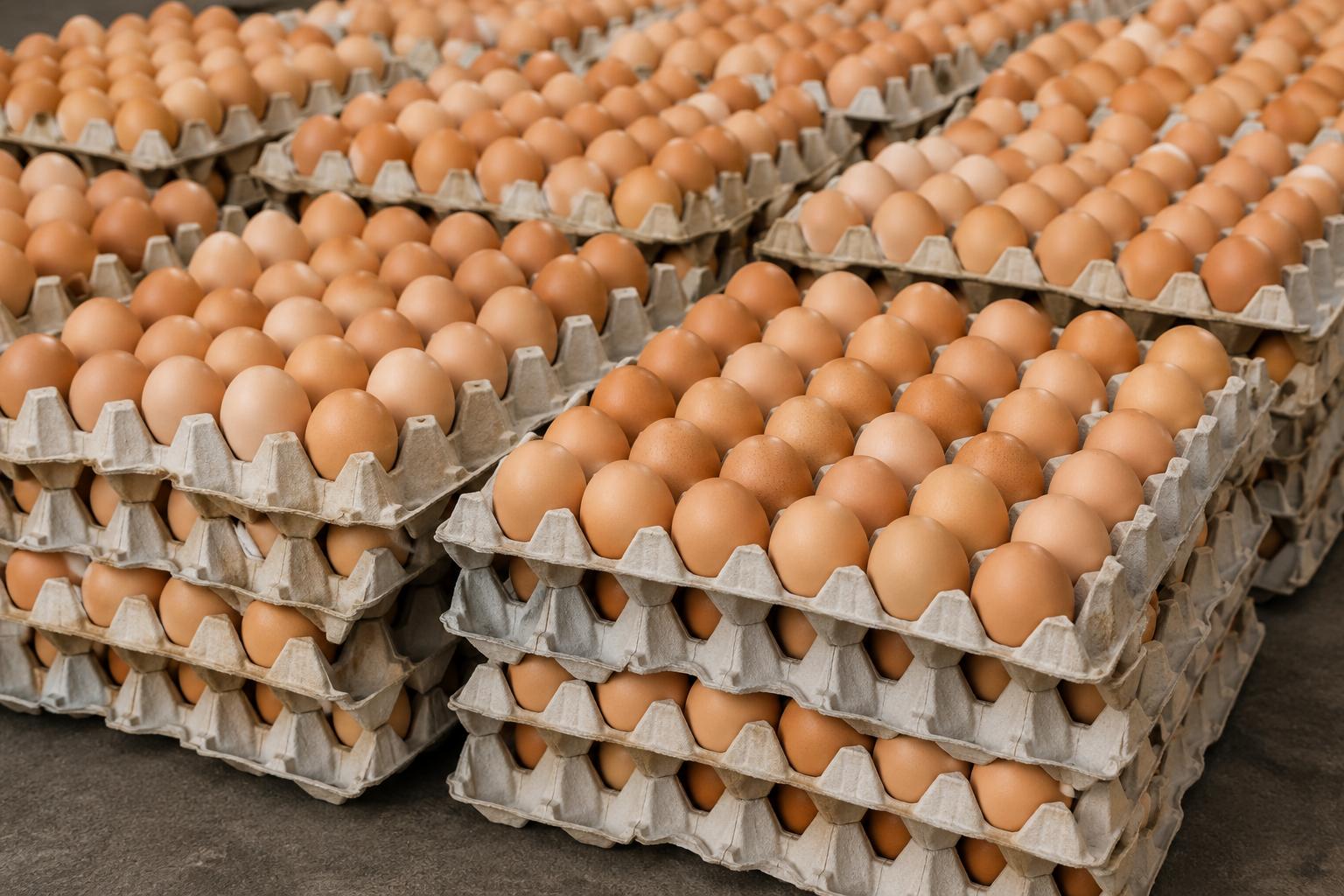
Producers and distributors in Burkina Faso’s poultry industry are reeling from a government decision that threatens the very foundations of their livelihoods. In a sudden announcement, the ministries of Commerce and Animal Resources imposed a strict price ceiling on eggs, capping the retail price at 100 F CFA per unit. For bulk purchases, wholesale prices are capped at 2,600 F CFA per crate, while retailers face a ceiling of 2,750 F CFA. Marketed as a measure to cushion household budgets, the policy instead delivers a crushing blow to business freedom and the survival of an already struggling sector.
The cost-price mismatch: a recipe for disaster
Setting a fixed price for a finished product while ignoring soaring production costs is a flawed strategy. Poultry farming, especially egg production, relies heavily on feed inputs—maize, soybean and cottonseed cakes, mineral supplements—collectively known as provende. Over recent months, the cost of these essentials has skyrocketed due to inflation, rising transportation expenses and supply chain disruptions. By capping the egg price without subsidizing feed costs, the government has effectively made it impossible for producers to break even.
Forcing producers to sell at a predetermined price—regardless of their actual costs—is not regulation; it’s economic strangulation. When the state dictates pricing without addressing input costs, it erodes the profitability of every link in the supply chain, from smallholder farmers to large-scale producers.
Economic intervention gone wrong: what happens when prices don’t reflect reality?
The principle of free enterprise hinges on the natural balance of supply and demand. When the state overrides this mechanism by imposing arbitrary price limits, it doesn’t regulate the market—it paralyzes it. Entrepreneurs who have invested millions in infrastructure, secured bank loans and created local jobs now face a harsh reality: their revenue is capped, but their expenses continue to rise. Why would anyone risk capital and employment in such an environment?
The consequences of this policy are already taking shape and could worsen rapidly:
- Small producers forced into bankruptcy: Unlike industrial-scale operations, small poultry farmers lack the financial resilience to absorb losses. Many will be forced to close down, eliminating thousands of jobs across rural and peri-urban areas.
- Reduced production to protect losses: Faced with unprofitable prices, farmers will likely scale back flock sizes, leading to a decline in egg supply.
- Black markets and price gouging: As official supply dwindles, eggs will disappear from store shelves. When they reappear, they’ll be sold illegally at prices far exceeding the regulated 100 F CFA threshold—ultimately harming the very consumers the policy aims to protect.
A call for smarter, production-focused regulation
Ensuring affordable access to food is a legitimate goal, but it must not come at the expense of those who feed the nation. To truly stabilize egg prices, the government should address the problem at its source. Rather than capping output prices, it should:
- Subsidize the cost of animal feed, the single biggest expense for poultry farmers.
- Remove taxes on essential feed ingredients to reduce production costs.
- Expand access to low-interest credit for small and medium-scale aviculturists.
Imposing price controls without tackling rising feed costs is not just bad economics—it’s a dangerous precedent. It signals to the business community that entrepreneurial freedom remains hostage to disconnected decrees. To safeguard Burkina Faso’s poultry sector and food sovereignty, the government must reverse this decision, free the market and support production from the ground up.