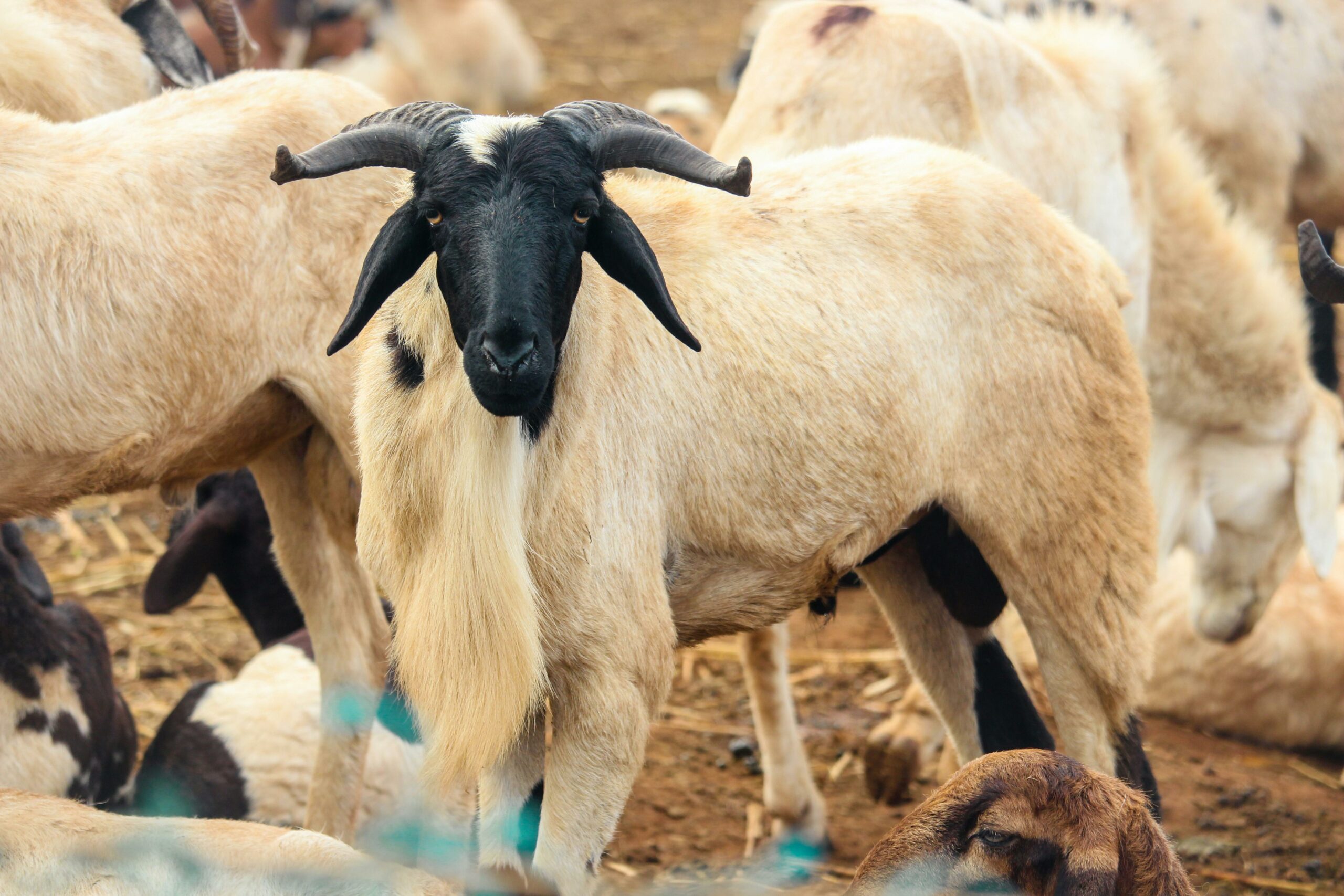
Tabaski’s soaring sheep prices push Senegalese into debt spiral
As Tabaski approaches, millions of Senegalese families face impossible choices: borrow at crippling rates or sacrifice tradition. The price of a sacrificial sheep has skyrocketed, turning a religious obligation into a financial nightmare.
Two weeks before Tabaski, the mood darkens in Dakar’s working-class districts. From Almadies to Sacré-Cœur, fathers of households grapple with the same dread. Yesterday’s sheep cost 120,000 FCFA; today it’s 150,000. For the ‘prestige’ animals—those photographed for WhatsApp—prices hit 300,000 FCFA or more.
“How am I supposed to find this money?” the question echoes annually, like an inescapable punishment. Tabaski, once a simple act of faith, has morphed into a status symbol. The pressure to conform is relentless.
From faith to finances: the sacred sheep’s new burden
Meet Mamadou Sall, a Sacré-Cœur resident earning 60,000 FCFA monthly. By May, his mind races. Two months later, he must scrape together 150,000 FCFA—two and a half months’ salary—to buy a sheep. Not for nourishment, but to uphold tradition. To impress neighbors. To preserve family dignity.
Banks won’t lend for sheep. Instead, Mamadou turns to his neighborhood tontine. They advance 150,000 FCFA—but at what cost? Tontine rates during Tabaski climb to 30-50% annually. On a 150,000 FCFA loan, upfront fees reach 3,750-6,250 FCFA, with 12-month repayment terms.
Mamadou’s story is far from unique. Between 35% and 45% of all microfinance loans in Senegal during Tabaski are for sheep purchases. Nearly one in two credit applications in those weeks is for an animal destined to be eaten within months.
How sheep prices exploded since 2010
In 2010, a sheep cost 60,000-80,000 FCFA. Today, prices range from 150,000 to 250,000 FCFA—a staggering 87% to 275% increase in 15 years. This inflation stems from concentrated demand over two months. Tabaski demand is inelastic: families borrow regardless of cost. Breeders and intermediaries exploit this, inflating prices without hesitation.
Senegal’s minimum wage (SMIG) stands at 60,239 FCFA monthly. To buy a 150,000 FCFA sheep, a minimum-wage worker must sacrifice two and a half months’ pay. Factor in Tabaski’s other expenses—clothes, food, gifts—and the strain becomes unbearable for the 60% living below the poverty line.
Who’s borrowing—and how much?
In 2024, Senegal’s microfinance sector saw a 62% surge in loan applications during Tabaski, with average requests ranging from 120,000 to 200,000 FCFA. Two months of concentrated borrowing drowns households in debt.
The web of informal debt
With banks inaccessible, Senegalese weave through a labyrinth of debt sources: tontines, microfinance, private lenders. Each thrives during Tabaski.
| Credit Source | Normal Period | Tabaski Period |
|---|---|---|
| Local tontines | 15-30% annually | 30-50% annually |
| Formal microfinance | 24-36% annually | 36-48% for short-term loans |
| Private informal lenders | 30-40% annually | 50-60%+ annually |
| Commercial banks | Almost inaccessible | Almost inaccessible |
Tontines accelerate their lending cycles. Informal interest rates hit 30-50% annually during Tabaski, turning a 150,000 FCFA loan into a repayment of 172,500-225,000 FCFA over 12 months. Microfinance offers slightly better terms (24-36% annually), but short-term loans can reach 48%. Upfront fees on a 150,000 FCFA loan can hit 3,000-6,000 FCFA.
Social media fuels the crisis
Social platforms have weaponized Tabaski. What was once neighborly pride is now a public spectacle. WhatsApp groups and Instagram showcase ‘prestige’ sheep, turning tradition into a competition. 67% of young Dakar residents feel pressure to buy expensive sheep, with 48% citing social media as the primary pressure source.
For men, the stakes are highest. In Senegalese culture, the family’s sheep purchase falls on the man’s shoulders. Failing to provide risks shame, perceived failure, and questions about his ability to provide. The psychological toll is severe.
The hidden cost: drained household budgets
Households with Tabaski loans reduce food and healthcare spending by 18-25% in the three months following the holiday. School fees go unpaid, essential medicines are skipped. The true cost of Tabaski’s social pressure far exceeds the sheep’s price tag.
Worse still, some farmers divert agricultural loans—meant for seeds and fertilizer—toward sheep purchases. Between 8% and 12% of Senegalese agricultural loans are redirected for Tabaski prestige. This means farmers who could boost harvests by 30% instead sacrifice their future productivity.
Morocco’s 25-year-old solution
In 1999, Morocco’s king took decisive action. He declared that every poor Moroccan had the right to a Tabaski sheep—not as charity, but as a right. A recognition that religious observance shouldn’t be hostage to market forces.
Since then, Morocco has distributed over 2.8 million sheep annually via the Zakat Al-Fitr program. The cost? 450 million Moroccan dirhams (≈ 43 billion FCFA). Relative to Morocco’s budget, this is less than 0.1% annually. A small price to ensure no citizen must choose between debt and tradition.
Morocco acknowledged a simple truth: a religious festival tied to personal wealth isn’t truly religious—it’s a social distinction mechanism masked as tradition. By treating Tabaski as a public good, Morocco defused the debt crisis. Senegal could adopt the same model.
Senegal’s policy vacuum
Senegal spends almost nothing on Tabaski support. A handful of municipalities and private religious groups offer minimal aid. The rest? Left to the mercy of predatory lending and social media-driven pressure.
Recovery agencies report a troubling pattern: household over-indebtedness peaks three months after Tabaski. Families juggle loan repayments with basic survival. Meals shrink. Medical care is delayed. Children leave school.
The mental health toll is equally alarming. A 2022 study by the Dakar Mental Health Research Center found calls to helplines double among 30-55-year-old men in the three weeks before Tabaski. The dread of an unaffordable sheep, the fear of judgment—it’s crushing.
How did we get here?
The crisis stems from two forces. First, the rise of ostentatious consumption. Tabaski, once a humble religious act, now serves as a display of wealth and respectability. Social media amplified this trend, turning sheep purchases into a public competition.
Second, policy failure. The Senegalese government treats Tabaski as a non-issue. Politicians rarely mention it. Media coverage is sparse. Meanwhile, millions drown in debt annually.
Mamadou’s tontine calls are starting again. Tabaski 2025 looms. Prices climb. Interest rates surge. And the cycle repeats.