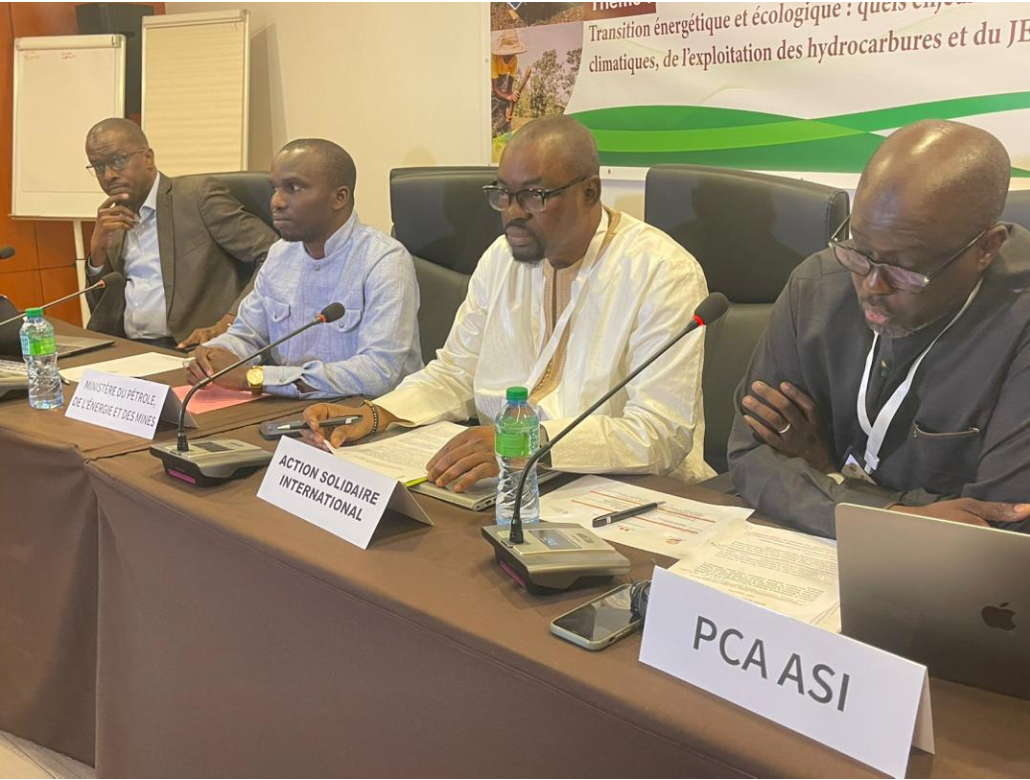
Dakar, the vibrant capital of Sénégal, has become the epicenter of critical conversations surrounding the nation’s ecological and energy future. The fourth edition of the Université de l’Environnement et de l’Énergie kicked off this week, drawing together policymakers, scientists, renewable energy advocates, and grassroots organizations to address pressing environmental challenges.
Dialogue and collaboration for a sustainable Sénégal
The two-day event, held on May 19 and 20, underscores the urgent need for action as Sénégal grapples with the dual pressures of climate change and the recent surge in oil and gas exploration. The opening ceremony, led by Dr. Elhadji Ndiaye, a senior representative of the Ministry of Petroleum, Energy, and Mines, set the tone for collaborative problem-solving.
Dr. Ndiaye emphasized that energy and environmental issues are no longer confined to isolated sectors but have evolved into pivotal economic, social, and developmental challenges. « The energy landscape is the backbone of productivity, innovation, and job creation, directly shaping the quality of life for every citizen, » he stated. The summit was attended by the Agence Nationale pour les Énergies Renouvelables (ANER), the Agence Sénégalaise d’Électrification Rurale (ASER), academic institutions, and multiple non-governmental organizations, reflecting a broad consensus on the need for sustainable solutions.
Renewable energy and climate resilience take center stage
Mamadou Barry, president of Action Solidarité Internationale and coordinator of the summit, highlighted the urgency of accelerating Sénégal’s green transition. He warned that recurrent flooding, coastal erosion, and agricultural losses are intensifying, demanding immediate policy shifts. « Climate change is not a distant threat—it is reshaping our landscapes and livelihoods today, » he noted.
Barry urged for a balanced approach that leverages the country’s emerging oil and gas sector while committing wholeheartedly to renewable energy expansion. « Sénégal stands at a crossroads: we cannot afford to let hydrocarbon development overshadow our renewable commitments. The time for action is now. »
He also called for greater inclusion of climate-vulnerable communities in policymaking, stressing that sustainable development must be both sovereign and inclusive. The summit’s agenda included workshops on clean energy innovation, rural electrification strategies, and climate adaptation policies, all aimed at fostering a resilient and equitable energy future.
Why this summit matters for Sénégal’s tomorrow
With global energy markets evolving and climate risks mounting, Sénégal’s proactive stance on energy transition positions it as a regional leader. The discussions in Dakar are not just theoretical—they are a roadmap for balancing economic growth with environmental stewardship. As the nation prepares to navigate its dual energy landscape, the outcomes of this summit could redefine its path toward a greener, more sustainable future.