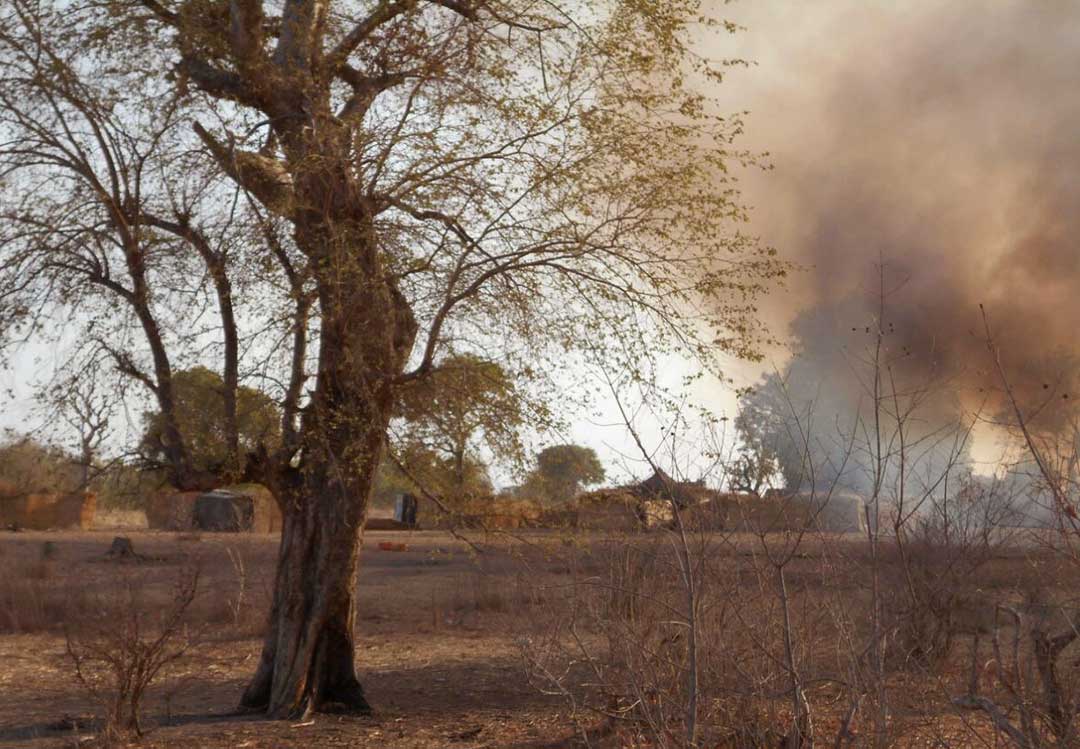
The Sambisa Forest, sprawling across 60,000 square kilometers in Nigeria’s Northeast, once thrived as a lush natural reserve beloved by tourists. Today, its dense canopy and rugged terrain have transformed it into a battleground—one where two rival militant factions vie for dominance while government forces pursue them relentlessly.
The split within Boko Haram in 2016 birthed two distinct groups: the Sunni Group for Preaching and Jihad (JAS) and the Islamic State’s West Africa Province (ISWAP). Since then, the struggle for control over Sambisa has intensified, turning the forest into a critical hub for insurgent operations.
With its impenetrable vegetation and vast expanse, Sambisa provides the perfect hideout for militants to launch attacks, disrupt supply routes, and extort local communities. The forest’s strategic value lies not only in its natural defenses but also in its proximity to remote villages and porous borders shared with Cameroon, Niger, and Chad.
Escalating clashes and shifting strategies
Security analyst Zagazola Makama, based in Borno, has documented multiple skirmishes between JAS and ISWAP in and around Sambisa. Both factions claim to have inflicted heavy losses, though these assertions remain unverified. Yet, the frequency of these encounters underscores the fierce rivalry that has evolved beyond their shared insurgency against state forces.
According to Makama’s observations, the conflict has forced both groups to adapt. While ISWAP focuses on territorial expansion, taxation, and establishing shadow governance in occupied zones, JAS continues to rely on kidnappings, looting, and indiscriminate violence. Despite relentless counterterrorism operations, their communication networks and operational capabilities persist within Sambisa’s enclaves.
The regional toll of a decade-long insurgency
Since Boko Haram’s uprising in 2009, the violence has spilled across borders, claiming over 40,000 civilian lives and displacing more than two million people, per United Nations estimates. The Sambisa Forest and the islands of Lake Chad remain strongholds for both insurgent factions, serving as launching pads for attacks on military outposts and civilian targets alike.
Diverging strengths and future risks
Security researcher Malik Samuel, a senior fellow at Good Governance Africa, highlights the resilience of both groups. “The conflict between JAS and ISWAP began as a survival struggle,” he notes. “Despite their rivalry, both factions have demonstrated remarkable adaptability, maintaining their ability to challenge Nigerian and Multinational Joint Task Force troops.”
Meanwhile, analyst Taiwo Adebayo, a Boko Haram specialist at the Institute for Security Studies in South Africa, warns that security strategies must evolve. “JAS should no longer be viewed as a weakened rival to ISWAP,” he argues. “It operates as an independent and adaptive threat, exploiting gaps in security focus.”
Samuel predicts a prolonged stalemate. “ISWAP struggles to penetrate JAS’s stronghold in Barwa, where its leadership resides,” he explains. “Yet, their proximity in the lake’s islands ensures inevitable confrontations over territory and resources.” He adds that outside these islands, JAS lacks the manpower, territorial reach, and foreign fighter support that bolster ISWAP’s dominance.