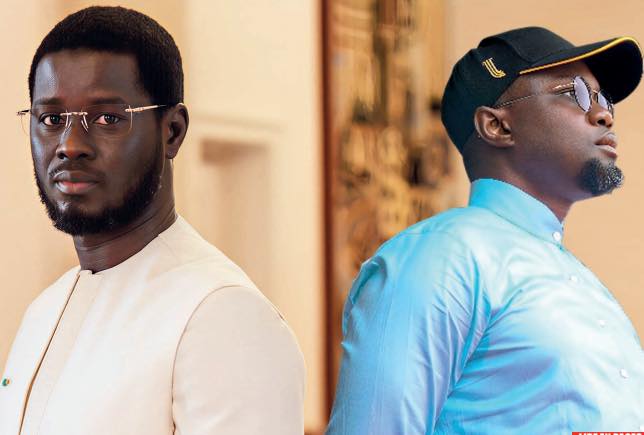
During a high-energy gathering in Louga, northern Senegal, political figure Ousmane Sonko took aim at President Bassirou Diomaye Faye’s handling of upcoming local elections. Speaking before a roaring crowd of party members and supporters, Sonko—leader of the ruling coalition Pastef Les Patriotes—highlighted what he views as inconsistent decision-making in governance.
The debate centered on the use of presidential decrees, which Sonko argued should be applied uniformly. He drew a direct comparison between decrees used to remove officials like Fadilou Keïta and Waly Diouf Bodiang and the long-overdue decree that should set the election date.
« Whether dismissing an official or setting an election date, both require a presidential decree. There is no difference in the authority vested in the president. Yet one is executed swiftly, while the other remains pending. This inconsistency speaks volumes about priorities, » Sonko remarked, as the crowd erupted in applause.
Sonko’s remarks came during a nationwide tour to promote party membership card sales, but his focus quickly shifted to broader concerns about electoral transparency. He warned against any postponement of the local polls, suggesting that hesitation from the presidency may stem from fears of Pastef’s growing influence.
« The president’s reluctance to act may reflect unease over the unwavering passion and mobilization of our party’s base, » he stated. Sonko’s comments underscore rising tensions within Senegal’s political landscape as the country prepares for a pivotal electoral cycle.
Pastef’s grassroots momentum
The party’s leadership has repeatedly stressed the urgency of holding elections on schedule, framing delays as a threat to democratic principles. Sonko’s address in Louga reinforced this stance, positioning Pastef Les Patriotes as a driving force for institutional accountability.
With local elections looming, the party’s strategy appears to hinge on maintaining public pressure, both through mobilization and direct appeals to the presidency. Observers note that Sonko’s rhetoric resonates strongly with younger voters, many of whom see his leadership as a break from traditional politics.
What’s next for Senegal’s electoral timeline?
The absence of a fixed election date has fueled speculation about potential delays. Critics argue that prolonged uncertainty could erode public trust, while supporters of the president insist that thorough preparation is necessary to ensure a smooth process.
The coming weeks will be critical in determining whether Senegal’s democratic institutions can withstand the pressure—or if political calculations will override procedural timelines.