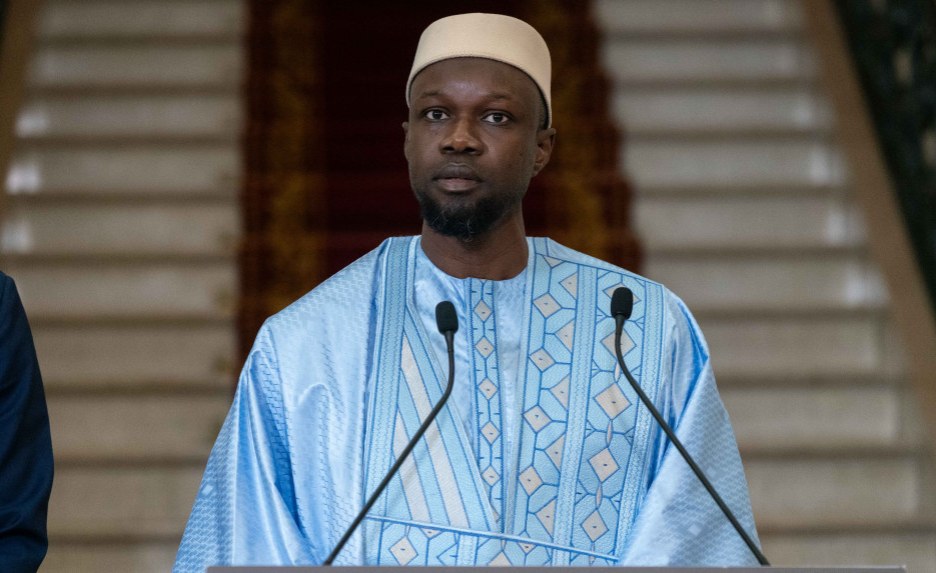
A political tremor of unprecedented scale is reverberating across Senegal and throughout the sub-region. On Friday, May 22, 2026, President Bassirou Diomaye Faye officially terminated the tenure of his Prime Minister and political mentor, Ousmane Sonko. This decisive action has led to the immediate dissolution of the entire government, signaling an abrupt end to the executive partnership that had steered the nation since the transition of power in April 2024.
Decree n°2026-1128: the official act of separation
The shockwaves spread swiftly that evening with the release of a significant official document. The head of state, President Faye, formally signed presidential decree number 2026-1128 on Friday, May 22, 2026, instantly ending Ousmane Sonko’s responsibilities as the head of government. To formalize this split, Bassirou Diomaye Faye meticulously invoked the powers vested in him by Senegal’s foundational law, specifically citing articles 42, 43, 53, and 56 of the Constitution.
This legal framework designates the President of the Republic as the guardian of the Constitution, ensuring the smooth operation of state institutions, and grants him the discretionary authority to appoint and remove the Prime Minister. Article one of the decree unambiguously states that « the functions of Mr. Ousmane Sonko, Prime Minister of the Republic of Senegal, are hereby terminated ».
According to Article 2, the implementation of this decision is immediate. Through a constitutional ripple effect, the departure of the head of government automatically triggers the resignation of all ministers and secretaries of state. However, the decree specifies that outgoing cabinet members are tasked with managing current affairs until a new ministerial team is appointed.
“Diomaye is Sonko”: the genesis of an extraordinary partnership
To fully grasp the significance of this political earthquake, one must recall the deeply intertwined and singular relationship that bound the two men. Ousmane Sonko, the charismatic leader of the PASTEF party, had forged a formidable opposition against the Macky Sall administration. Confronted with relentless legal challenges and his ultimate disqualification from the presidential race by the Constitutional Council in early 2024, Sonko made a brilliant strategic move.
While sharing a prison cell during a period of political arrests, Ousmane Sonko had designated his Secretary-General and most loyal lieutenant, Bassirou Diomaye Faye, as the substitute candidate for their systemic reform agenda.
Propelled by the iconic slogan « Diomaye is Sonko », the substitute candidate became the focal point for popular enthusiasm, strongly aligned with the party leader. Freed just days before the election through an amnesty law, both men conducted a lightning-fast campaign, culminating in Bassirou Diomaye Faye’s triumphant first-round victory on March 24, 2024.
Immediately following his oath of office on April 2, 2024, the newly inaugurated president appointed Ousmane Sonko as Prime Minister via decree n°2024-921. This marked a historic moment in African politics, as a political mentor assumed institutional subordination to his own protégé, establishing an unprecedented dual-headed governance structure.
Seeds of discord: from unity to contention
While the appearance of perfect harmony was maintained for a considerable period through public statements, the practicalities of state power swiftly exposed the limitations of this two-headed operational model. Over the months, it became clear that two subtly divergent visions were clashing.
On one side, Ousmane Sonko maintained his core identity as a sovereignty theorist and orator, frequently delivering direct and assertive pronouncements on international affairs, the renegotiation of mining and oil contracts, and a break from traditional partnerships. On the other side, President Faye found himself directly grappling with the practical realities of macroeconomic management, regional diplomacy, and the critical need to reassure financial markets.
Indeed, the initial visible cracks emerged during the governmental reshuffle on September 6, 2025, formalized by the signing of decree n°2025-430, which outlined the new cabinet composition. Far from easing tensions, this reshuffle highlighted internal power struggles for control over key ministries between the Prime Minister’s long-standing loyalists and technocrats championed by the head of state.
Ultimately, this political cohabitation between a President of the Republic, who holds constitutional legitimacy, and a head of government, who embodied historical popular legitimacy, reignited the “kingmaker” complex. This created a highly unstable equilibrium where Ousmane Sonko’s constant influence over presidential decisions eventually brought the question of actual authority at the top of the Republic into sharp focus.
What lies ahead for Senegal?
This dismissal plunges the nation into an entirely uncharted political landscape. By fully reclaiming control of the state apparatus through this assertive action, President Bassirou Diomaye Faye has definitively broken free from the moral tutelage of his former leader. He now assumes the full scope of his presidential duties alone.
The major unknown now centers on the stance Ousmane Sonko will adopt. Will the PASTEF leader opt for silence, a gentle separation, or a return to confrontational opposition, leveraging his still highly active electoral base? The composition of the upcoming government, anticipated in the coming hours, will offer crucial insights into the new direction President Faye intends for his mandate.