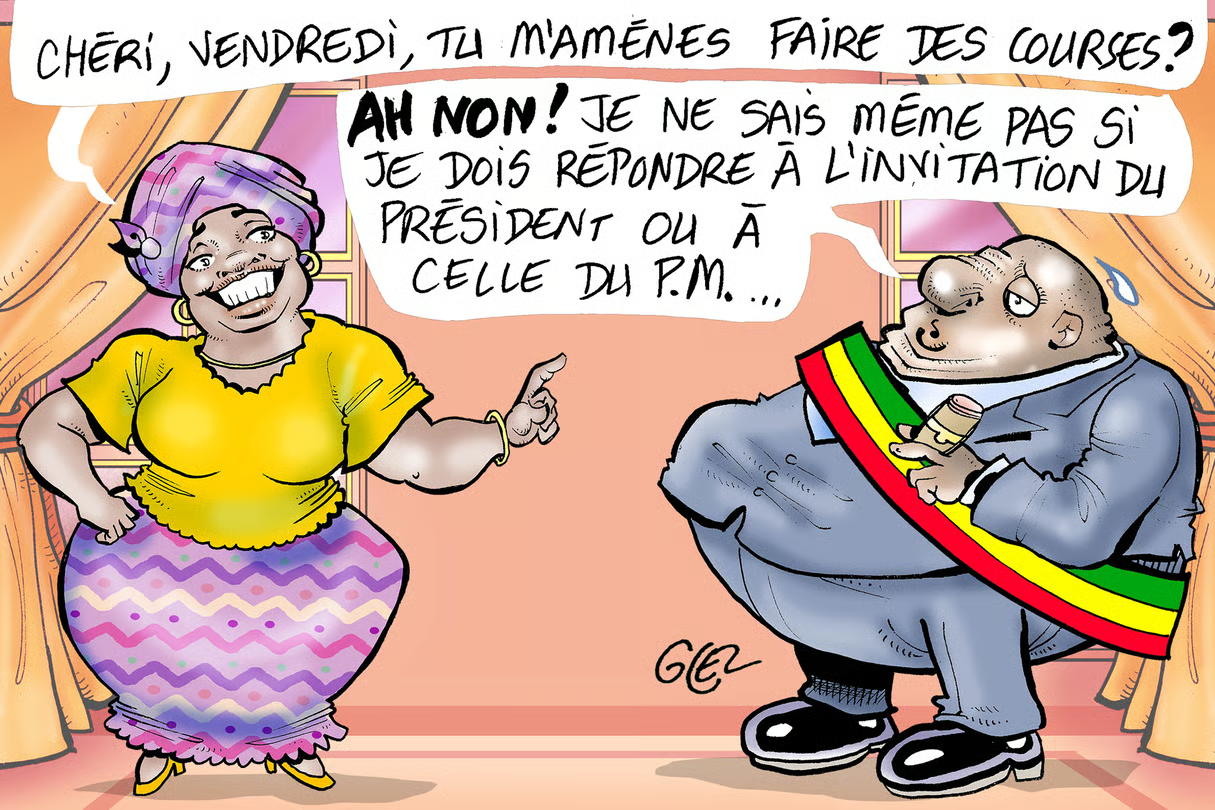
The political landscape in Senegal is heating up as two key figures, Bassirou Diomaye Faye and Ousmane Sonko, engage in a high-stakes battle of dialogues. Their exchanges are not just shaping the future of their parties but are also redefining the contours of Senegalese politics. With national attention riveted on their every move, the stakes could not be higher.
Why these dialogues matter for Senegal
Their discussions are more than political posturing; they represent critical negotiations that could determine the trajectory of Senegal’s governance. As both leaders navigate complex alliances and strategic partnerships, their decisions will influence policy directions and public sentiment for years to come.
Key issues on the table
The talks between Faye and Sonko are centered around several pressing issues:
- Economic policies: How to balance growth with social equity remains a central theme.
- Governance reforms: Debates over transparency and accountability are intensifying.
- National unity: Bridging divides across political and regional lines is a priority.
Public reaction and political implications
Senegalese citizens are closely watching these developments, with opinions sharply divided. Some view the dialogues as a necessary step toward stability, while others see them as a distraction from more urgent challenges. The outcome of these exchanges could either unite or further polarize the nation.
What’s next for Senegal’s political scene?
As Faye and Sonko continue their discussions, the political arena remains volatile. The coming weeks will be pivotal in determining whether their collaboration leads to progress or deepens existing tensions. One thing is certain: Senegal’s political future hangs in the balance.