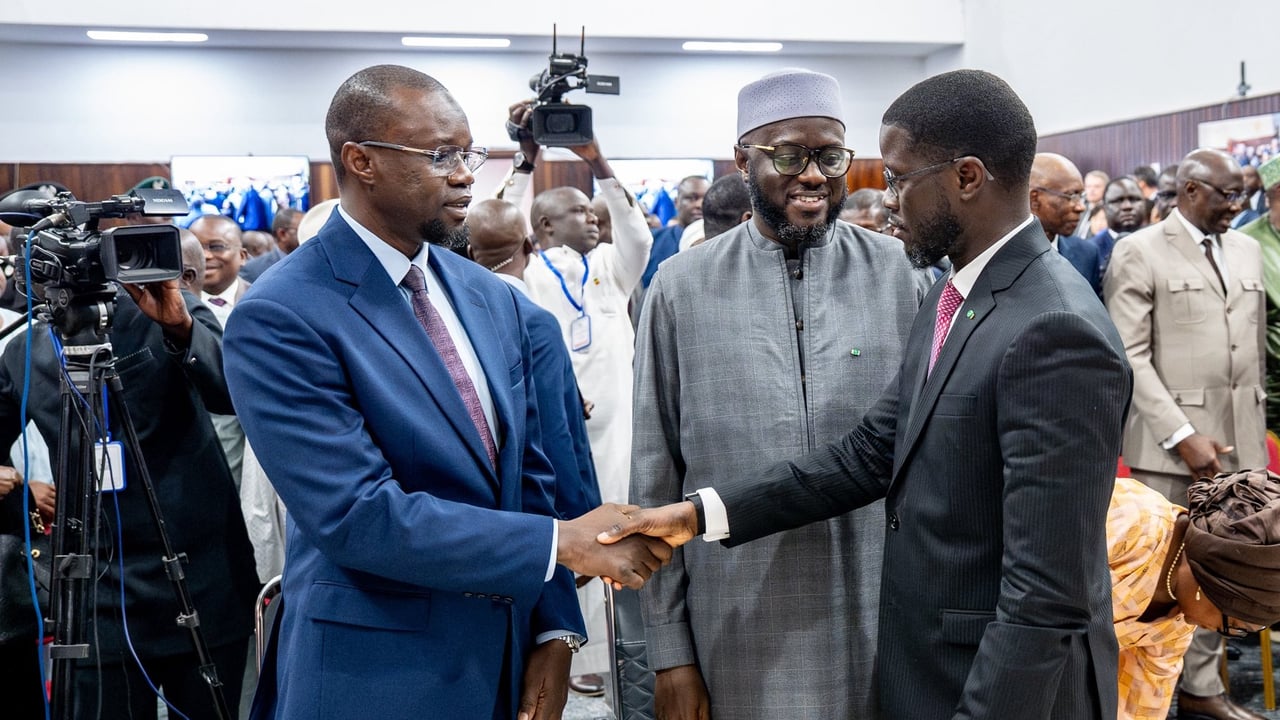
President Bassirou Diomaye Faye of Senegal has terminated the appointment of Prime Minister Ousmane Sonko, marking a significant change in the country’s political leadership. The decision, announced through official channels, underscores a strategic realignment within the government’s highest echelons.
The move arrives at a critical juncture, as Senegal navigates evolving domestic priorities and regional dynamics. Ousmane Sonko, a prominent political figure, had previously held the prime ministerial position, contributing to policy discussions and governance initiatives. His removal signals a fresh phase in the administration’s approach to national leadership.
Bassirou Diomaye Faye, who assumed the presidency, has emphasized continuity while introducing new governance perspectives. Observers note that this adjustment reflects broader efforts to strengthen institutional efficiency and address emerging challenges in governance.
The reshuffle has drawn attention from political analysts, who highlight its potential implications for policy direction and public administration in Senegal. As the government transitions, stakeholders across sectors will be closely monitoring the unfolding developments.
The Prime Minister’s office is now set for a transition period, during which responsibilities will be reassigned in alignment with the President’s vision. This transition phase is expected to play a pivotal role in shaping the country’s immediate political and administrative agenda.
The announcement has also sparked discussions about the future trajectory of Senegal’s political landscape. With Bassirou Diomaye Faye at the helm, the government is positioned to pursue reforms aimed at enhancing stability and fostering development.
Key implications of the leadership change
- Policy continuity: The government remains committed to maintaining stability while introducing new initiatives to address pressing national issues.
- Governance adjustments: The reshuffle reflects a strategic effort to optimize administrative efficiency and align leadership with evolving priorities.
- Regional considerations: Senegal’s evolving political dynamics may influence its engagements within the West African subregion.