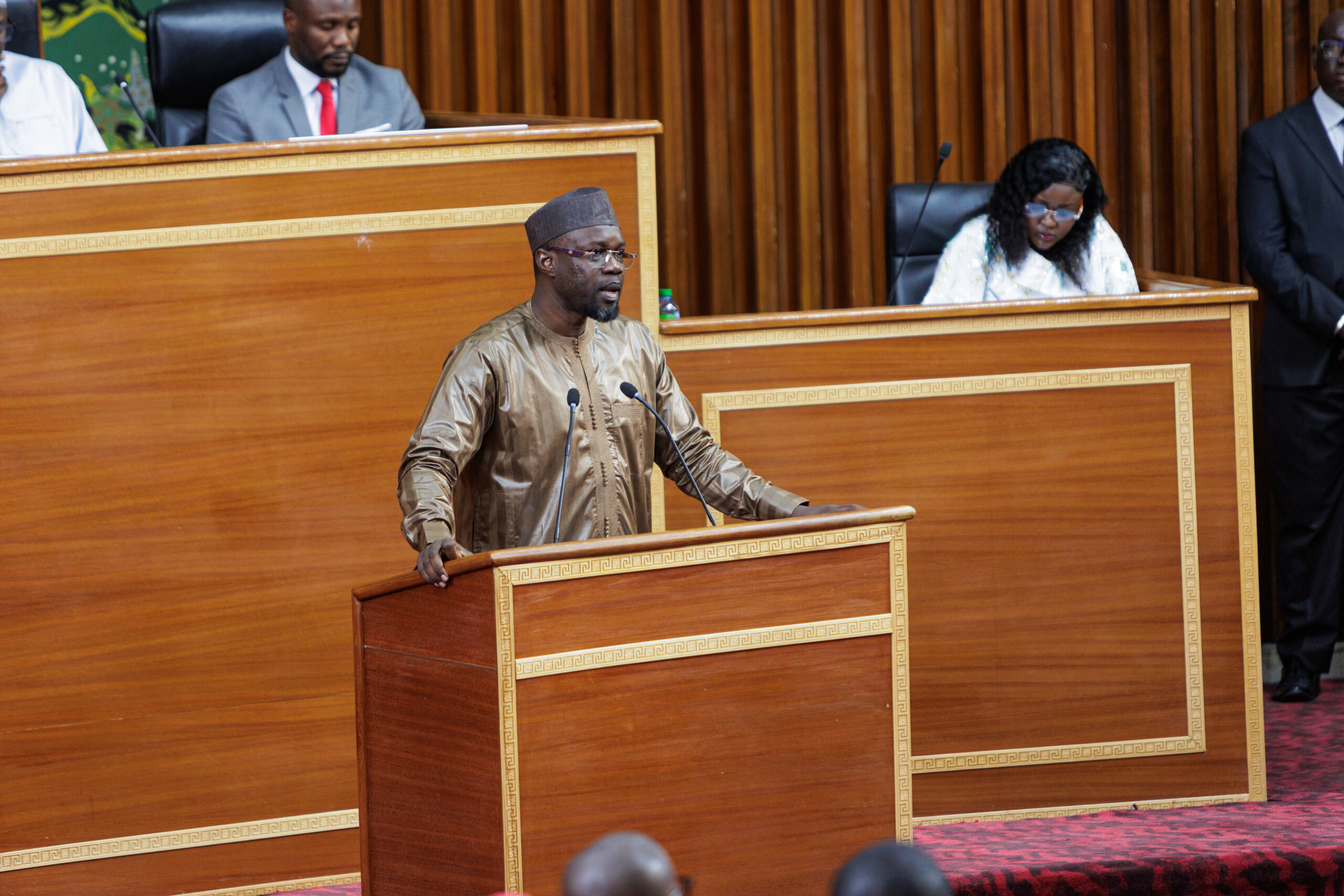
Ousmane Sonko strengthens anti-LGBTQ+ stance in national assembly
The Senegalese Prime Minister, Ousmane Sonko, delivered a robust defense of the newly amended law targeting acts considered against nature during a tense session of the National Assembly. Speaking during a parliamentary session focused on government accountability, Sonko presented the legislation as a necessary response to what he described as a worrying proliferation of such acts across the country.
Law remains impersonal, Prime Minister clarifies
Addressing concerns about potential targeting of specific individuals, Sonko emphasized that the law, once enacted, would apply universally. « A law, by its very nature, is impersonal. No attempt was made to single out any group or individual, » he stated firmly before the assembly. The Prime Minister sought to dispel fears that the legislation could be used discriminatorily against particular communities.
Religious backing strengthens government’s resolve
Sonko highlighted significant support from religious leaders for the legislative initiative. According to his account, several influential religious figures had reached out to the government to express their approval of the proposed measures. This backing appears to have reinforced the government’s commitment to enforcing the law without compromise.
Warning against societal normalization
In a forceful speech, Sonko alleged the existence of organized networks encouraging such practices in Senegal, particularly targeting vulnerable youth. He cited incidents where students reportedly received financial incentives and mobile phones, warning that state inaction could lead to widespread normalization of these behaviors. The Prime Minister underscored the urgent need for decisive action to prevent societal erosion.
Judiciary urged to enforce law without exception
Sonko directed a clear message to the country’s judicial system, demanding strict and impartial enforcement of the new law. « Justice must apply this legislation in its entirety, without deviation or partiality, » he declared. The Prime Minister made it unequivocally clear that no protections would be granted to those found in violation. « We will not shield the powerful, » he warned, signaling zero tolerance for elite interference in legal proceedings.
Rejecting foreign influence on domestic matters
In a bold assertion of national sovereignty, Sonko dismissed any notion of external pressure influencing Senegal’s stance on this issue. Referring to Western countries, he declared, « Senegal does not take lessons from anyone. » He asserted that the overwhelming majority of Senegalese citizens oppose these practices, framing the law as a reflection of popular will rather than external imposition.
Criticism of cultural imperialism and elite complexes
The Prime Minister extended his critique beyond legal enforcement, targeting what he described as attempts by Western nations to impose cultural and social models on African countries. He also singled out segments of Senegal’s elite, accusing them of harboring an inferiority complex toward Western positions. This, he argued, had contributed to societal confusion and resistance to upholding traditional values.
No room for compromise
Concluding his address, Sonko ruled out any possibility of suspending or softening the law. « There will be no moratorium, » he declared, reaffirming the government’s unwavering commitment to full implementation. The Prime Minister’s firm stance signals a period of heightened legal scrutiny and potential crackdown on activities deemed against Senegal’s moral and social fabric.