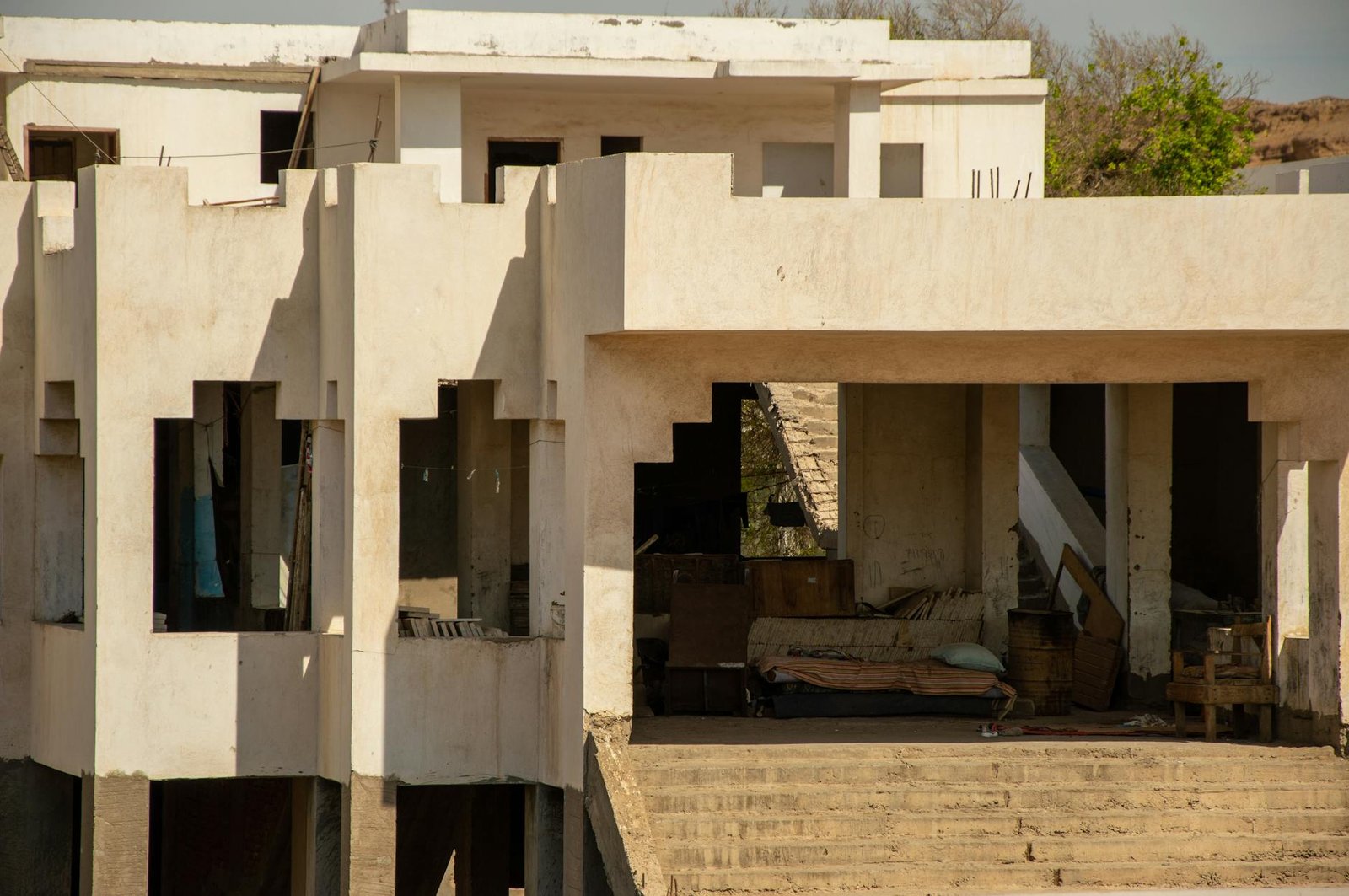
Senegal’s government is undertaking a sweeping review of its public infrastructure portfolio, targeting 25 completed but non-operational facilities that have drained 279 billion CFA francs without delivering any economic or social return. This audit exposes a persistent gap between project completion and effective utilization—a recurring flaw in public procurement that leaves valuable assets idle while budgets remain strained.
Targeted evaluation of dormant public assets
The initiative reflects a systematic effort to assess underutilized state properties, including administrative buildings, sector-specific facilities, and economic infrastructure. Each idle asset represents a financial loss, as maintenance costs—such as security, upkeep, and potential deterioration—continue to accrue without generating any tangible benefit. Dakar’s strategy focuses on reintegrating these resources into productive or administrative use through strategies like reallocation, inter-agency sharing, or private partnerships.
The audit process involves a granular examination of each infrastructure to identify root causes of non-utilization. Common issues include facilities delivered without allocated operational budgets, buildings constructed without designated occupants, or projects lacking essential logistical frameworks for activation. Addressing these gaps will be critical to unlocking their potential value.
Budgetary relief amid financial constraints
This audit arrives at a pivotal moment for Senegal’s administration, which has prioritized financial transparency and expenditure control since 2024. By reallocating these dormant assets—valued at 279 billion CFA francs—Senegal can reduce reliance on new debt amid high debt servicing costs. The move aligns with broader efforts to scrutinize public contracts and semi-public entities, reinforcing a policy of maximizing existing resources before pursuing new investments.
The initiative also responds to repeated critiques from the Cour des comptes, which has long highlighted weaknesses in post-delivery management within Senegal’s public procurement system. By addressing these inefficiencies, the government aims to improve accountability and fiscal discipline across its infrastructure pipeline.
Strengthening project governance and accountability
The audit underscores a fundamental issue in infrastructure governance: the delivery of a facility marks the beginning of its economic utility, not the end of its lifecycle. However, Senegal’s current system often fragments responsibility across multiple ministries and agencies, creating blind spots in project oversight.
International financial institutions have long emphasized the need for clearer accountability chains, from feasibility studies to operational deployment. For the 25 affected sites, potential solutions vary. Some may be reassigned to government agencies currently leasing private office spaces, generating immediate rent savings. Others could be privatized or concessioned under strict operational guidelines. A third approach involves addressing missing components—such as equipment, staffing, or utility connections—to activate their original purpose. Final decisions will hinge on case-by-case evaluations and budgetary trade-offs.
This effort to revitalize public assets serves as a credibility test for Senegal’s administration. Success will depend on transparent progress tracking and verifiable performance metrics. If executed effectively, the initiative could set a regional benchmark for combating the widespread issue of “ghost infrastructure”—a challenge that undermines public investment efficiency across West Africa.