On a bustling street in Dakar, “K.” appears indistinguishable from any other passerby. He moves swiftly, phone in hand, exchanging greetings with acquaintances. Outwardly, nothing seems amiss. Yet, every action is meticulously calculated. “Here, one must know how to protect oneself,” he confides.
His incarceration dates back to February 14th, though the information only recently came to light. A French citizen in his thirties, residing in Dakar, was apprehended during a series of arrests targeting individuals accused of homosexual acts. He faces charges including “unnatural acts,” criminal association, money laundering, and attempted HIV transmission.
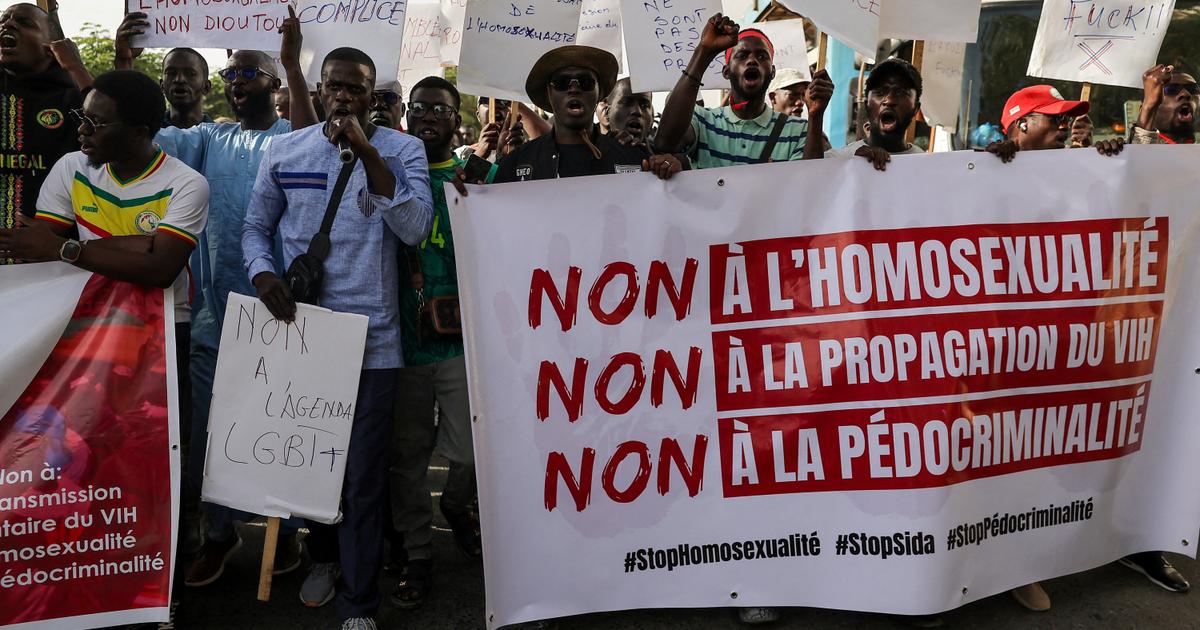
This arrest occurred amid parliamentary discussions surrounding a new law, passed in early March, which now stipulates prison sentences of five to ten years for same-sex relations. This development is part of an escalating crackdown, with dozens of detentions reported daily since the legislation’s enactment.
Paris has reiterated its commitment to the universal decriminalization of homosexuality and its support for those discriminated against by Senegal’s new law. French diplomatic sources confirm that the French Embassy in Dakar is closely monitoring the situation, and consular officials have visited the detained French citizen.
K. is a gay man. In a nation where deeply entrenched homophobia persists, simply living authentically presents immense challenges.
In Senegal, resistance often manifests not through overt slogans or public demonstrations. More frequently, it unfolds in subtle ways: barely perceptible gestures, in what is spoken, and, crucially, in what remains unsaid.
In his neighborhood, K. has learned to interpret unspoken cues—the silences, the glances, the insinuations. “You quickly understand what you can or cannot say.” Like many, he adapts, he composes. One life lived openly, another kept private. Homosexuality remains broadly associated with social disgrace, and the repercussions are undeniably real.
In a discreet Dakar apartment, “M.” speaks in hushed tones, reflexively glancing towards the door. “Here, you always have to be careful.” His story is not unique; indeed, that is precisely the problem.
“she will not judge”
M.’s daily life is a tapestry of precautions. At work, certain topics are meticulously avoided. Within his family, he maintains a carefully crafted persona. “I know what I can say, and to whom.” This constant mental gymnastics has become second nature.
Yet, in other, safer environments, dialogue flows freely. Groups convene, engage in discussions, and offer mutual support. They share personal experiences, but also converse about rights, justice, and dignity. Not always overtly, but sufficiently to sustain a sense of community.
For M., resistance is not about grand gestures. It lies in a simple refusal: to accept his life as illegitimate.
Awa, a nurse, is not directly impacted, but she has made a firm decision at her health center: she will not pass judgment. “I’ve seen patients who no longer dared to come,” she recounts. Some arrive too late; others conceal vital information, complicating treatment. This is a critical issue in Dakar current events related to healthcare access.
So, she adapts. She listens intently. She chooses her words carefully. On the surface, it seems minor, but at times, it proves decisive. She doesn’t view herself as an activist. Nevertheless, in the prevailing climate, her stance is far from neutral.
In another district, “I.” recalls a neighbor accused of homosexuality. The rumor quickly escalated, followed by violence—insults, threats, and social ostracization:
“I realized it could happen to anyone.”
Since then, he remains wary. But more than that, he listens differently. And occasionally, he intervenes. A comment. A question. Nothing confrontational. It may not seem like much, but it is a start.
resistance in the interstices
Aminata, a student, is not directly affected, but she refuses to remain silent. One day, confronted with violent remarks, she responded calmly. “I said that everyone should live their own life.” The ensuing silence made a profound impression on her. “It unsettled them.” Such moments don’t alter everything, but they create a subtle crack in the status quo.
The acclaimed writer Fatou Diome frequently reminds us that societies are never static. They evolve, sometimes slowly, sometimes quietly. Thinking for oneself, she suggests, remains a profound act of courage.
Similarly, Senegalese writer Mohamed Mbougar Sarr, recipient of the 2021 Goncourt Prize, views literature as a realm of freedom. A space where certainties can waver, and dominant narratives can be challenged.
Resistance here does not always adopt an organized form. It infiltrates the gaps: in professional practices, in friendships, and even in silences. Some choose not to amplify hatred. Others offer protection, listen, and provide support. Nothing dramatic, yet these actions matter. They open up fragile, but real, spaces.
Ultimately, the core principle is simple: every individual deserves dignity and respect. This may seem self-evident, but it is not always so. Resisting homophobia in Senegal often means embracing discomfort, moving against the current. Sometimes discreetly. Sometimes almost invisibly.
K., M., Awa, Aminata, I., and many others may not explicitly identify as activists. Yet, their choices carry weight. Slowly, they shift perceptions. Courage, in this context, is not spectacular. It is a daily, and often silent, endeavor, shaping Senegal news and human rights discussions.