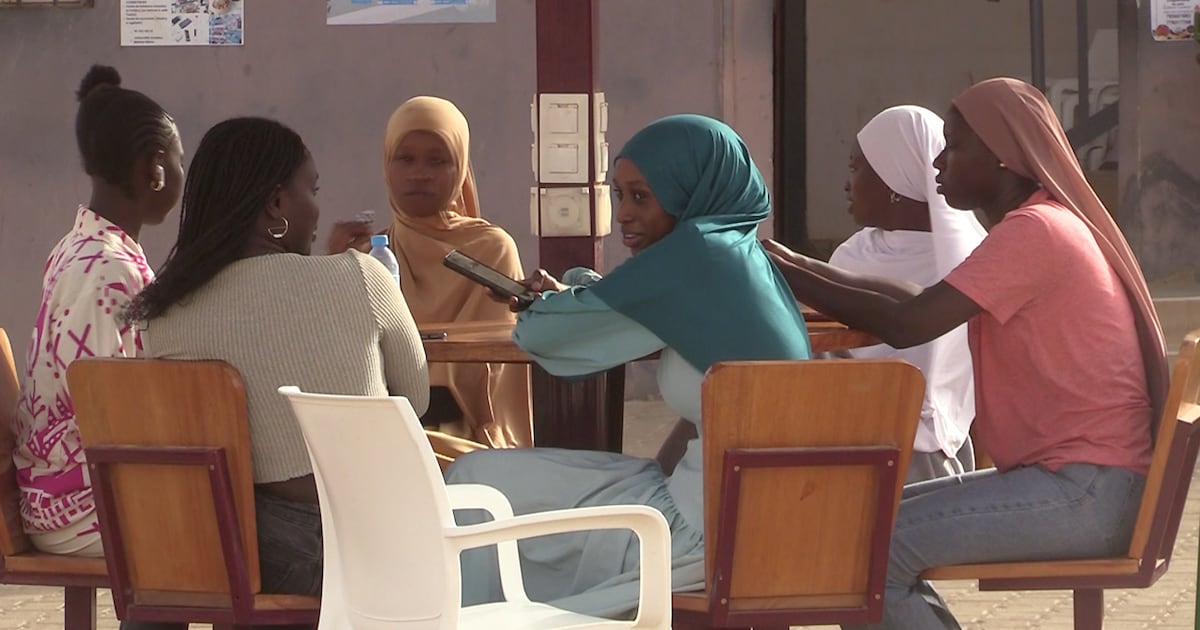
Across Senegal’s university campuses, a growing number of students are embracing political engagement as a natural extension of their academic pursuits. For these young minds, blending higher education with civic involvement isn’t just possible—it’s a strategic investment in shaping both personal and national futures.
Many university students view political participation as a dual pathway: one that sharpens their intellectual growth while simultaneously preparing them to navigate the complexities of governance. Far from being a distraction, they see it as a way to test theories in real-world conditions and develop a deeper grasp of societal challenges.
From lecture halls to political action
Law student Adama Lam articulates this perspective with conviction: «As a law student, I’ve always believed that joining a political movement aligns perfectly with my academic journey. This isn’t just about studying laws—it’s about understanding how they’re shaped and applied in practice. Politics isn’t separate from knowledge; it’s where theory meets reality. For me, the two are inseparable, and both require dedication.»
His viewpoint reflects a broader trend among Senegalese students who reject the notion that politics must conflict with scholarly or professional growth. Instead, they argue that civic engagement can coexist harmoniously with other aspirations.
Business student Amadou Saliou Diallo echoes this sentiment: «Politics isn’t a career—it’s an act of service to one’s nation. But that doesn’t mean abandoning other ambitions. I can pursue accounting while actively participating in political discourse. The key is balance: using education to inform civic duty without letting either sphere overshadow the other.»
Education meets political foresight
For some, early political involvement serves as a supplementary education in itself. Students like Ousmane Seck emphasize how academic learning, when paired with political awareness, creates a powerful foundation for future leadership. «The classroom gives us analytical tools, but politics teaches us how to wield them responsibly. Programs like ‘Jub, Jubal, Jubanti’ aren’t just theoretical—they’re blueprints for action. Whether we aim to lead or found our own movements someday, this dual exposure is invaluable.»
This perspective raises a compelling question: Should universities remain solely temples of knowledge, or should they also cultivate the next generation of political architects? The answer, increasingly, seems to be both.
Students today navigate a delicate balance—juggling lectures, exams, and political meetings, all while refining their vision for Senegal’s future. Their determination suggests that the line between scholar and statesman may be thinner than ever before.