From Soweto to Lomé: infanticide as a political shield
The African continent observed the Day of the African Child on June 16. This year’s theme centered on universal access to water, sanitation, and hygiene—a day that typically features high-level summits and pledges for a better future. In Togo, representatives of the ruling administration will likely adhere to tradition with reassuring addresses. However, beneath the official discourse, the ground-level reality is unforgiving: in its efforts to retain power, the regime in Lomé has frequently resorted to lethal force, claiming the lives of innocent children. This article revisits a tragic sequence of unkept promises and inquiries that have disappeared.
The Day of the African Child was originally established to commemorate the Soweto students who, in 1976, rose up to demand quality education and reject the imposition of Afrikaans. While many states have since striven to realize these rights, the Togolese system appears to have transformed the repression of the youngest into an ultimate political safeguard. Protecting a child involves more than declarations of intent; it requires ensuring the opportunity to be born and to grow up with dignity. In facilities that pass for hospitals in Togo, mothers still give birth on the floor. Due to a lack of resources and infrastructure, maternity wards are overwhelmed, sometimes resembling newborn warehouses where life hangs by a thread. While sub-regional and international institutions reaffirm their short-, medium-, and long-term commitments to children, Lomé feigns compliance. Yet the slightest protest by young people against these systematic violations of their fundamental rights is met with live ammunition. Even those who are not demonstrating, but are simply out seeking a livelihood, end up swelling the list of victims.
Jacques Koutoglo: the drowning theory versus a family’s grief
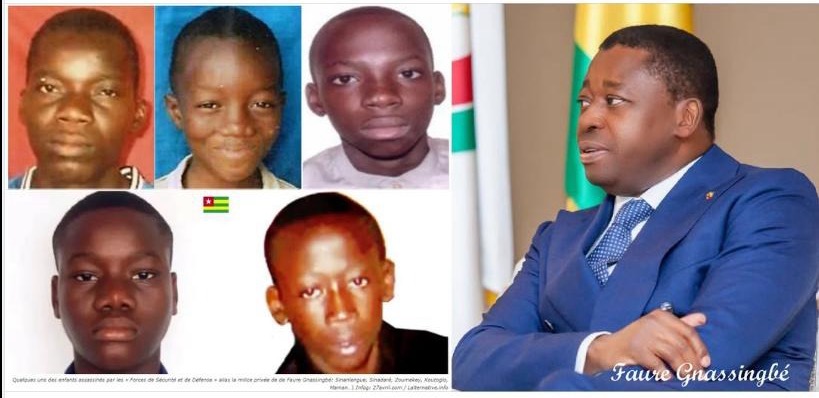
Nearly a year has passed since the family of Jacques Koutoglo began seeking justice. The 15-year-old schoolboy was beaten to death and then thrown into the Bè lagoon in Lomé during the first demonstrations in June 2025. That afternoon, the adolescent was not marching; he was simply looking for food. In response to the tragedy, Pacôme Adjourouvi, then Minister of Human Rights, initially publicly supported the theory of a ‘natural drowning’ during a period of unrest, before backtracking and announcing the opening of an official investigation to assign responsibility. Since then? Nothing. The minister left office without ever releasing the findings. The government’s refusal to authorize a memorial mass for the repose of Jacques’s soul only deepens the sense of injustice for a family left inconsolable.
Joseph Zoumekey and Rachad Maman: silence as the only answer
In 2017, the fate of 13-year-old Joseph Zoumekey already demonstrated that repression spared no age. Sent by his mother to buy condiments in the Bè-Kpota neighborhood, the child was struck by live ammunition. It took until 2018 and the conclusions of an independent autopsy conducted by Amnesty International experts to confirm that the cause of death was indeed a gunshot wound, contradicting the official version. Despite repeated calls by the NGO to bring the perpetrators to justice, Faure Gnassingbé’s government remained silent. That same year, in Bafilo, 14-year-old Rachad Maman suffered a similar fate while walking alongside his father to demand democratic reforms. Hit by gunfire aimed at the group of demonstrators, his case sparked international outrage, materializing in an Amnesty International petition signed by thousands of people worldwide. The demand was simple: shed light on the matter and prosecute those responsible. That request also fell on deaf ears.
Anselme Sinandaré and Douti Sinalengue: north and south united in grief
Further north, in Dapaong, the memory of Anselme Sinandaré (12) and Douti Sinalengue (21) remains vivid. In 2012, during a peaceful student protest demanding the presence of their teachers in classrooms, both were shot dead. More than a decade later, no official proceedings have identified the shooters within the security forces. From the far north to the coast, the observation is painfully consistent: the lives of children seem to count for little against the imperatives of retaining power. Dozens of families are thus robbed of their future, seeing their offspring—the next generation—sacrificed with impunity. This pattern of repression has persisted across generations since the beginning of the Gnassingbé family’s rule. Yet Togo is indeed a signatory to the African Charter on the Rights and Welfare of the Child, ratified on May 5, 1998. By leaving these crimes unpunished and these investigations unresolved, the authorities in Lomé send a clear signal to the international community: respect for treaties ends where the demands of political survival begin.