United Nations Sounds Alarm Over Terror Threat in Africa
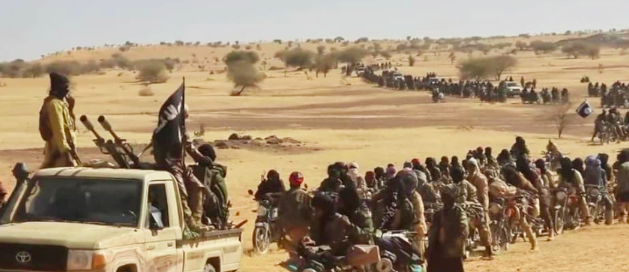
The United Nations has issued a stark warning about the escalating threat posed by the Islamic State (Daesh) in Africa, particularly across the Sahel region and the Lake Chad basin. This concern comes despite reports suggesting a weakening of Daech’s central leadership, as its regional affiliates grow increasingly autonomous and adapt to local vulnerabilities.
Key Findings from the UN Report
In a detailed report submitted to the UN Security Council, Secretary-General António Guterres highlighted the persistent and evolving danger presented by Daech. The document, presented by Oguljeren Niyazberdiyeva of the UN Office of Counter-Terrorism (UNOCT), underscores the Sahel and Lake Chad basin as critical hotspots for the group’s expansion.
The report identifies the Islamic State West Africa Province (ISWAP) as Daech’s most active affiliate globally. Despite military pressure, ISWAP continues to strengthen its military capabilities, increasingly deploying commercial drones for surveillance and attacks. Additionally, affiliated groups in the Democratic Republic of the Congo (DRC) and Mozambique are sustaining their offensives, recruiting new fighters, and consolidating local networks.
Daech’s Adaptive Strategy
Oguljeren Niyazberdiyeva emphasized that Daech has undergone a significant transformation to survive international military campaigns. The group’s decentralized structure now operates as a network of autonomous regional branches, sharing a common ideology while adapting to local contexts. This flexibility allows Daech to exploit institutional weaknesses, prolonged conflicts, and economic hardships to deepen its presence.
The UN report also highlights Daech’s growing use of emerging technologies, including artificial intelligence, encrypted communications, digital platforms, virtual assets, and unmanned aerial vehicles. These tools are being leveraged to enhance propaganda, recruitment, financing, and operational planning. While the report acknowledges the potential of these technologies for counter-terrorism efforts when used responsibly, it stresses the urgent need for stronger international cooperation and collaboration with the private sector to regulate and govern their use.
The document concludes that despite the degradation of Daech’s central command, the group remains a grave threat to global peace and security. Its ability to decentralize and adapt has allowed it to endure and expand, underscoring the need for sustained vigilance and coordinated action.